About Eurostopodus argus Hartert, 1892
General Description
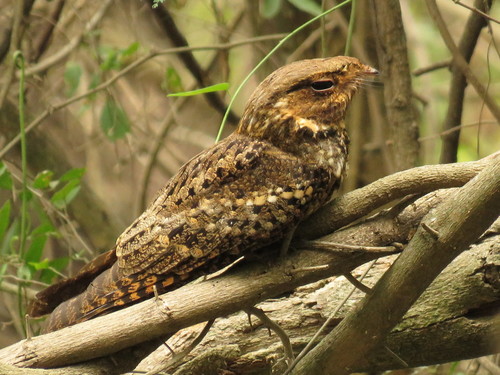
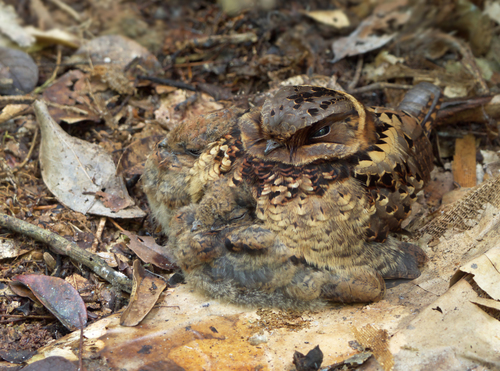
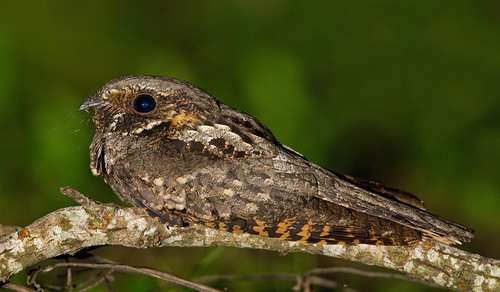
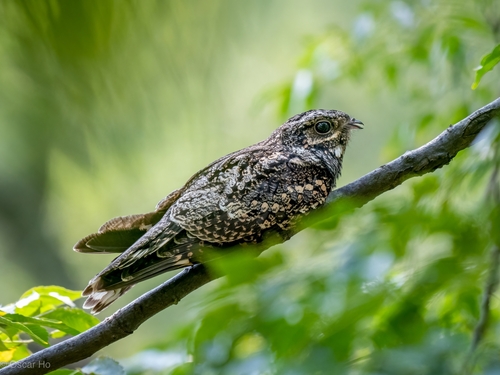
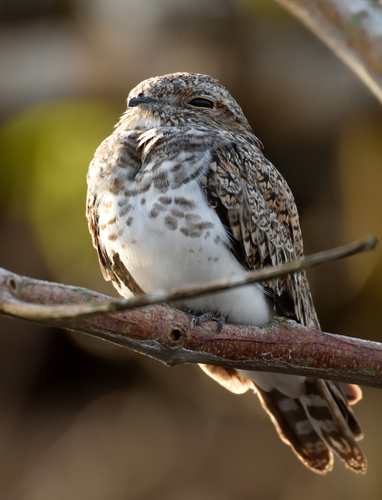
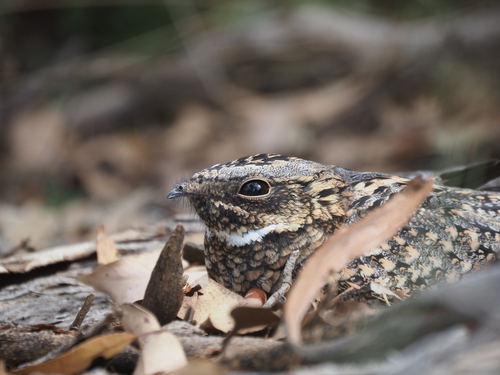
The spotted nightjar (Eurostopodus argus) is one of the larger and more colorful members of the nightjar group. Its intricate, heavily spotted and flecked plumage allows it to blend perfectly into surroundings with red, grey or brown soils scattered with rocks, leaves, branches, and twigs.
Similar Species
It looks similar to two other Australian nightjar species: the large-tailed nightjar (Caprimulgus macrurus) and the white-throated nightjar (Eurostopodus mystacalis). When in flight, an adult spotted nightjar shows large white spots on its four outer primary feathers, and it lacks the white tail markings found on the more tropical large-tailed nightjar.
Body Size
Adults measure 25–28 cm in body length. Adult males weigh 81–132 g, while adult females are slightly smaller, weighing 74–123 g.
Morphometric Measurements
Adult wingspan ranges from 20.5 to 23.9 cm, tail length from 13.4 to 16.8 cm, and bill length from 1.5 to 2.5 cm. The spotted nightjar's bill ranges from flesh-brown to blackish, and is occasionally paler closer to the gape of the lower mandible.
Soft Part Coloring
Its iris is brown to very dark brown, and its legs and feet are brown with darker claws.
Australian Distribution
The spotted nightjar is found across most of mainland Australia. It is generally absent from areas east and south of the Great Dividing Range along the eastern seaboard, from central Queensland to southeast South Australia, and does not occur in Tasmania.
Movement Patterns
In northern regions, individual spotted nightjars may be locally nomadic or sedentary. Southern populations are partially sedentary or migratory, and winter in northern Australia from May to September.
Extralimital Records
Some spotted nightjars may also winter on Indonesian islands in the Banda Sea, possibly from overshooting during migration, and vagrants have been recorded as far north as Irian Jaya.
Habitat Preferences
The spotted nightjar inhabits a range of habitats from deserts to mangroves, and generally prefers warmer, drier country over humid, cooler climates. Recorded habitat types include savannah woodland, low open sclerophyll forest, mallee, mulga and acacia scrubland, and spinifex and tussock grasslands.
Arid Environment Occupancy
The species has also been found in relatively harsh environments including gibber plains, semi-deserts, and deserts. It generally avoids dense grasslands and tall, closed forest.
Winter Habitat
On Indonesian islands, its winter habitat includes savannahs, grasslands, and rainforest edges.