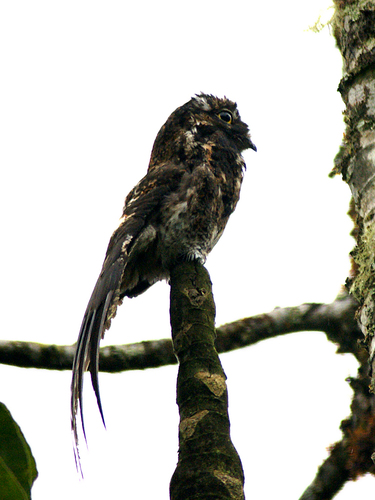
About Nyctibius maculosus Ridgway, 1912
Body Length
The Andean potoo (Nyctibius maculosus Ridgway, 1912) is 34 to 40.5 cm (13 to 16 in) long.
Body Weight
One measured male weighed 195 g (6.9 oz), and two measured females weighed 145 g (5.1 oz) and 185 g (6.5 oz).
Male Upperpart Coloration
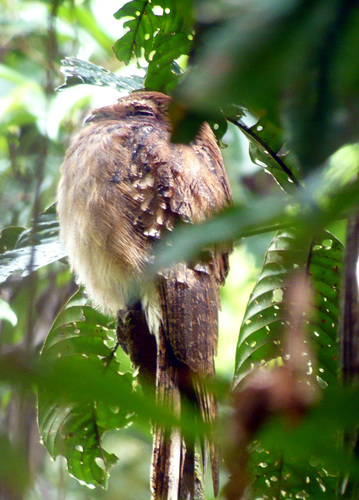
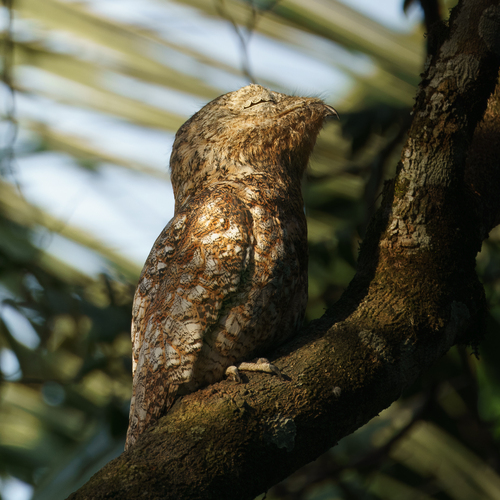
For males, the upperparts are brown, marked with white, buff, tawny, and black streaks, speckles, and spots.
Male Wing Markings
The median wing coverts are white, forming a broad visible stripe on the closed wing.
Male Throat Coloration
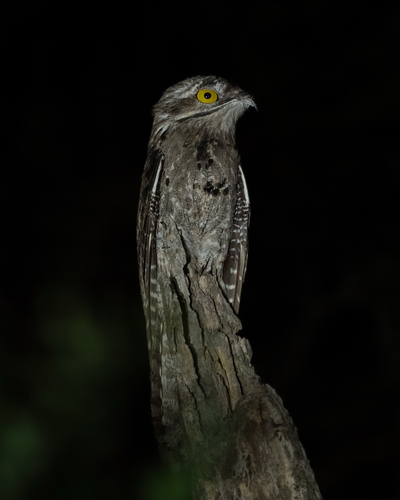
The chin and throat are white or grayish white, with a cinnamon tint on the lower throat.
Male Breast and Flank Coloration
The breast is brown, separated from the buffish upper belly and flanks by a buff or tawny band.
Male Underpart Markings
The breast has blackish brown speckles, while the belly and flanks have brown bars and vermiculation.
Male Lower Belly Coloration
The lower belly is pale buff, cinnamon buff, or whitish, and marked with blackish brown streaks and spots.
Female Plumage Differences
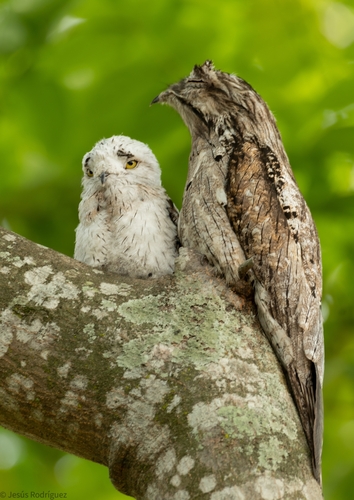
Females are lighter overall, with a more buffy or tawny base color, and their wing coverts are buff rather than white.
Geographical Distribution
The Andean potoo has been recorded at approximately a dozen sites along the Andes mountain chain, ranging from western Venezuela through Colombia, Ecuador, and Peru to western Bolivia.
Distribution Explanations
This patchy known distribution could either reflect that the species is truly restricted to local areas, or result from challenges detecting it: it has cryptic camouflage, is nocturnal, and occurs in areas with few resident ornithologists.
Typical Elevation Range
Most individuals are found at elevations between roughly 1,800 and 2,800 m (5,900 and 9,200 ft).
Elevation Extremes
The lowest documented elevation for the species is 1,400 m (4,600 ft), and the highest is 3,200 m (10,500 ft).
Habitat
It lives in the canopy of both the interior and edges of humid montane forest.