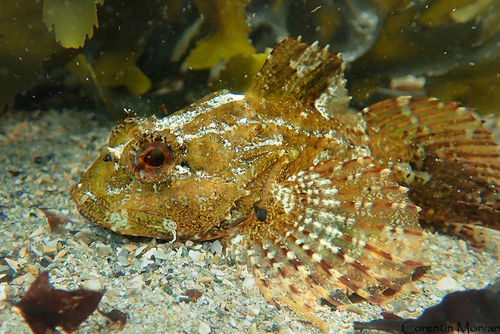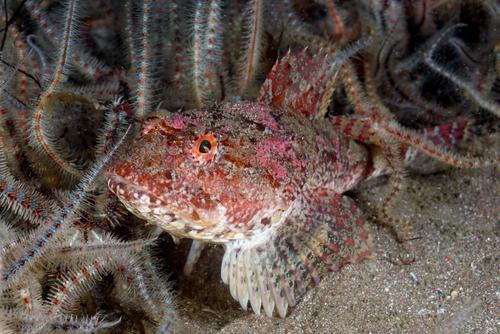
About Myoxocephalus scorpius (Linnaeus, 1758)
Taxonomy
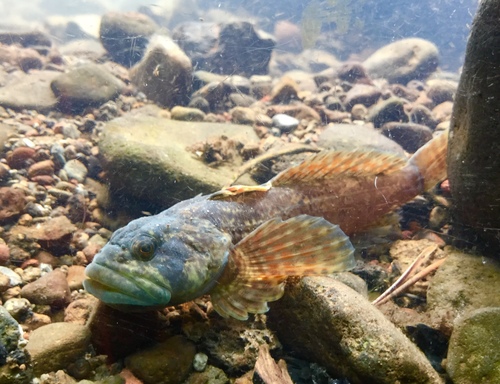
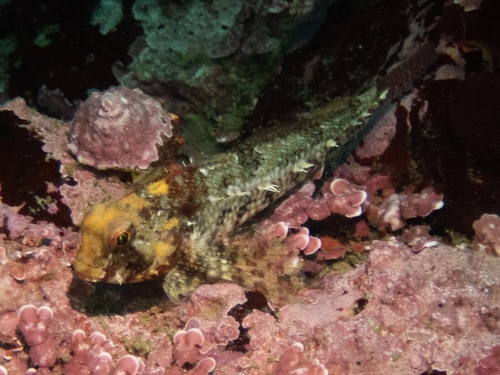
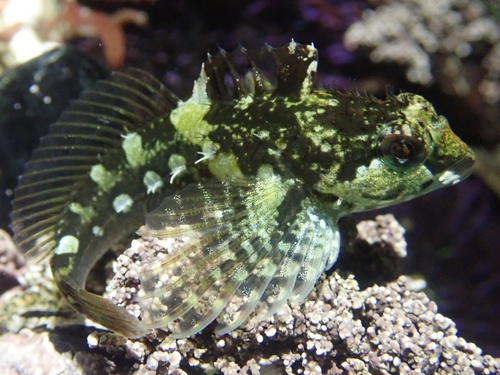
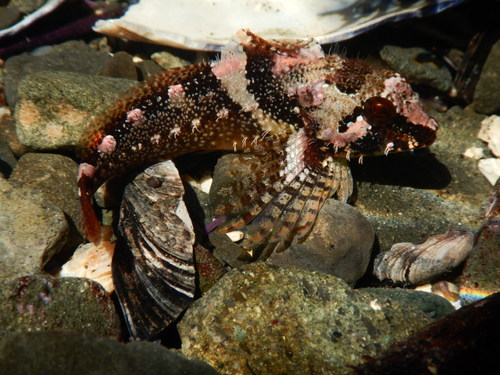
Myoxocephalus scorpius, most commonly called the shorthorn sculpin or bull-rout, is a fish species belonging to the family Cottidae. It is a demersal species that lives in the Northern Atlantic and its adjacent subarctic and Arctic seas.
English Names
Many less common English names are used for this species, either only regionally or rarely overall; these include Arctic sculpin, daddy sculpin, European sculpin, father-lasher, goat sculpin, Greenland sculpin, guffy, horny whore, pig-fish, scully, scummy, short-spined sea scorpion and warty sculpin.
Habitat
Shorthorn sculpins are found among seaweed, or on rocky bottoms mixed with mud or sand, at depths ranging from 0 to 451 m (0–1,480 ft).
Cold Adaptation
While it is primarily a marine species, it also lives in brackish waters such as the Baltic Sea. Like some other coldwater fish, this species produces antifreeze proteins that let it survive at temperatures around or slightly below freezing.
Pollution Effects
Sculpin populations in West Greenland have been observed to be affected by heavy metal contamination from a former lead (Pb)-zinc (Zn) mine. Analysis of samples from three different sites found a positive correlation: fish living closer to the mine had higher levels of mucus secretion.
Mucus Mapping
The mucus layer that forms over the fish's body can cause respiratory stress and irregular swimming, and also alters the species' relationship with parasites. Researchers intend to use this mucosal mapping to improve understanding of the effects of contaminant and parasite exposure for future studies.
Diet
Shorthorn sculpins feed on a wide variety of demersal and benthic fishes and crustaceans.
Spawning
This species spawns between December and March. Females lay eggs in clumps placed between rocks, which are then guarded by the male. Eggs typically hatch after five weeks.