About Cottus aleuticus Gilbert, 1896
Scientific Name and Distinguishing Traits
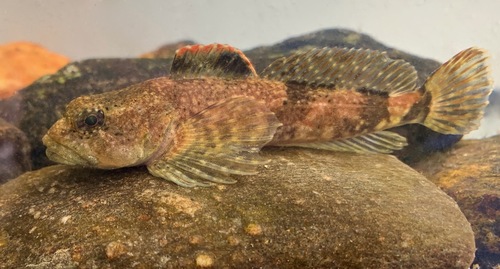
Coastrange sculpin, scientifically Cottus aleuticus Gilbert, 1896, can be distinguished from other related species by several unique traits: it has only one pore under its chin, lacks palatine teeth, and has no distinct gap between its two dorsal fins.
Size Measurements
Adult Coastrange sculpins can reach a maximum length of 17 cm, while their average length is just 6 cm.
Lifespan
The maximum reported lifespan for this species is 8 years.
Breeding Individual Size Dimorphism
Breeding females are generally larger than breeding males.
Breeding Male Coloration
Breeding males are almost entirely black, with a thin orange trim along the edge of the first dorsal fin.
General Distribution Range
This sculpin is found only along the Pacific coast of North America. Its range extends from Bristol Bay and the Aleutian Islands in Alaska, south to Santa Barbara County, California.
Isolated Populations
Isolated populations of the species also exist in Alaska's Kobuk River, Lake Washington in Washington state, and Cultus Lake in British Columbia.
Southern Range Occurrences
Sporadic occurrences have been recorded in streams as far south as Mendocino County, California.
Primary Habitat and Depth
Coastrange sculpins live mostly in rivers and streams, specifically in riffles and glides with coarse or cobblestone bottoms at depths between 0.20m and 1.0m.
Nocturnal Habitat Movement
At night, they move into shallower, calmer waters along river edges.
Habitat Overlap with Prickly Sculpin
They occupy nearly the same habitats as the prickly sculpin (Cottus asper), so the two species meet and interact regularly.
Sympatric Fish Species
Coastrange sculpins also commonly encounter salmon and three-spined stickleback in their habitats.