About Cottus beldingii Eigenmann & Eigenmann, 1891
Size
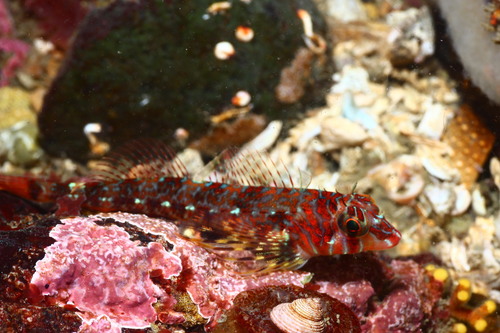
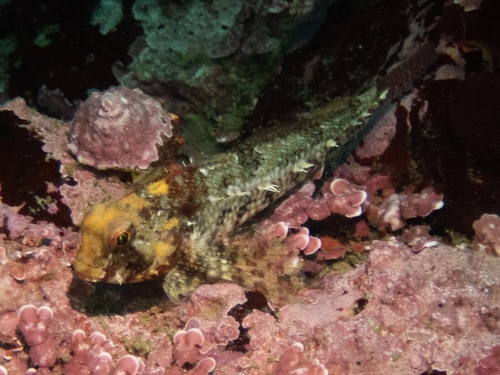
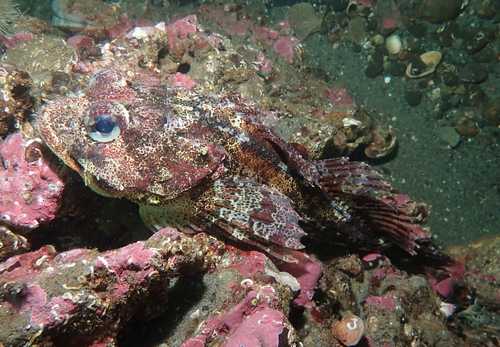
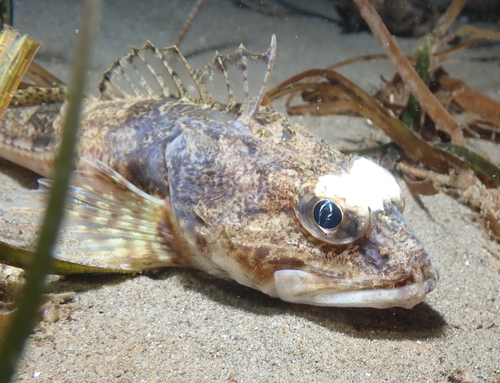
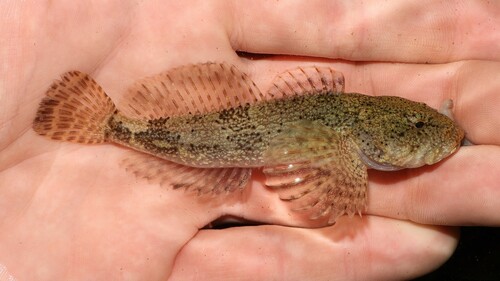
Paiute sculpin (Cottus beldingii) are small, slow-growing fish that reach a maximum length of 13 cm.
Body Coloration Basics
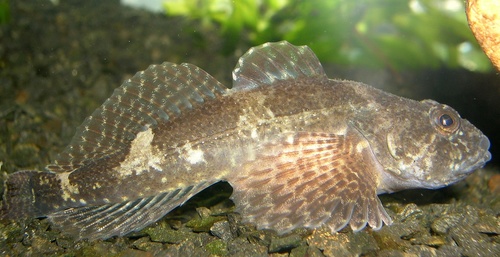
Their upper sides are mottled brown and black, and their underside is pale.
Fin and Caudal Peduncle Markings
They have a yellow or white spot on the caudal peduncle near the second dorsal fin, and all their fins (pectoral, pelvic, dorsal, anal, and caudal) may also be mottled.
Camouflage Adaptation
4 to 5 vertical bands run along their sides, and this coloration provides effective camouflage in stream environments.
Skin and Body Spines
They have smooth, scaleless skin, and unlike the closely related Prickly Sculpin, they have no spines on their body.
Fin Shape Characteristics
Their caudal fin is rounded, their dorsal fin is divided, and their pelvic fins extend past the vent.
Pectoral Fin Ray Count
Their fan-like pectoral fins contain 14 to 15 rays.
Dorsal Fin Spine and Ray Structure
The posterior dorsal fin is rayed with 13 to 16 rays, while the anterior dorsal fin is spined with 6 to 8 spines; rays are less bony and more flexible than larger, more structured spines.
Pre-opercular Spine Features
Paiute sculpin can be distinguished by two pre-opercular spines on the sides of their head, in front of the gill cover (operculum): the upper spine is long and slender, while the lower spine is smaller and less conspicuous.
Sexual Dimorphism
Male Paiute sculpin have long papillae that separate them from females, and males have a mouth width greater than the distance between the pelvic fin and anus, while in females this distance is wider than the mouth width.
Sensory Pore Characteristics
Their lateral line is incomplete, with 23 to 35 pores, and they also have two median chin pores.
Native Drainage Range
Paiute sculpin are native to the Western United States, where they occur in the Lahontan system and the Columbia River drainage, including Lake Tahoe.
State Distribution
They have been recorded in the states of Idaho, Wyoming, Nevada, Washington, Oregon, California, and Utah.
Habitat Water Type
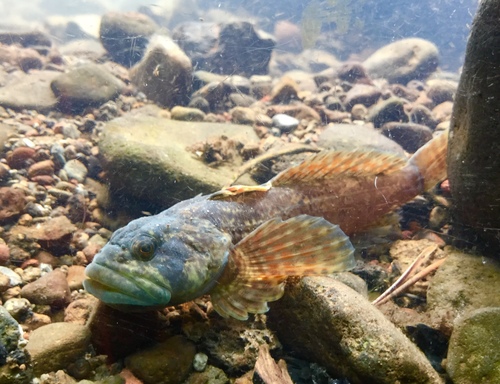
They inhabit cold water of streams and creeks, most often in riffles of clear water systems, and are commonly associated with trout.
In-stream Microhabitat Depth
They are usually found in deeper parts of creeks near aquatic macrophytes.
Substrate Preferences
They can occupy substrates including silt, gravel, boulders, and areas under logs or among aquatic vegetation, and they prefer coarse substrates such as gravel.
Stream Section Selection
They select sections of streams with fewer in-stream structures.
Lapwai Creek Population Status
The species is quite abundant, and has been recorded as clearly dominant over other sculpin species in the Lapwai Creek watershed.
Lahontan System Population Status
It is also very abundant in the Lahontan system of Nevada and California, particularly in the cold upper reaches of the basin's lakes and streams where no other freshwater sculpin species occur.
Invasive Species Threat
Paiute sculpin have also been found in the Little Wood River in Idaho and Sagehen Creek in the Eastern Sierra Nevada, where they dominate the middle and bottom reaches of the creek but are being displaced by the invasive signal crayfish.