About Myotomys unisulcatus (F.Cuvier, 1829)
Taxonomy and Naming
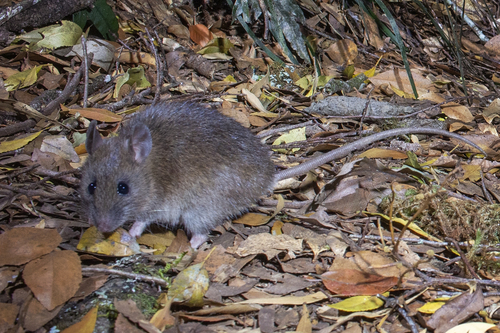
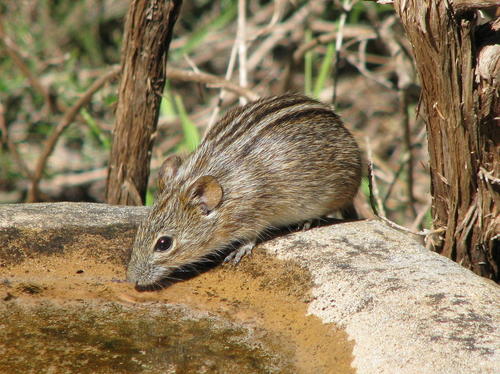
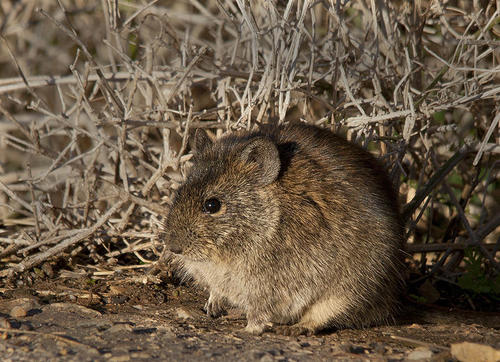
The bush vlei rat, also known as the Karoo bush rat (Myotomys unisulcatus, formerly classified as Otomys unisulcatus), is a rodent species in the family Muridae.
General Distribution and Habitat
It is found in Namibia and South Africa, and its natural habitat is temperate shrubland.
Climate Adaptation Strategy
This species uses behavioral adaptations to survive the dry arid climate.
Physical Appearance
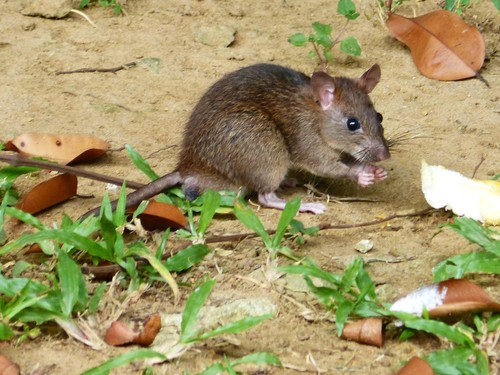
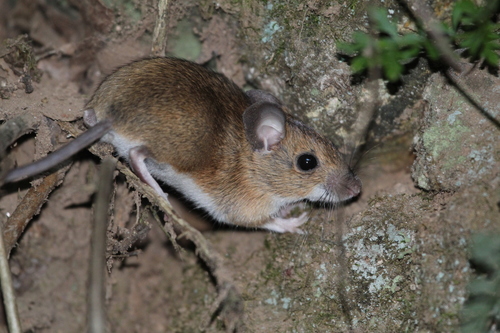
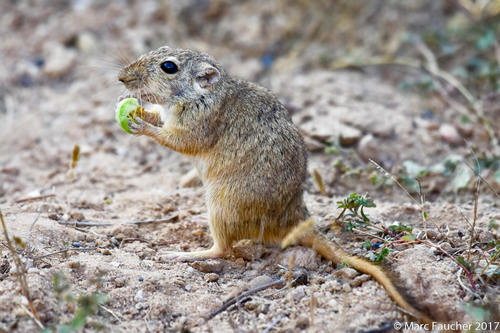
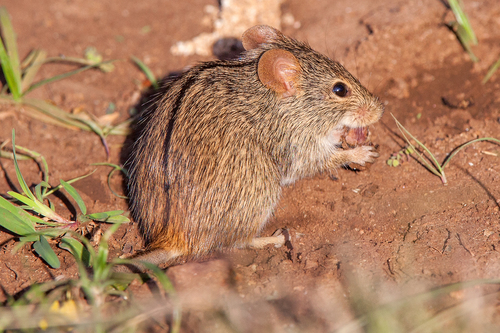
It is a medium-sized rodent with dark fur on its upper body and lighter fur on its underside. It has light-colored feet, a dark tail, and may have light-colored fur around its eyes and on the back of its ears.
Habitat Climate Conditions
Karoo bush rats live in the semi-deserts of South Africa, where temperatures experience extreme fluctuations, dropping below 0 °C (32 °F) in winter and rising above 40 °C (104 °F) in summer.
Refuge Construction
Unlike most rodents, Karoo bush rats build surface-level refuges called stick lodges from interwoven sticks, which are located within desert shrubs. Only one lodge is built per shrub, and these structures can grow to over 1 m (3.3 ft) in height.
Lodge Functions
Stick lodges provide protection from extreme climates and predators, and also act as a physiological refuge.
Internal Lodge Temperature Regulation
Temperature variation inside the lodges is far smaller than in the surrounding environment: in winter, temperatures inside are about 4 °C (39 °F) warmer than outside, while in summer they are around 14 °C (57 °F) cooler than outside.
Lodge Construction Material
In Postberg Nature Reserve in coastal Western Cape Province, these rats build their lodges using plant stems from the native shrub Exomis.
Reproduction Correlates
For this Muridae species, reproduction is strongly correlated with abundant resources and occupation of a stick lodge.
Postnatal Development Traits
Myotomys unisulcatus has rapid postnatal development, and produces small litters of semi-precocial young. The average litter size ranges from two to three.
Weaning and Reproductive Maturity
Weaning starts at eight days of age, and males reach reproductive maturity at six weeks old, while females reach reproductive maturity at five weeks old.