About Myotis evotis (H.Allen, 1864)
Common Name and Classification
Myotis evotis, commonly called the long-eared myotis, is a bat species.
Coloration
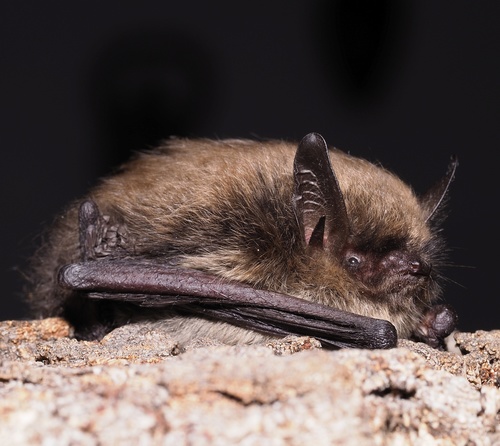
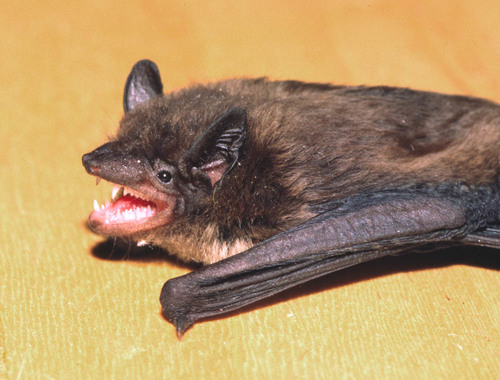
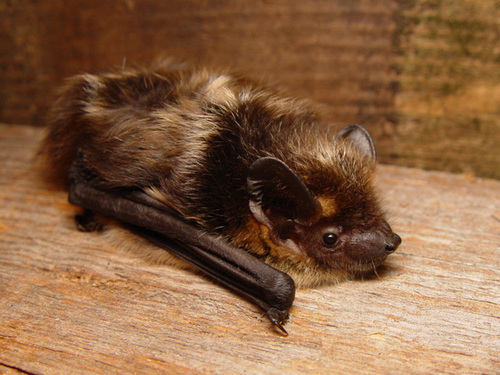
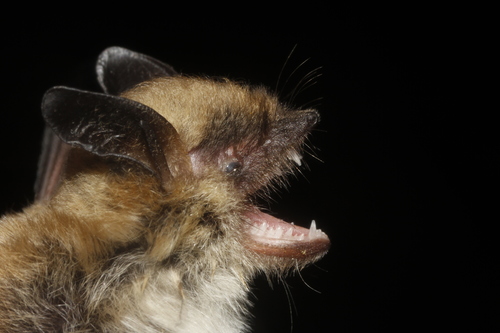
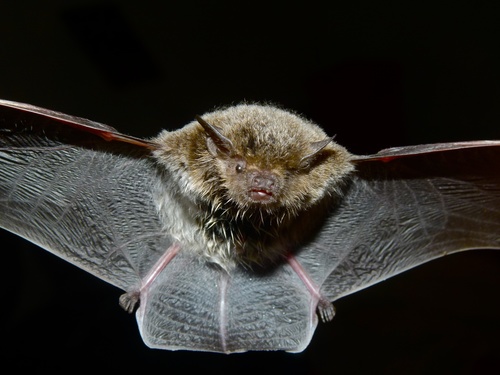
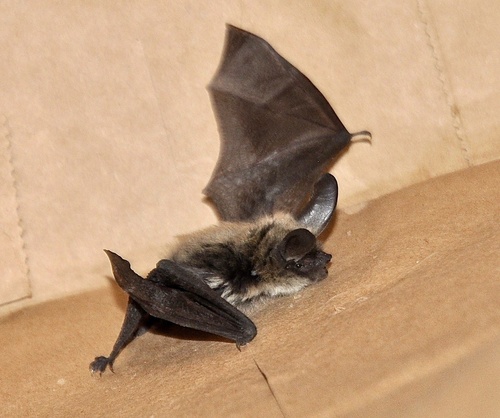
This bat is typically pale brown or straw-colored, with black ears, black wing membranes, and a black face.
Subspecies
Specimens found along the coast are generally darker in color, and are classified as the subspecies Myotis evotis pacificus.
Habitat Types
The long-eared myotis occupies a range that includes multiple different environments, and has been recorded in semiarid shrublands, shortgrass prairie, and subalpine forests.
Elevation Range
Its habitats occur across elevations from sea level up to 2,830 meters (9,280 ft).
Roosting Location Types
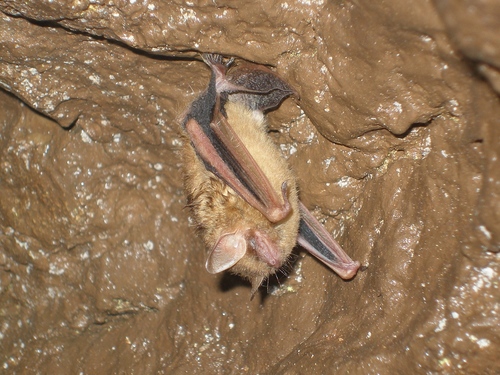
This species roosts in a variety of locations, including tree cavities, rock crevices, caves, and even abandoned buildings.
Roost Preference
It appears to prefer roosting in rock crevices, while individuals in the northern part of its range favor roosting in ponderosa and lodgepole pines.
Reproducing Female Roosts
Reproducing females generally roost in small crevices that measure just 2 centimeters (0.79 in) wide.
Crevice Characteristics
Most crevices used by the long-eared myotis are vertically oriented, and have an overhang covering the opening.
Roost Switching Behavior
Occasionally, the entire colony of long-eared myotis will switch roosting sites together.
Roost Site Attributes
Roosting sites used by this species typically have extensive rock cover, are located far from bodies of water, and have very little additional cover from trees and grass.