About Myotis ciliolabrum (Merriam, 1886)
Common Name & Basic Classification
Myotis ciliolabrum, commonly known as the western small-footed bat, is a relatively small bat species.
Adult Body Size
Adults have a total length of 8 to 10 cm (3.1 to 3.9 in), a wingspan of approximately 24 cm (9.4 in), and weigh only 4 to 5 g (0.14 to 0.18 oz).
Sexual Dimorphism
Females of this species are larger than males.
Fur Coloration
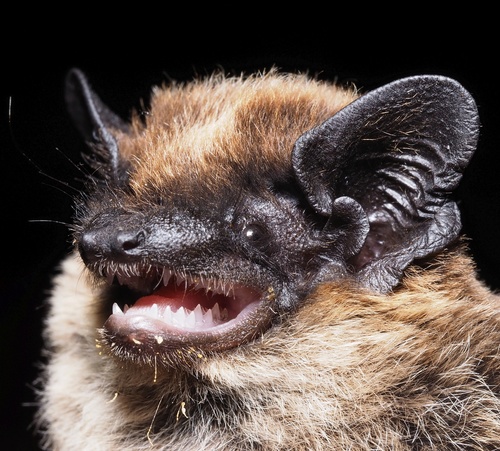
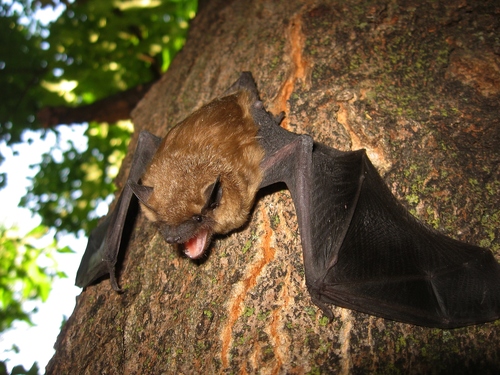
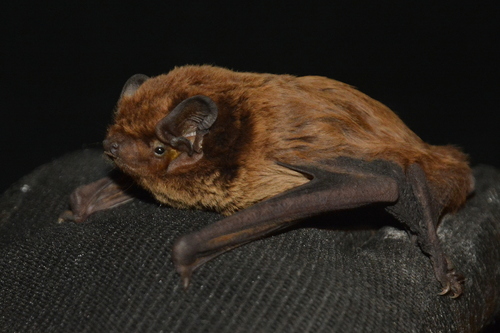
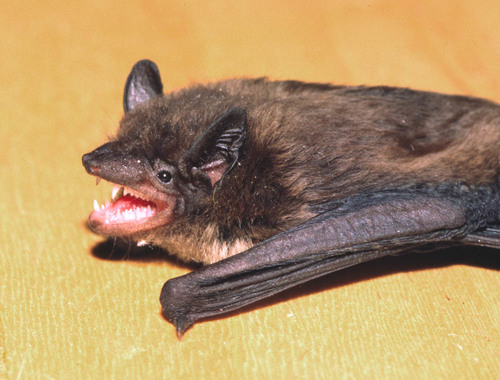
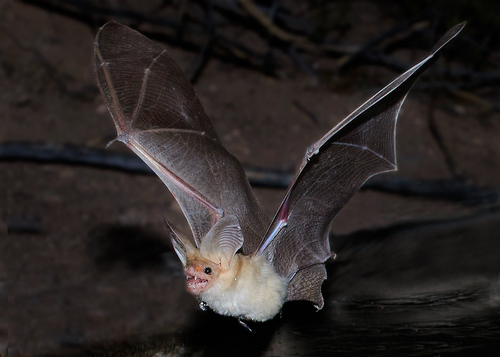
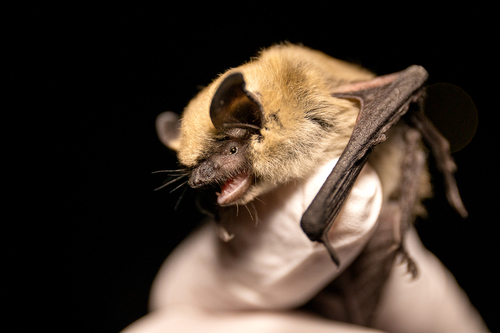
Their fur is yellowish-brown, with paler underparts that are sometimes white.
Facial & Ear Features
The muzzle, chin, and 11 to 16 mm (0.43 to 0.63 in) long ears are all black.
Tail Morphology
Their tail measures 3 to 5 cm (1.2 to 2.0 in) in length, and is almost entirely enclosed within the uropatagium, with only the tail tip extending beyond it.
Foot Characteristics
As its common name suggests, this species has unusually small feet, which are roughly half the length of the tibia.
Wing Parameters
This bat has a wing aspect ratio of 6.1 and a wing loading of 6.7 N/m2, both of which are relatively low values for bats.
Similar Species Comparison
Western small-footed bats are very similar in appearance to the closely related California myotis, and the two species share some overlapping range.
Distinguishing Feature
They can be distinguished because California myotis lack the black "face mask" found on western small-footed bats.
General Distribution
This species is found across most of the western half of North America.
Full Range Extent
Its range extends from southern British Columbia and Saskatchewan in the north, south to Baja California, Zacatecas, and Nuevo León.
Habitat Preferences
Within this range, western small-footed bats are most common in arid and semiarid habitats including deserts and badlands, but they may also be found in pine or juniper forests, particularly at higher elevations.
Elevation Range
They occur at elevations ranging from 300 to 3,300 m (980 to 10,830 ft).
Subspecies Classification
Two subspecies of Myotis ciliolabrum are currently recognized: M. c. ciliolabrum is found in the western and southern parts of the species' range, from British Columbia to Mexico, while M. c. melanorhinus is found in the northeastern parts of the range, from Alberta to Kansas.