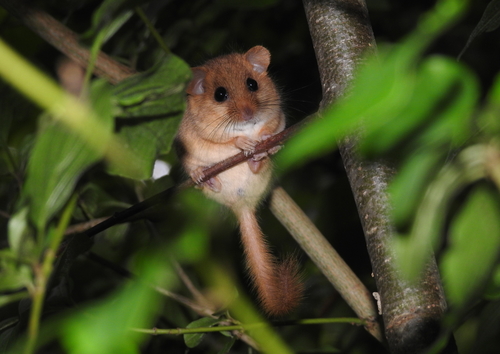
About Muscardinus avellanarius (Linnaeus, 1758)
Size Measurements
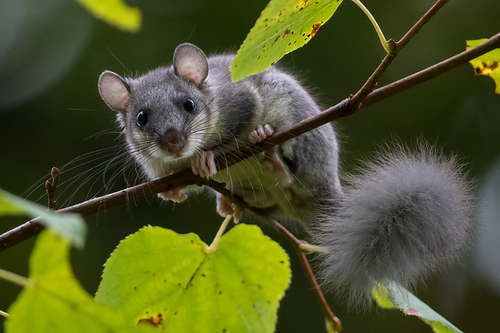
The hazel dormouse, Muscardinus avellanarius, has a head-and-body length of 6 to 9 cm (2.4 to 3.5 in), with a 5.7 to 7.5 cm (2.2 to 3.0 in) long tail. Total body length including the tail reaches about 16 centimetres (6.3 in), while body length alone is around 10 centimetres (3.9 in).
Weight
It normally weighs 17 to 20 g (0.60 to 0.71 oz), but its weight increases to 30 to 40 grams (1.1 to 1.4 oz) just before hibernation.
Coloration
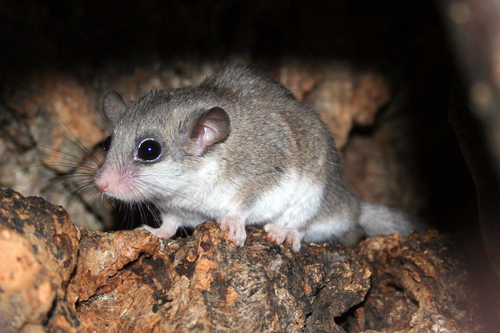
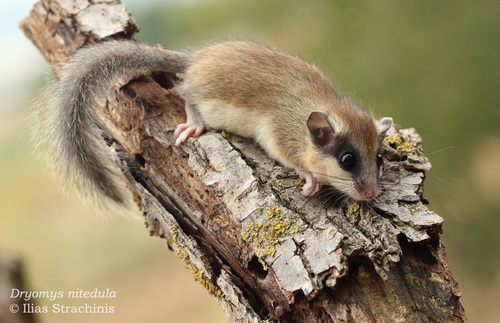
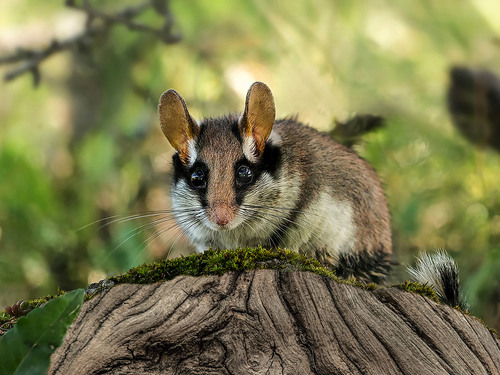
This small mammal has fur that ranges from reddish brown to golden-brown or yellow-orange-brown, and the fur on its underparts is lighter.
Physical Features
It has large black eyes and small, underdeveloped ears, and its long tail is fully covered in hair.
Activity Pattern
The hazel dormouse is nocturnal, and spends most of its active hours foraging among tree branches.
Foraging Behavior
It prefers to make long detours rather than descend to the ground, to avoid exposing itself to danger.
Hibernation Period
It hibernates from October to April or May.
Native Range
The hazel dormouse is native to northern Europe and Asia Minor.
British Isles Distribution
It is the only dormouse species native to the British Isles, so it is often called simply "dormouse" in British sources, even though the edible dormouse, Glis glis, has been accidentally introduced and now has an established population in South East England.
Ireland Population
Ireland has no native dormouse, but the hazel dormouse was discovered in County Kildare in 2010, and it appears to be spreading rapidly across Ireland, aided by the widespread hedgerows in the Irish countryside.
UK Distribution Resources
Information on the distribution of the hazel dormouse across the United Kingdom is available on the National Biodiversity Network's website.
Conservation Threats
Woodland habitat loss and mismanagement, combined with the effects of climate change, are considered major threats to the future survival of the hazel dormouse.
Population Decline
Its total population is estimated to have declined by 72% between 1993 and 2014.
Habitat Types
According to English Nature's Dormouse Conservation Handbook, hazel dormice are particularly associated with deciduous woodland, but they also live in hedgerows and scrub.
Preferred Vegetation
Higher numbers of hazel dormice are found at sites with more honeysuckle, yew, and birch.
Nest Travel Range
Dormice rarely travel more than 70 m (230 ft) from their nest.