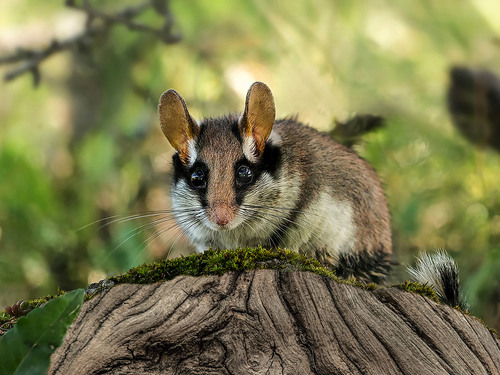
About Eliomys quercinus (Linnaeus, 1766)
Nomenclature
This is a description of the garden dormouse, with the scientific name Eliomys quercinus (Linnaeus, 1766).
Pelage and Markings
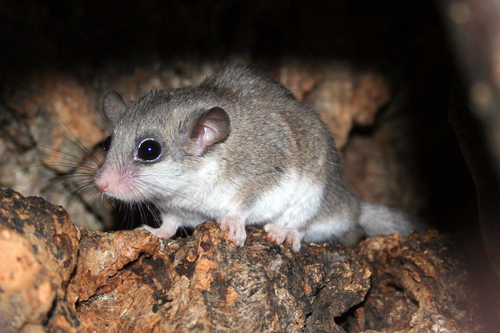
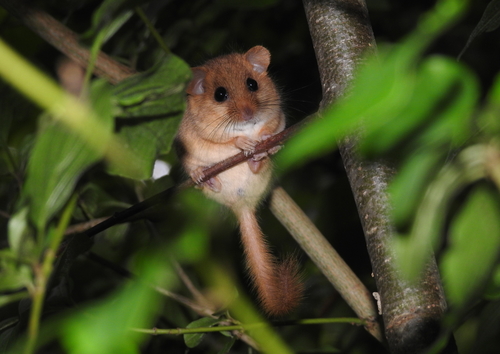
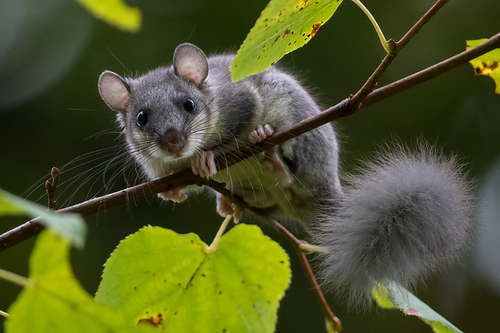
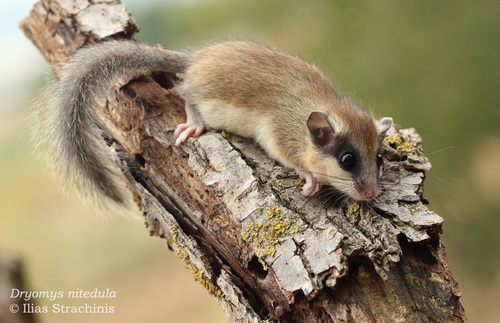
Its physical characteristics are as follows: it has gray or brown fur on the top of the body and whitish fur on the underside. It has black markings around its eyes, large ears, and short overall hair. Its tail has a white tassel at the tip.
Body Size
The typical head-to-body length is 10 to 15 cm (3.9 to 5.9 in), with a tail length between 8 and 14.5 cm (3.1 to 5.7 in).
Weight
Adult weight ranges from 60 to 140 g (2.1 to 4.9 oz).
Primary Habitat
Despite its common name, the garden dormouse's primary habitat is forest, though it also occurs in fruit-growing regions.
General Range
It is especially common in southern Europe, and its range extends into northern Europe. It is frequently found in the Alps, the Bavarian Forest, and the Ore Mountains.
Regional Population Status
The species occurs in northern Germany, but the local population appears unable to reproduce at large scale. In the Netherlands, it is almost extirpated.
Netherlands Population Survey
In 2007, researchers found only nine individuals in two woods in the province of Limburg, where the species was once common.
Decline Causes
Researchers suggested this decline is caused by increasingly monotonous landscapes and climate change, which interrupts the species' hibernation.
2022 Sighting Event
In 2022, the first recorded garden dormouse sightings in more than 100 years were made in Büsserach, using camera traps and Spurentunnel, a tunnel-shaped device that forces animals to step into an ink container to leave footprints for identification.
Activity Pattern
In terms of behaviour and ecology, the garden dormouse is mostly nocturnal. It sleeps in tree nests during the day, and sometimes multiple individuals share a single nest.
Diet Overview
It is omnivorous, and its diet changes seasonally to include both small animal prey and plant matter.
Animal Prey Types
Its small animal prey are typically arthropods such as insects and millipedes, as well as gastropods like snails and slugs.
Plant Food Types
Its plant food is usually fruit and seeds.
Seasonal Diet Variation
Analysis of garden dormouse scat collected in Belgium showed the diet consists mostly of leaves and flowers in spring, berries and fruit in summer, and beetles, snails and millipedes throughout the species' active season.
Carnivorous Tendencies
The garden dormouse is among the most carnivorous of all dormice. It has been recorded eating adult birds, reptiles, amphibians, and small mammals, and much of this food is likely scavenged. Cannibalism has also been reported.
Mating Season
The garden dormouse's mating season runs from April to June. During this period, females signal that they are ready to mate by squeaking loudly.
Reproduction
After a 23-day gestation period, young are typically born in litters of three to seven. Newborns are blind and naked.
Juvenile Development
They open their eyes at around 18 days old, and nurse until they reach one month of age. They become independent at two months old, but do not reach sexual maturity until the following year.
Life Expectancy
Their typical life expectancy is about five years.
Parasite Host Role
In Sicily, the garden dormouse acts as a host for Moniliformis siciliensis, an Acanthocephalan intestinal parasite.