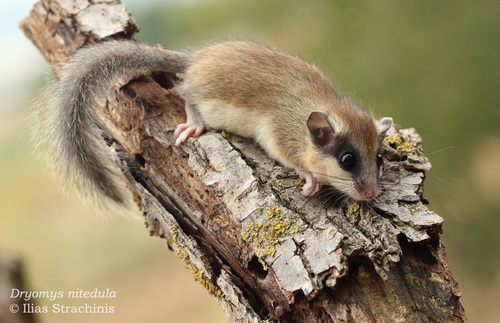
About Dryomys nitedula (Pallas, 1778)
General Morphology
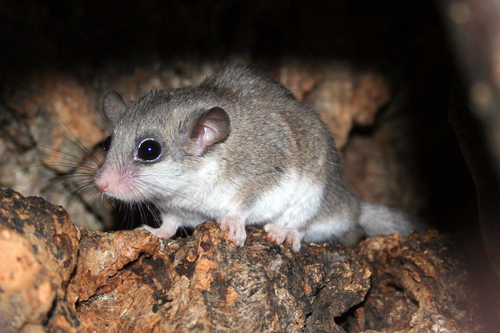
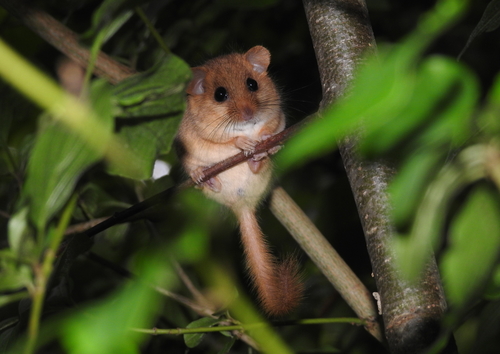
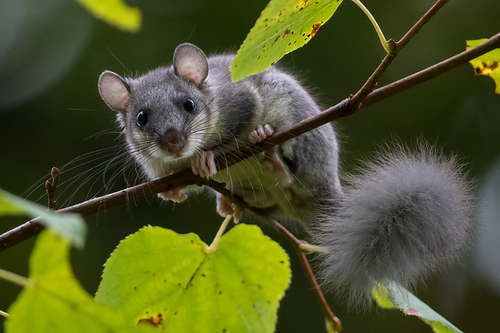
Morphologically, Dryomys nitedula (the forest dormouse) has a squirrel-like appearance.
Body and Tail Length
On average, it reaches 110 mm in total length, with a fluffy grey tail nearly as long as its body. Head-and-body length ranges from 80 mm to 130 mm, while tail length ranges from 60 mm to 113 mm, and body mass falls between 18 grams and 34 grams.
Fur Coloration
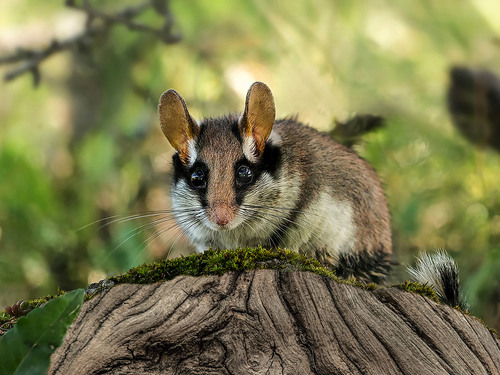
Its upper body fur is grayish-brown, and its underparts are yellowish-white.
Facial Features
A black stripe surrounds each eye and extends to the small ear, and its whiskers form a bushy tuft about 10 mm long.
Physiological Traits
Each paw has six pads, and this species has bilateral symmetry and is endothermic.
Main Geographic Range
The forest dormouse’s range extends from Switzerland in the west, through central, eastern and southern Europe and the Balkan Peninsula, north to the Baltic Sea, and east to the Volga River and Ural Mountains in Russia.
Isolated Populations
Isolated populations exist outside this main range, in Israel, central Iran, Afghanistan, the Tien Shan mountains, and Sinkiang (Xinjiang) in China.
Habitat Types
It occupies a wide variety of habitats, including broad-leaved, mixed and coniferous woodlands, rocky areas, dwarf montane woodland, evergreen shrubland, and wood-steppe.
Altitudinal Range
It has been recorded at altitudes up to 3,500 m, and is most commonly found in dense forests.
Nest Placement
Forest dormice build their natal nests on lower tree branches or within thick shrubbery, 1 to 7 meters above ground level.
Nest Structure
These nests are spherical, with a diameter between 150 mm and 250 mm, and typically have a single entrance that faces the tree trunk.
Nest Construction Materials
The outside of the nest is constructed from leaves and twigs, and the interior is lined with pieces of bark and moss.
Nest Building Purpose
Forest dormice pay close attention to detail when building these nests to ensure their young are protected.
Spring Diet
In spring, after emerging from hibernation, the forest dormouse feeds on small invertebrates, baby birds, buds, shoots, and the green parts of plants.
Late Year Diet
Later in the year, it feeds primarily on fruits, nuts, and seeds, and has been recorded eating fruits from around twenty different tree and bush species including apricots, apples, cherries, plums, cherry plums, pears, peaches, and blackberries.
Population Stability
Population numbers do not fluctuate much, as the number of young born each year only roughly replaces individuals that die during hibernation.
Winter Mortality
Sixty percent of young individuals and most elderly adults over four years old do not survive winter.
Juvenile Mortality Causes
Storms are another source of mortality for juveniles in unprotected nests.
Predator Species
Predators of the forest dormouse include pine martens, stone martens, wildcats, owls, and crows, with tawny owls (Strix aluco) and Eurasian eagle-owls (Bubo bubo) being two of its main predators.
Anti-Predator Behavior
Because forest dormice almost never travel far from dense brushy cover, they are hard for predators to locate.
Defensive Temperament
This species is very defensive and is not tame even in captivity. While they may occasionally allow humans to pet them, they will bite with sharp teeth if attempts are made to hold them.
Disturbance Response
If they are disturbed while resting, they may wake suddenly, leap high, spit, and hiss.
Negative Human Impacts
For humans, forest dormice can have negative impacts: they raid fruit orchards and chew on the bark of coniferous trees, and they are known to be vectors for diseases including tick-borne encephalitis, leptospirosis, and possibly the Black Death.
Positive Human Impacts
They can also have positive impacts by controlling arthropod populations and scattering seeds.