About Mucuna sloanei Fawc. & Rendle
Species Classification and Native Range
Mucuna sloanei, commonly known as Sloane's velvet bean, is a tropical legume from the Fabaceae family. Native to West Africa, it can be found in countries like Nigeria, Ghana, and Sierra Leone.
Growth and Stem Features
The plant can grow up to 15 meters in length, featuring a woody stem and twining branches.
Leaf Morphology
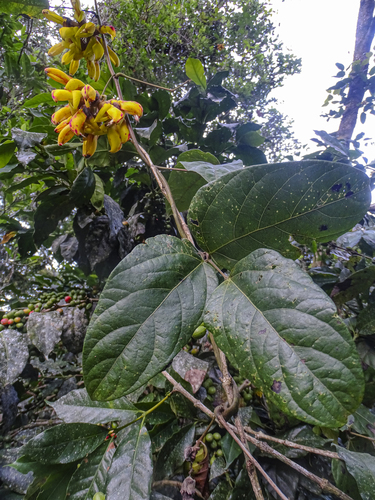
The leaves of Mucuna sloanei are trifoliate, with ovate leaflets measuring approximately 10-15 cm in length.
Flower Characteristics
Its flowers are either purple or pinkish-white and form on long spikes that can reach up to 30 cm.
Pod and Seed Features
The plant produces pods containing several seeds, which are covered with soft, velvet-like hairs.
General Use Categories
Mucuna sloanei serves various purposes, including as a food source, medicinal plant, and agricultural aid.
Food Applications
In West Africa, its seeds are consumed either boiled or roasted.
Medicinal Uses
Medicinally, Mucuna sloanei is used to treat conditions such as snake bites and skin infections.
Agricultural Role
In agriculture, Mucuna sloanei is valuable in intercropping systems as a cover crop.
Soil Improvement Benefits
It has the ability to fix nitrogen from the air into the soil, thereby improving soil fertility and reducing erosion on farmlands.
Ecological and Cultural Significance
Overall, Mucuna sloanei is a significant tropical legume due to its diverse uses, making it an essential component of many communities across West Africa where it grows natively.