About Astragalus alpinus L.
Species Classification and Root System
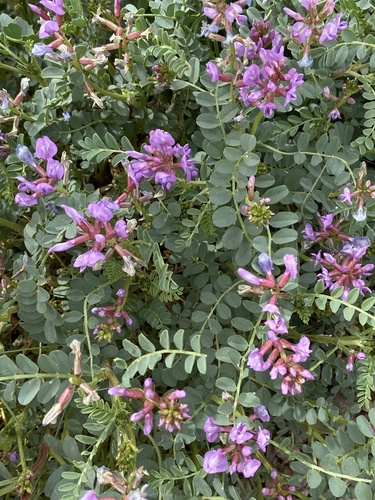
Astragalus alpinus L. is a variable perennial herb that grows from a taproot and rhizome network, topped by an underground caudex. Its roots host nitrogen-fixing nodules.
Stem Characteristics
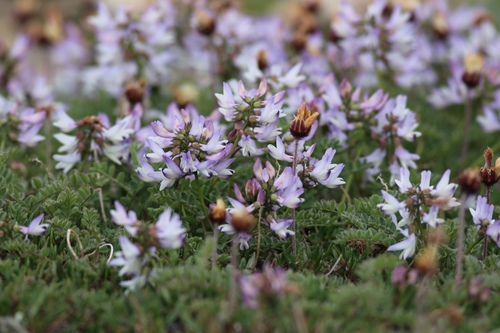
Aboveground stems reach up to 30 centimetres (12 in) long, and are mostly decumbent, growing to form a mat.
Leaf Structure
Its leaves grow up to 15 centimetres long, and are divided into several pairs of leaflets that each reach up to 2 centimetres (5⁄6 in) long.
Inflorescence and Flower Features
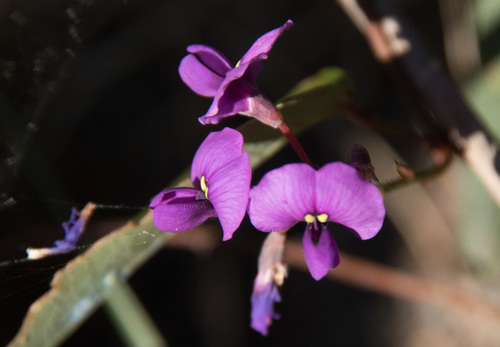
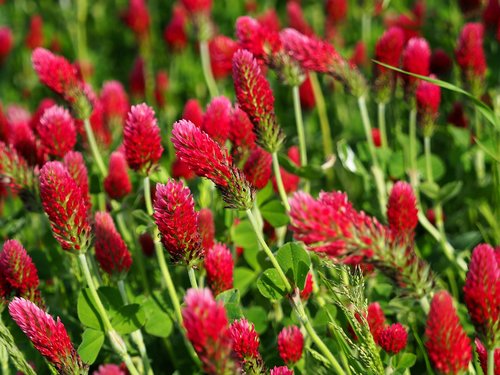
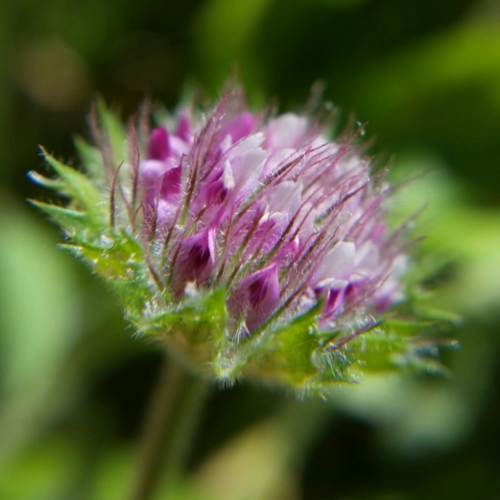
The inflorescence is a raceme that holds up to 30 flowers, each around 1 centimetre (1⁄3 in) long, and colored purple or blue.
Fruit Characteristics
The fruit is a legume pod up to 1.7 centimetres (2⁄3 in) long that contains seeds.
Eurasian Distribution
This species is widespread across Eurasia.
North American Distribution
In North America, it ranges from Alaska to Newfoundland, and extends south as far as Nevada and New Mexico.
Moist Habitat Preferences
It grows in subalpine and alpine climates, most often in moist habitats including woodlands and meadows surrounding streams and lakes.
Cold Exposed Habitat Preferences
It also grows on tundra and other cold, dry, exposed sites, including gravel bars and scree.
Pioneer Species Role
It sometimes acts as a pioneer species, colonizing land during the primary stage of ecological succession, such as roads and bare ground turned over by frost heave.
Post-disturbance Growth
It has been observed regrowing early in recently burned areas in Grand Teton National Park, and can also grow in already vegetated areas.
Phenotypic Plasticity
Individual plants growing in harsh conditions are smaller than individuals growing in more favorable sites.
Faunal Interactions
This species provides food for caribou, Arctic hares, greater snow geese, small blue butterflies, and grizzly bears.
Intraspecific Taxonomy
The species may be split into two varieties: var. alpinus, which occurs in the Arctic, and var. brunetianus, which occurs at lower latitudes in northeastern North America.