About Melittis melissophyllum L.
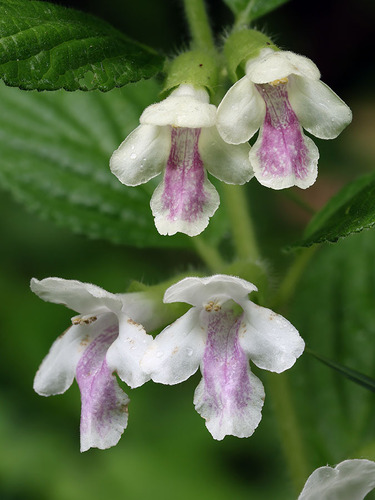
Melittis melissophyllum, commonly called bastard balm, grows to an average height of 30 to 50 centimeters (12 to 20 inches), with a minimum height of 20 centimeters (7.9 inches) and a maximum height of 60 centimeters (24 inches). It is a strongly aromatic perennial plant with short rhizome roots and erect hairy stems. This species is quite variable in leaf shape and corolla color. Its leaves are 5 to 9 centimeters (2.0 to 3.5 inches) long; they are oval, bluntly toothed, quite hairy, borne on short petioles, and arranged in opposite pairs along the stems. The inflorescence is made up of two to six (or more) large, stalked hermaphrodite flowers that grow from the leaf axils. The flowers are bilabiate (labiate), arranged in pairs, and one-sided, meaning all flowers face the same direction. They are usually white or pale pink with a large pinkish purple blotch on the lower lip. They are mainly pollinated by bees and moths, and their flowering period runs from May through August. This species is native to central and southern Europe, ranging from Ireland, Britain, and Portugal eastward to Turkey, Ukraine, and the Baltic States. It grows in shady deciduous woods, often in association with oak, beech, and chestnut trees. It can also be found growing among pines and junipers. It is common at altitudes between 0 and 1,400 meters (0 to 4,593 feet) above sea level. In cultivation, bastard balm grows well as an edging plant in sunny woodland areas or scrubby borders. It is attractive to insects, and cultivated varieties include 'Royal Velvet Distinction'.