About Melanophryniscus montevidensis (Philippi, 1902)
Taxonomy
Melanophryniscus montevidensis, commonly known as Darwin's toad, is a species of toad in the family Bufonidae, belonging to the genus Melanophryniscus.
Distribution
It is found in Brazil and Uruguay.
Genus Distinguishing Traits
Like other amphibians in its genus, it is set apart by its bright coloration, defensive behavior, and rapid metamorphosis.
Skin Compounds
Its skin contains a wide range of chemical compounds that may be suitable for biomedical applications.
Dorsal and Lateral Coloration
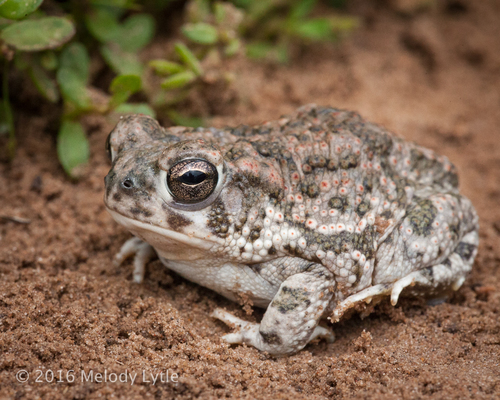
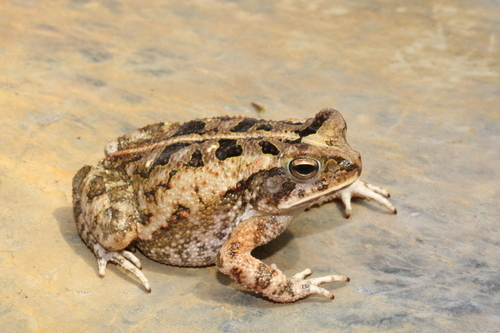
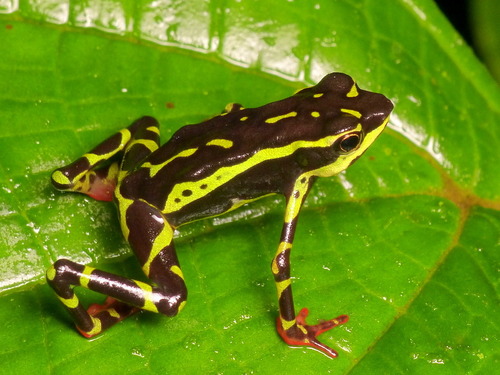
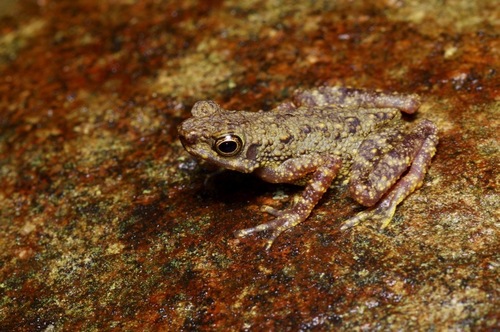
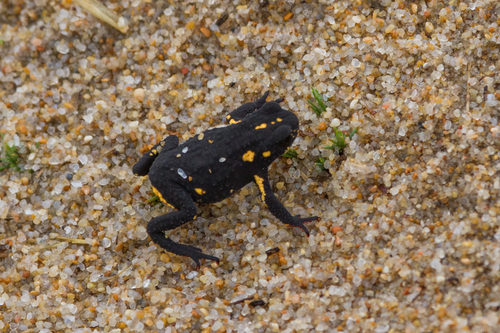
Darwin's toad is jet black, with yellow patches on its back, sides, forelimbs, and ventral surface.
Ventral and Limb Extremity Coloration
It has a red spot on the ventral side of the thigh and part of the abdomen; the palms of its hands and soles of its feet are also red.
General Habitat Types
Darwin's toad's natural habitats are temperate shrubland, intermittent freshwater marshes, and sandy shores.
Coastal Distribution Range
This species occurs along the coast of the Río de la Plata and the Atlantic Ocean, ranging from Santiago Vázquez in Montevideo to Praia da Alvorada in Rio Grande do Sul.
Preferred Microhabitat
It is most often found in coastal sandbanks with psammophilous vegetation, where it prefers open, vegetated areas, and is occasionally found in flooded grasslands.
Sheltering Behavior
It takes shelter in burrows it digs in the sand among vegetation.
Activity Pattern
Darwin's toad is typically diurnal.
Diet
It feeds mainly on ants, but will also consume small beetles, springtails, and aphids.
Reproductive Period
Its reproductive period is short, and usually takes place after heavy rains from late spring to early autumn.
Male Mating Territoriality
During the mating season, males defend territories.
Male Mating Behavior
Their vocal repertoire changes, and males engage in short fights with one another.
Winter Activity
They can also be found active in winter after heavy rains, when the air temperature is above 15 °C (59 °F).
Defensive Posture
When handled by humans, individual toads usually stay motionless with their belly turned upward, displaying their red and yellow coloration.
Unken Reflex
This defensive behavior is known as the Unken reflex.