About Megophrys nasuta (Schlegel, 1858)
Body Size
Megophrys nasuta is a large frog species that reaches 100–120 mm in body length.
Dorsal Coloration
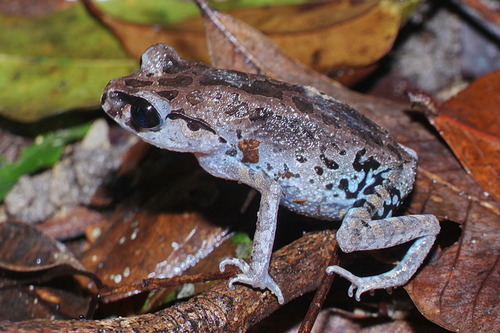
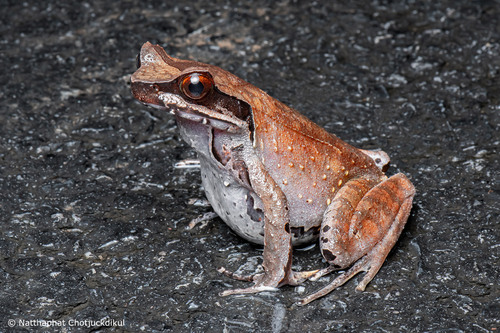
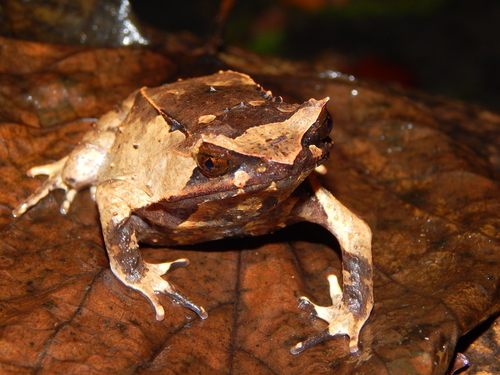
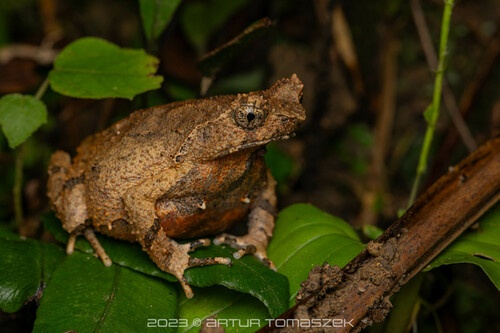
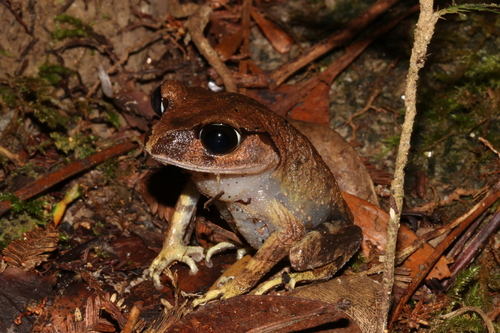
Its dorsal surface ranges from light to dark brown with variable patterns, which allows it to camouflage extremely well against the forest floor.
Ventral Coloration
Its throat is black to dark brown, and this color diffuses into cream-yellow across the half of the ventral surface closer to the abdomen.
Head Projections
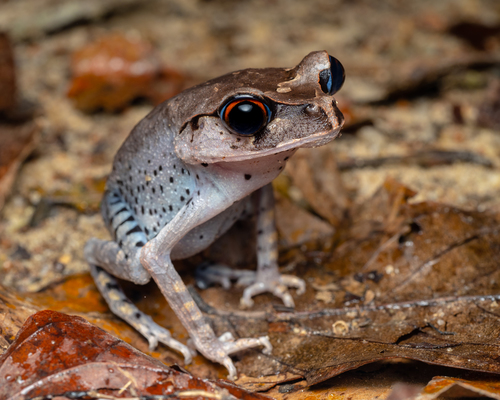
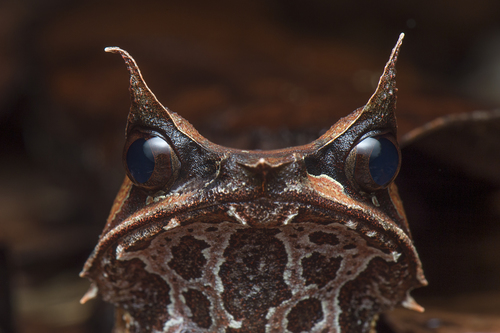
The upper eyelids and snout are extended into long triangular projections that look like "horns", which gives the species its common name.
Dorsolateral Folds
Two pairs of dorsolateral skin folds run down the frog's back: the first pair starts behind the eye and ends near the groin, while the second pair starts at the corner of the eye and ends roughly halfway between the armpit and groin.
Dorsal Tubercles
Randomly scattered, enlarged tubercles cover the dorsum.
Limb Coloration
The arms and legs have barred skin folds, and are mottled with cream and different shades of brown.
Webbing Structure
The toes are slightly webbed, while the fingers have no webbing.
Head Sensory Features
The tympanum is indistinct, and the iris is golden brown.
Habitat
This species inhabits permanently damp, cool lowland and submontane rainforests, where it stays among leaf litter.
Vocalization
Its call is a loud, resonating, metallic "honk" or "henk".
Breeding Site
Breeding occurs in streams: female frogs attach their eggs to the underside of partially or fully submerged rocks or logs.
Egg Characteristics
The egg capsules are large, and females produce only a small number of eggs.
Feeding Behavior
Megophrys nasuta typically remains still on the forest floor to wait for unsuspecting prey to pass, then lashes out to engulf its prey.
Diet Composition
Its known diet includes spiders, small rodents, lizards, and other frogs.