About Malacochersus tornieri (Siebenrock, 1903)
Shell Structure and Size
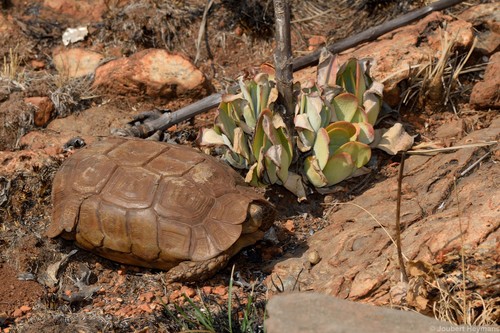
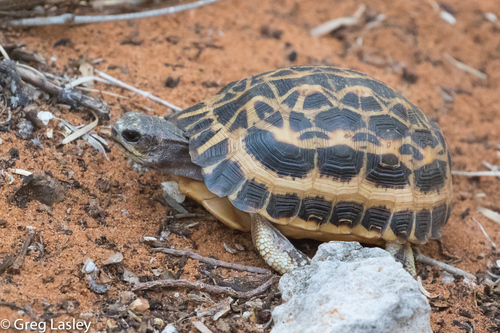
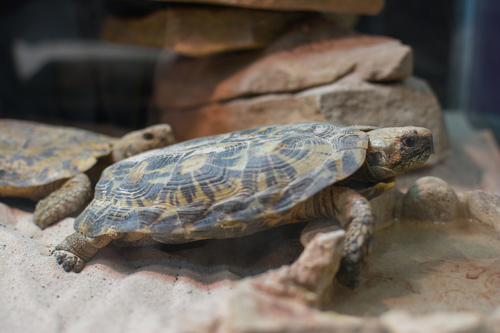
The pancake tortoise (Malacochersus tornieri) has an unusually thin, flat, flexible shell that reaches up to 17.8 centimetres (7.0 inches) in length. Unlike most other tortoises, which have solid shell bones, this species has shell bones with many openings, making it lighter and more agile than other tortoises. It has a highly ossified lump on the rear of its shell, which has a different bone structure from the rest of the shell.
Carapace Coloration
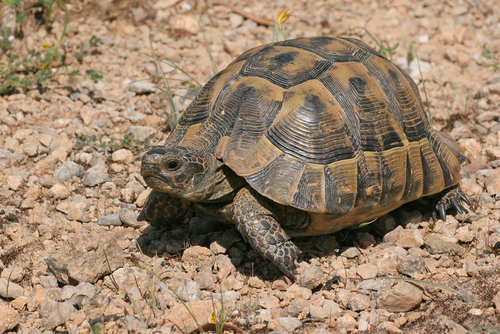
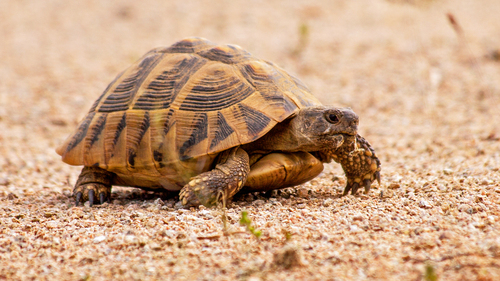
The brown upper shell (carapace) often has a variable pattern of radiating dark lines on each shell plate (scute), which helps camouflage the tortoise in its natural dry habitat.
Plastron and Soft Tissue Coloration
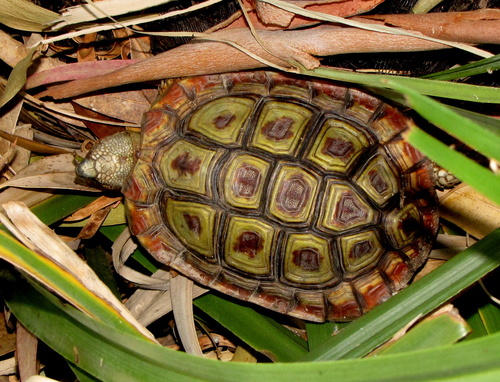
The lower shell (plastron) is pale yellow with dark brown seams and light yellow rays, while the head, limbs and tail are yellow-brown.
Collection Pressure
The species' distinctive flattened, pancake-like shape makes it a popular animal in zoological and private collections, which has led to over-exploitation of wild populations.
Native Distribution
Malacochersus tornieri is an East African species native to southern Kenya, and northern and eastern Tanzania. An introduced population may exist in Zimbabwe, and the species has also been reported in Zambia.
Core Habitat and Elevation Range
It lives on rocky outcrop hillsides called kopjes in arid thorn scrub and savanna, at elevations from 30 to 1800 metres (100 to 6,000 feet) above sea level.
Regional Habitat Types
It inhabits the arid semi-desert Somalia-Masai floristic region, which features Acacia-Commiphora bushland and Brachystegia woodland in upland areas, and also occurs in low-altitude dry savannah on small rocky hills of the crystalline basement.
Colony Structure
Pancake tortoises live in isolated colonies; many individuals share the same kopje, and may even share the same crevice.
Mating Behavior
During the January and February mating season, males fight for access to females, and larger males typically secure more mating opportunities.
Nesting Period
In the wild, nesting usually takes place in July and August, though captive individuals produce clutches year-round.
Nest Construction
Females dig a nest cavity 7.5 to 10 cm deep in loose, sandy soil.
Egg Laying Pattern
Usually only one egg is laid at a time, but a female can lay multiple eggs over a single breeding season, with eggs laid every four to eight weeks.
Captive Incubation and Hatchlings
In captivity, egg incubation lasts from four to six months, and hatchlings are independent immediately after emerging.
Basking Behavior
Both wild and captive pancake tortoises often bask.
Dormancy
While the species does not appear to hibernate, there are reports that it may aestivate beneath flat rocks during the hottest months.
Activity Pattern
Most activity takes place in the morning, or in late afternoon and early evening.
Diet
Its diet consists primarily of dry grasses and vegetation.
Climbing Ability and Home Range
The pancake tortoise is a fast and agile climber, and it rarely travels far from its rocky home so it can dash to the nearest rock crevice if disturbed.
Predator Escape Strategy
Because its shell structure leaves it easily injured by predators, it relies on speed and flexibility rather than withdrawing into its shell to escape danger. Its flexible shell lets it crawl into narrow rock crevices to avoid predators, allowing it to use a habitat no other tortoise can occupy.
Crevice Wedging Hypotheses
There are two hypotheses about how the pancake tortoise wedges itself into rock crevices: first, it uses its hind legs to press its ossified rear lump against the crevice ceiling, or second, it inflates the unossified portion of its plastron with air.