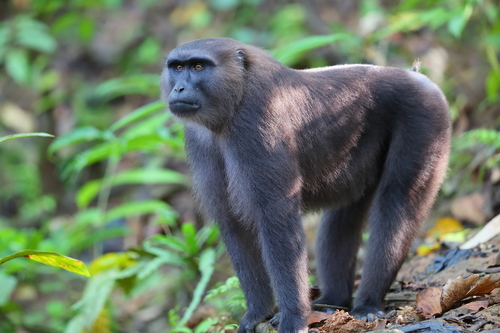
About Macaca maura (Schinz, 1825)
Species Classification
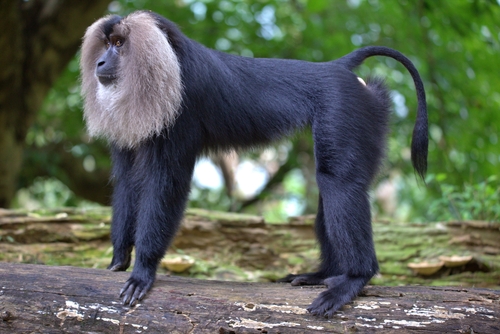
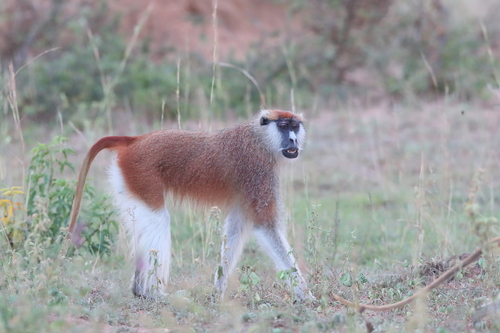
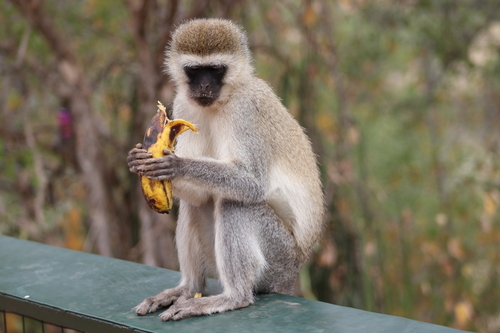
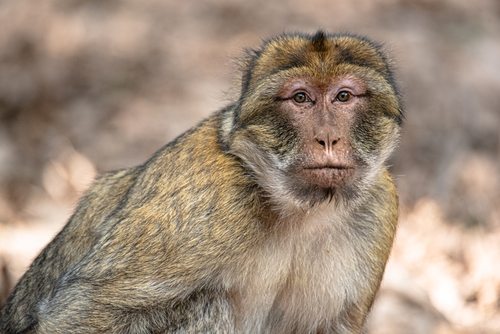
The Moor macaque (Macaca maura) is a macaque monkey with brown to black body fur, a pale rump patch, and pink bare skin on the rump.
Physical Characteristics
It has oval-shaped ischial callosities, and reaches 50–58.5 cm in body length.
Habitat and Diet
It inhabits tropical rainforests, where it feeds on figs, bamboo seeds, buds, sprouts, invertebrates, and cereals.
Common Name Origin
It is sometimes called "dog-ape" because of its dog-like muzzle, though it is no more closely related to apes than any other Old World monkey.
Endemic Range
It is endemic to the Indonesian island of Sulawesi, an important global biodiversity hotspot.
Primary Threats
The Moor macaque is primarily threatened by habitat loss, driven by an expanding human population and deforestation to create more agricultural land.
Historical Population Trend
Its total population is estimated to have decreased from 56,000 in 1983 to fewer than 10,000 in 1994.
1992 Population Density Survey
An extensive 1992 survey by Supriatna et al. recorded population densities between 6.3 and 63.2 individuals per square kilometer.
Social Group Structure
Moor macaques typically live in groups of 15 to 40 individuals, with female philopatry and male dispersal.
Activity Pattern
They are diurnal and semi-terrestrial: they spend much of their time foraging in trees, and travel on the ground.
Feeding Time Allocation
Behavioural data collected from two groups of Moor macaques in Bantimurung Bulusaraung National Park, South Sulawesi, shows that this species spends most of its time feeding in areas with abundant food resources.
Group Size Effect on Behavior
The data also shows that as Moor macaque group size increases, individuals spend more time foraging and less time being alert.
Conservation Classification
The species is classified as highly endangered, due to severe anthropogenic impacts including agricultural development and tourism, both of which cause habitat loss.
Ecological Seed Dispersal Role
Like many other frugivorous primates, Moor macaques provide an important ecological service: they help support high densities of tree seedlings and saplings, and facilitate gene flow among plant populations.
Forest Regeneration Contribution
This contribution is critical for sustaining forest regeneration and restoring vegetation in degraded forests.
IUCN Red List Status
The species has been listed on the IUCN Red List of Threatened Species as threatened (A2cd) since 2015.
Sulawesi Macaque Diversity
The Indonesian island of Sulawesi is home to 7 macaque species, one of which is the Moor macaque.
South Sulawesi Endemicity
The Moor macaque is the only macaque species that occurs naturally in South Sulawesi.
Habitat Flexibility
It has considerable ecological flexibility that allows it to use multiple forest strata, including secondary habitats.
Predators and Competitors
Unlike many other nonhuman primates, the Moor macaque has no major natural predators or competitors, except in regions where its range overlaps with other species.
Home Range and Travel Distance
The home range of a Moor macaque social group is usually 20 to 30 hectares, with a daily travel distance of approximately 6.64 km.
Occupied Habitat Types
It can be found in lowland forests, grasslands, limestone areas, and even near human settlements.
Interspecies Association with Malkoha Birds
Moor macaques are often associated with endemic malkoha birds; these birds feed on grasshoppers that are displaced out of the canopy by the macaques' movements.
Human Proximity Habitat Preference
Moor macaques living near human activity tend to be more common in areas where domestic animals are present, because these areas have fewer dangerous traps for them.
Primary Ecosystem Habitat
The species is found predominantly in the karst forest ecosystem of South Sulawesi.
Karst Plain Forest Value
Karst plain forest is more valuable to Moor macaques, as it holds an abundance of food.
Karaenta Forest Food Resources
A study conducted in the Karaenta area of Bantimurung Bulusaraung National Park (a former nature reserve) identified 107 tree species in the region; 74 of these were counted as important food sources for the macaques, while the remaining were secondary food sources.
Karaenta Population Density Drivers
In Karaenta, high densities of fig trees and the fact that the Karaenta forest is separated from larger continuous forest tracts have led to a high population density of Moor macaques, and as a result, the macaques here have limited home ranges.
Karst Tower Forest Role
Karst tower forest is less useful to the macaques for obtaining food and other resources, but acts as a natural refuge from human disturbance.
Tabo-tabo Forest Population Site
Another important site with significant Moor macaque populations is the Tabo-tabo forest in Pangkep, which is a secondary forest area.
Primate Home Range Drivers
Home range size for primates is shaped by three factors: food availability, food distribution, and the interval between changing fruit seasons.
Tabo-tabo Forest Soil Characteristics
Tabo-tabo is a secondary lowland forest that grows on fertile alluvial and Mediterranean red soils, which creates a suitable environment for plant growth.
Tabo-tabo Habitat Suitability
The area's high plant diversity and available shelter make it excellent for Moor macaque populations to thrive.