About Lupinus albifrons Benth.
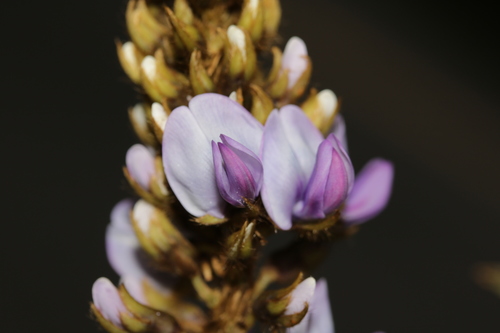
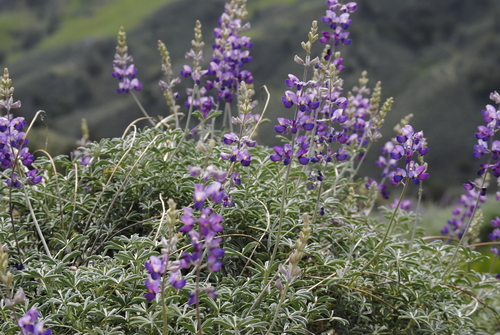
Lupinus albifrons Benth. is a perennial shrub that spreads around 2 feet (0.61 meters) wide and grows up to 5 feet (1.5 meters) tall. Its flowers range from light blue to violet, and grow on stalks that measure 3 to 12 inches (7.6 to 30.5 cm) long. The plant’s leaves are silver and have a feathery texture. It grows in sandy to rocky locations at elevations below 5,000 feet (1,500 meters).
Pollination of Lupinus albifrons is primarily carried out by various species in the genus Bombus, bumblebees. To discourage pollinators from visiting flowers that have already been pollinated, the plant produces ethylene. This causes the marking spot on its banner petals to change color from white or pale yellow to pink, then to magenta, as anthocyanins accumulate in the tissue.
Because it contains bitter-tasting alkaloid toxins anagyrine and lupinine, Lupinus albifrons is resistant to deer browsing. These toxins are harmful to livestock, and can cause birth defects and weight loss, especially in young, inexperienced cattle. When lactating cows experience stress, particularly when forage is scarce, they will consume more of this lupine than they normally would.
In the wild, this plant grows as a wildflower in the hills and valleys of California. For cultivation, it requires good drainage, and needs very little water once its roots are fully established. When grown alongside tall fescue, a common grass used for lawns in California and along the U.S. Western Coast, Lupinus albifrons shows decreased above-ground growth. This reduction comes from competition with the grass for soil space. In contrast, the presence of this lupine can help improve the growth of tall fescue. Fresh seeds of Lupinus albifrons var. flumineus do not require stratification to germinate. Germination of stored seeds of this variety is improved by physical scarification or a hot-water treatment, which is typical for many other leguminous plants.