About Lophotis gindiana (Oustalet, 1881)
Taxonomy and Size
The buff-crested bustard (scientific name Lophotis gindiana (Oustalet, 1881)) is a medium-sized East African bird, reaching up to 60 cm (24 in) in height. It is relatively small compared to other African bustard species.
Male Weight and Markings
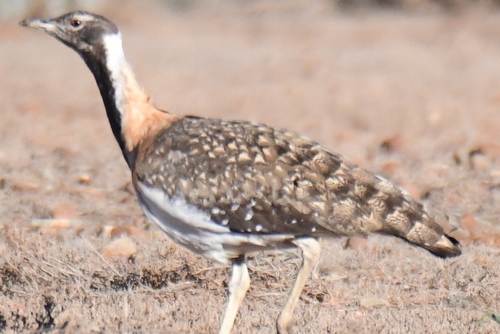
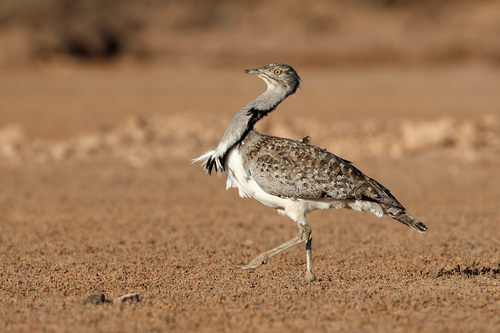
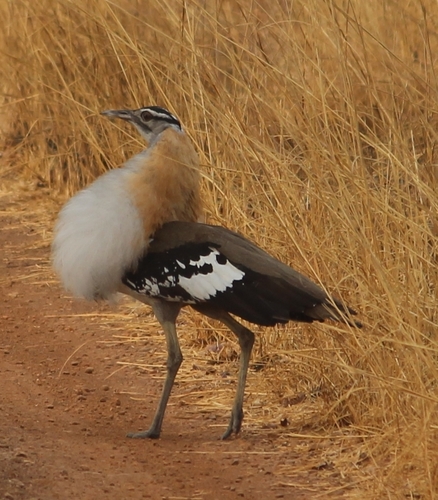
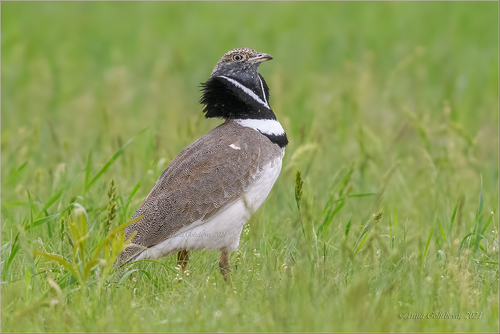
Males weigh between 675 and 900 grams (24 and 32 oz), and have a black stripe that runs from the throat to the breast. The male's plumage is grey or buff, with the exception of this black stripe and the dark underside of the body.
Sexual Dimorphism
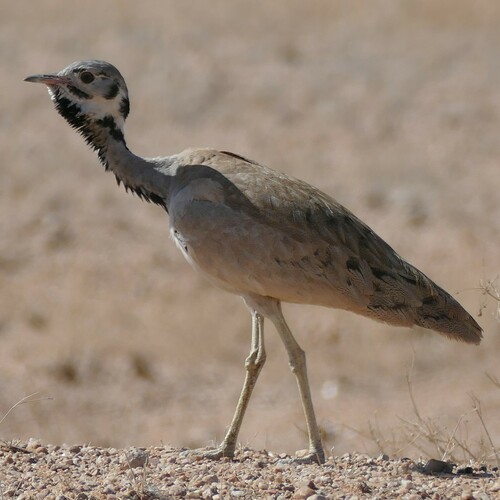
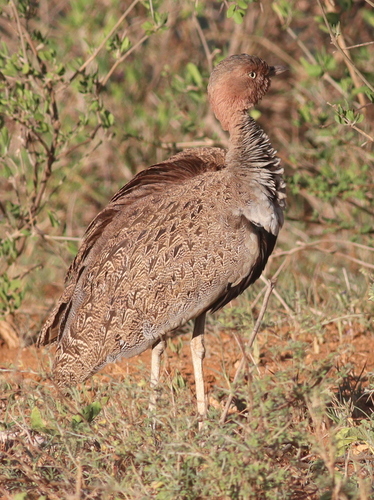
Like most bustards in this family, this species is sexually dimorphic: males and females differ in plumage coloration and size. The throat line on females is duller, and the overall grey colouring seen in males is replaced by light brown in females.
Foot Morphology
Because this species is ground-dwelling, the birds lack a hind toe and do not perch.
Species Etymology
The species gets its common name from the coloured feather crest that only males have; females do not have this crest.
Wing Markings
When the bird extends its wings, a large white patch is visible under each wing.
Core Distribution Range
Buff-crested bustards are found throughout East Africa, and are most common in Ethiopia, where they occur across southern regions east of the Rift Valley. They are non-migratory residents in Sudan, Somalia, Eritrea, Uganda, Tanzania, and Kenya.
General Habitat Type
This sedentary species lives in thorny scrub and arid stony desert habitats.
Kenyan Habitat Preferences
In Kenya, it prefers arid to semiarid climates, and is not found in sub-humid areas along the coastal strip. Unlike most bustards, it is rarely seen in tall grass, instead favouring ecosystems on stony or sandy soils.
Female Camouflage
A female's colouring provides ideal camouflage in these habitats.
Male Mating Displays
During the spring and summer mating season, males perform elaborate aerial displays to attract females for mating. A male will fly up to 30 meters (98 ft) upward, stall, and drop with its wings folded. Just before reaching the ground, it opens its wings at the last moment and lands abruptly on the ground.
Anti-predator Behavior
Outside of mating displays, both males and females are reluctant to fly, and prefer to creep away from danger.
Captive Chick Relocation Observation
One captive female buff-crested bustard has been observed carrying her newly hatched chicks to deliberately move them. The hen carried one chick at a time under her wing to relocate it, then dropped it at the chosen new location. It is not known whether this behaviour is common across the species.
Egg Laying
Hens lay 1 or 2 eggs in ground nests.