About Lissotriton maltzani (Boettger, 1879)
Sexual Size Dimorphism
This newt species reaches different maximum body lengths for each sex: females grow up to 94 millimetres (3.7 in) long, while males reach a maximum length of 75 millimetres (3.0 in).
Terrestrial Skin Texture
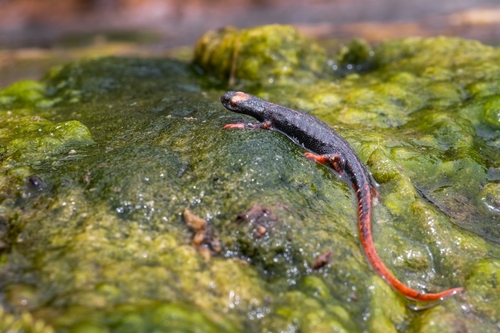
When individuals live out of water, their skin has a granular texture, and glandular ridges run along their back.
Body Coloration
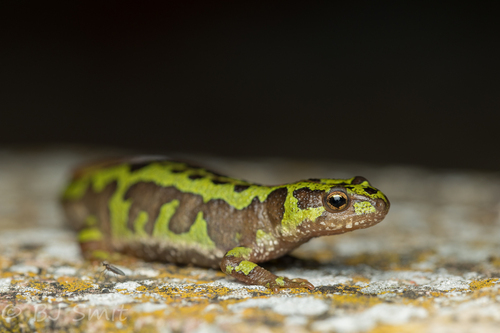
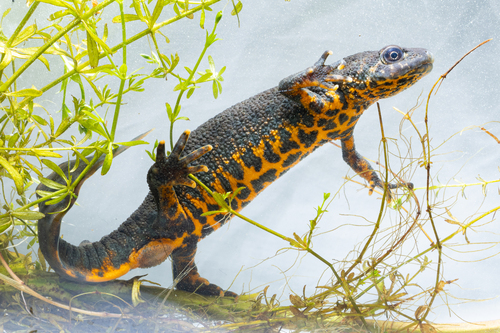
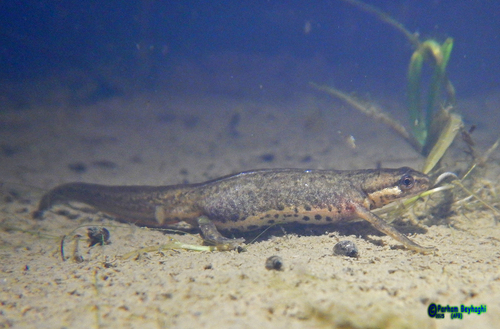
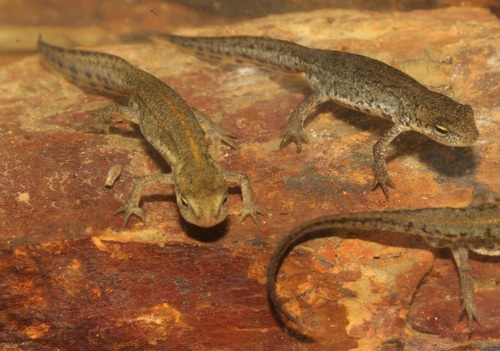
The body of this newt is brownish, yellowish, or dull green, patterned with dark spotting, and its belly is colored orange.
Breeding Traits
Unlike many related species, L. maltzani does not develop particularly striking breeding season traits; only males grow a brightly colored protuberance at the tip of their tail during this time.
Aquatic Habitat Preferences
This species is mostly aquatic, and inhabits shallow, vegetation-lined ponds and streams.
Artificial Habitat Tolerance
It can also live in disturbed and artificial water bodies, including ditches.
Terrestrial Habitat Types
Documented habitats for L. maltzani include oak woodland, scrub, sandy coastal strips, farms, and plantations.