About Limnophila sessiliflora (Vahl) Blume
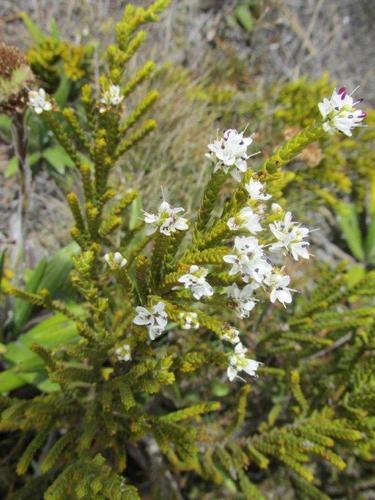
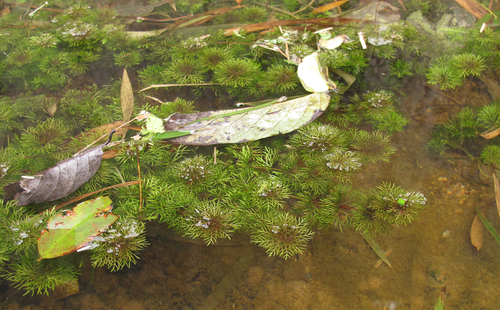
Limnophila sessiliflora (Vahl) Blume is an aquatic perennial herb that looks superficially similar to Cabomba caroliniana. It produces leaves arranged in whorls, with whorls reaching about 1.2 inches (3 cm) in diameter. Confusion between the two species is common because Limnophila sessiliflora has bright green pinnate leaves, similar to Cabomba caroliniana. When grown under strong artificial light or direct sunlight, its leaves develop a reddish, stressed hue, just like many other plant species. After receiving enough light over the course of a day, the leaf whorls will often close, and the entire plant will enter a "sleeping" state. Mature plants can eventually grow to over 16 inches (40 cm) in height, and they often grow emergent, meaning they extend out above the water surface where sunlight and carbon dioxide are more accessible. Emerged leaves that grow above the water look quite different from submerged leaves: they are typically darker green and more or less lance-shaped. This species produces elliptical capsule fruits that are 3.5–5.5 mm long. The capsules are green-brown when the plant is fully submerged, and dark brown when the plant is emergent. Limnophila sessiliflora is native to Bangladesh, Bhutan, China (including the provinces of Anhui, Fujian, Guangdong, Guangxi, Guizhou, Hainan, Henan, Inner Mongolia, Jiangsu, Jiangxi, Liaoning, Sichuan, Yunnan, and Zhejiang), Hong Kong, India (including Assam and Sikkim), Indonesia (Java), Japan (Ryukyu Islands), North Korea, Malaysia, Myanmar, Nepal, the Northern Mariana Islands, the Philippines, Singapore, South Korea, Sri Lanka, Taiwan, Thailand, and Vietnam. It grows in a wide range of natural and man-made freshwater wetland habitats, including ponds, rice fields, and swamps. It can be found in both permanent and seasonal waters, at altitudes up to 1,900 m (6,200 ft). This species has become invasive in the United States, where it occurs in Florida, Georgia, and Texas. It most likely became established in the U.S. after escaping from cultivation in Florida, where it was first recorded growing wild in Hillsborough County in 1961. It can grow either fully submerged or emergent, with leaves developing distinct forms in each growing condition. It is a fast-growing species that can reproduce either by seed or by stem fragmentation.