About Leucophyllum candidum I.M.Johnst.
Nomenclature and Native Range
Leucophyllum candidum, commonly known as Texas sage or white cloud, is a small evergreen shrub native to the southwestern United States and northern Mexico.
Taxonomy and Size
This plant belongs to the Scrophulariaceae family and can grow up to 6 feet tall and 6 feet wide.
Foliage Appearance
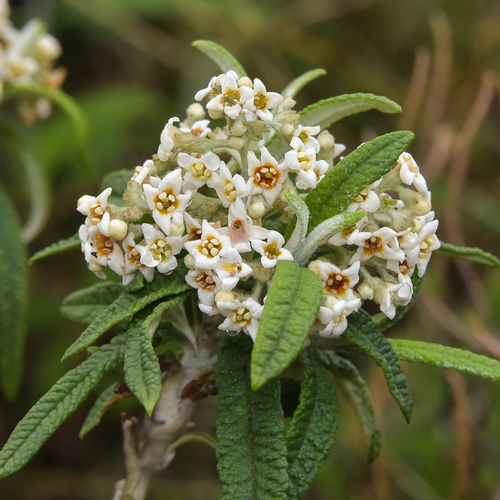
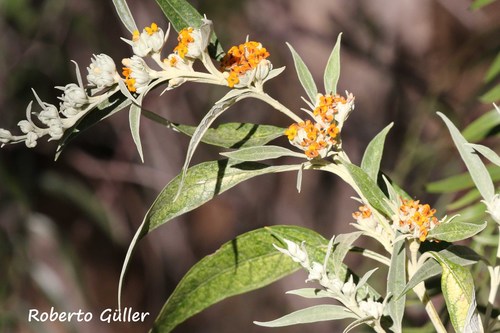
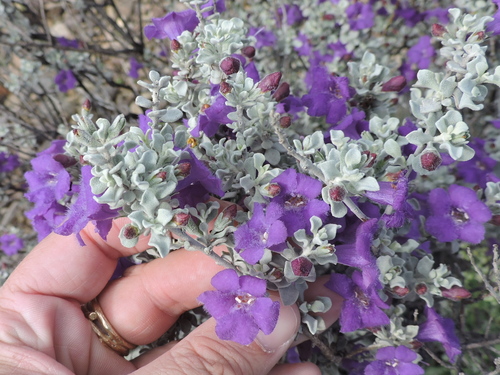
It features a dense, bushy growth habit with silvery-gray leaves that are covered in fine hairs.
Leaf Aroma
When crushed, the leaves emit a pleasant aroma.
Flowering Period and Pollinator Attraction
In late summer or early fall, Texas sage produces beautiful white or pale lavender flowers that attract bees, butterflies, and hummingbirds.
Flower Structure
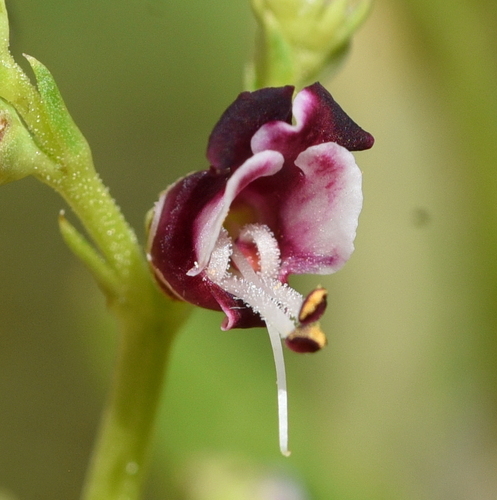
The flowers are tubular-shaped with five petals arranged in a funnel shape around the stamens.
Drought Tolerance and Soil Preferences
Once established, this plant is drought-tolerant but prefers well-drained soil with moderate moisture during the growing season.
Light Requirements
It thrives best in full sun but can also tolerate partial shade.
Ethnobotanical Medicinal Use
Historically, Native Americans have used Texas sage for its medicinal properties, primarily due to its anti-inflammatory effects.
Specific Respiratory Remedy Use
The leaves were often used as an herbal remedy for respiratory ailments such as asthma and bronchitis.
Ornamental and Low-Maintenance Trait
Overall, Leucophyllum candidum is an attractive ornamental shrub that requires minimal maintenance once established.
Pollinator Support Benefit
It offers beautiful blooms from late summer into the fall and supports pollinators like bees, butterflies, and hummingbirds.
Landscape Suitability
This makes it an excellent addition to any garden or landscape design!