About Lespedeza cuneata (Dum.Cours.) G.Don
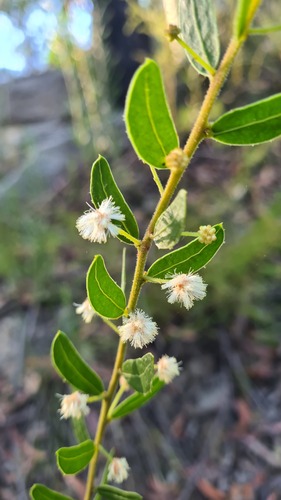
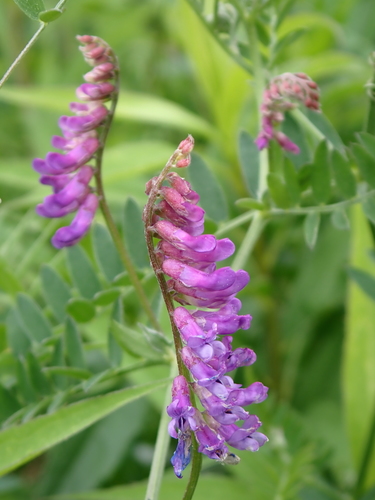
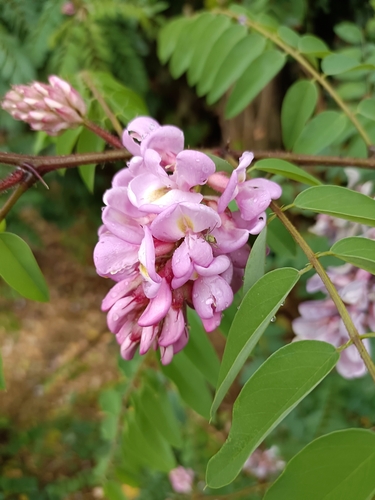
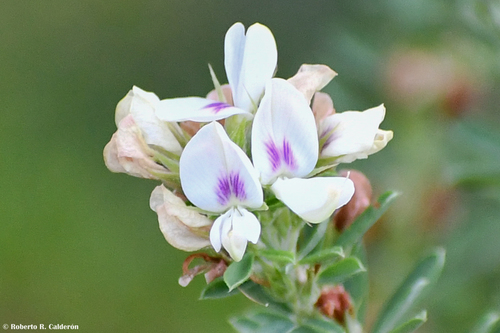
Lespedeza cuneata (Dum.Cours.) G.Don is a perennial herb with branching stems that grow to a maximum height of around two meters. It grows from a woody taproot that can be longer than one meter, topped by a woody caudex. Stems are densely covered in leaves, each divided into leaflets up to 2.5 centimetres (1 inch) long. Flowers grow singly or in clusters of up to three in leaf axils. Some flowers are cleistogamous, meaning they stay closed and self-pollinate. Open flowers can be purple, cream, white, or yellowish. The fruit is a legume pod that holds one single seed.
This species is native to eastern Asia, and also occurs in India, Pakistan, Afghanistan, and Australia. It can be found growing along roadsides on mountain slopes, typically at elevations below 2500 meters. It has been introduced to the United States, South Africa, Brazil, Canada, and Mexico. It was first planted in the US state of North Carolina in 1896. It was used for erosion control, revegetation of abandoned mine sites, and as livestock forage. It performs well in drought-prone areas because its deep roots allow it to survive. Several cultivars have been developed for use: 'Arlington', 'Serala', 'AU Lotan', 'AU Donnelly', 'AU Grazer', and 'Interstate'.