About Vicia cracca L.
Taxonomy and Growth Habit
Cow vetch (Vicia cracca L.) is a perennial species in the legume family Fabaceae, with a growth habit similar to pea plants. It produces climbing stems that can reach 150 cm in length; individual plants may grow 2 meters long or tall, and have a white taproot that can extend up to 1 meter deep.
Tendril Function
When its leaf tips touch another plant, it grows noose-like branched tendrils that securely fasten the cow vetch to the other plant, which can strangle smaller plants.
Leaf Structure
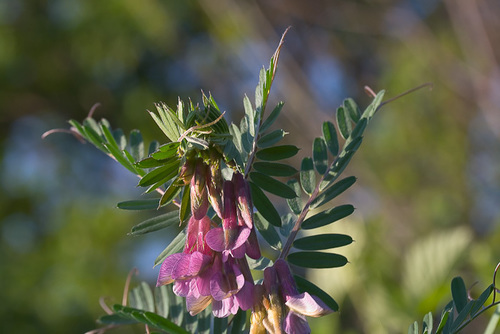
Its leaves are pinnate, 3–8 cm long, with 8–12 pairs of leaflets, each leaflet measuring 5–10 mm long.
Growth and Flowering Period
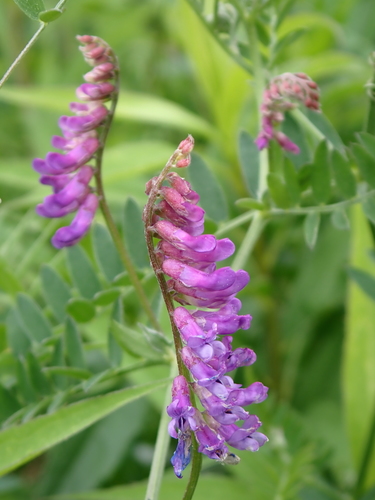
Cow vetch grows quickly and flowers prolifically. From late spring to late summer, it produces one-sided racemes that hold 10 to 40 pea-shaped purple to violet flowers, which emerge from leaf axils.
Flower Pollinators
Bumblebees are the main visitors to these flowers.
Seed Pod Development
After flowers fall, small bright green seed pods 10–20 mm long begin to develop. Mature seed pods reach 2 cm long, contain 6 to 8 seeds, and resemble the seed pods of very small peas.
Seed Maturation
Seeds ripen when the pods turn black. Unripened seeds are swollen and green-tinged, and shrink as they ripen.
Seed Pod Appearance
Seed pods range from light brown to dark brown with black spots.
Similar Species Distinction
Cow vetch is very similar to hairy vetch (Vicia villosa), but can be distinguished from hairy vetch by its smooth stem.
Native and Introduced Range
Vicia cracca is native to Europe and Asia, and has been introduced to large areas of North America.
Introduced Range Habitat
As an introduced species, it is recorded as very frequent, occurring casually on waste ground, and also grows in hedges.
Forage Use
Cow vetch is widely used as a forage crop for cattle.
Soil Enrichment Properties
Like other legumes, it has nitrogen-fixing properties that enrich the soil it grows in, making it beneficial to other plants.
Pollinator Resource Value
It provides nectar that is valued by bees and butterflies.
Erosion Control Use
It can also be used to control erosion.
Pet Bird Food Use
Owners of pet birds such as budgerigars often use cow vetch as a nutritious food; the birds particularly favor the seeds, but may also eat the foliage.
Cover Crop and Green Manure Use
Its usefulness as a cover crop and source of green manure has encouraged its introduction and naturalization far beyond its native range.
North America Naturalization Range
In North America, it has naturalized from southern Canada to upstate South Carolina.
Invasive Status Regulation
It is considered an invasive weed in some North American areas, and its sale may be regulated.
Invasive Ecological Impact
Cow vetch can be a potentially harmful species in areas outside its native range, as it can crowd out native plants. It is especially likely to dominate disturbed soil before other plants can become established, which is a particular concern for prairie and other natural habitat restoration or land reclamation projects in North America.