About Lampropholis guichenoti (Duméril & Bibron, 1839)
Size
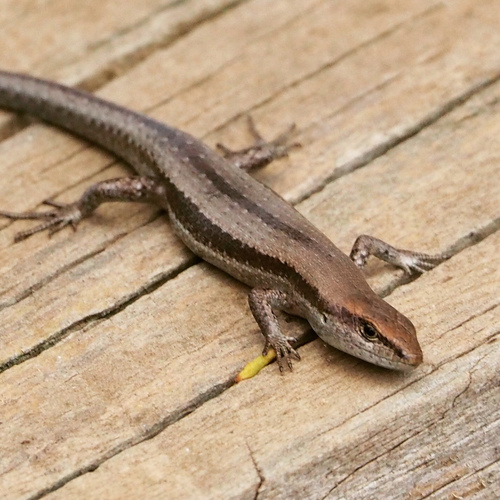
Lampropholis guichenoti can reach a maximum total length of 14 cm (5.5 inches) when including the tail, with an average total length between 8 and 10 cm (3.1 to 3.9 inches). On average, this species, commonly called the common garden skink, has a lifespan of 2 to 3 years.
Coloration
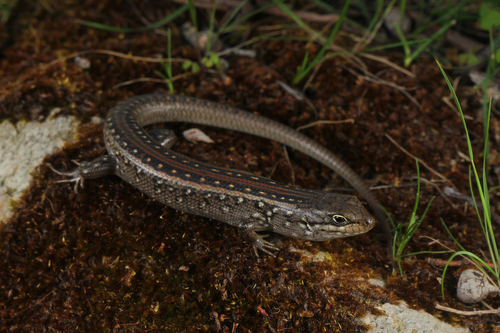
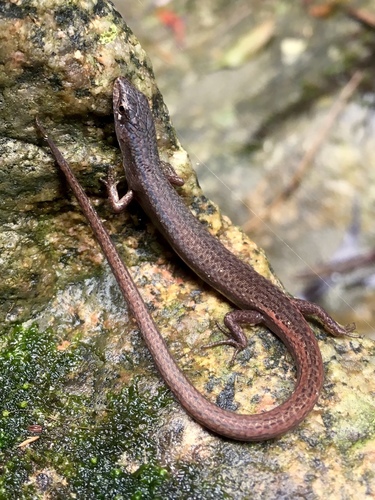
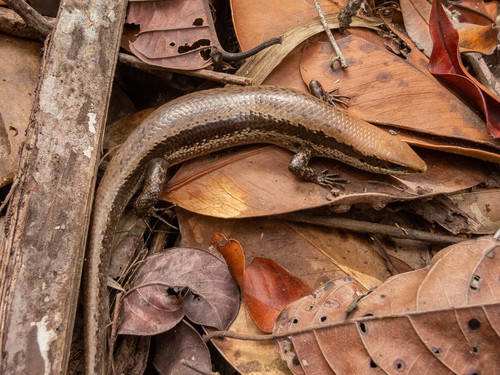
Its base coloration is typically browny black, and it may sometimes appear a dark shade of red when basking in the sun. Lighter body color correlates with higher activity levels in this species.
Dentition
It has small, sharp teeth that easily slice through smaller prey items.
Temperament
Even wild-caught individuals of this species are very docile, and rarely bite humans when touched or picked up.
Sexual Dimorphism
There are visible sexual dimorphisms for this species: female pale-flecked garden sunskinks have a yellowish, nearly orange tinge on their underside, while males have a light grey tinge on their underside, and females are often larger in size than males.
Swimming Ability
This species is a capable swimmer; individuals have been recorded diving underwater to evade predators, and can remain submerged for several minutes until a threat has passed.
Australian Distribution
In Australia, L. guichenoti is commonly sighted in suburban gardens of Adelaide, Melbourne, Perth, Sydney, Canberra, and Brisbane. It is also widespread across most of Southern Australia, Tasmania, and parts of New South Wales.
Microhabitat Prey Observation
L. guichenoti is often found under leaves, in long grass, and under rocks, where it can observe its prey.
Predator Avoidance Hiding Spots
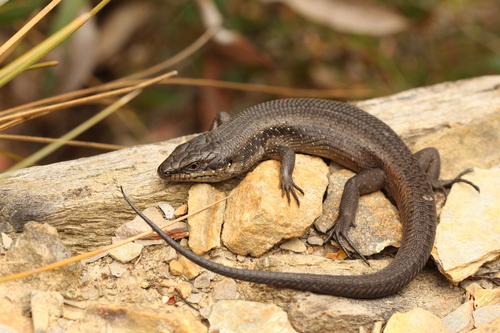
It also frequently prefers hiding in logs, which keep it out of reach of larger predators. It tends to favor areas around rock tumbles, as the crevices provide convenient hiding spots.
Thermoregulation Behavior
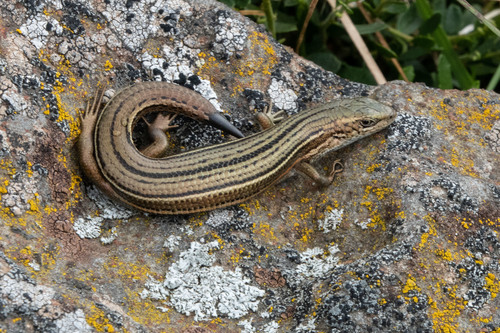
Like most reptiles, the common garden skink is cold-blooded, so it can often be seen on top of rocks or paths in the morning warming its body.
Habitat Preferences
It prefers large areas with abundant leaf cover and soft soil, and is normally found in dry regions that offer plentiful hiding spots.