All Species Animalia

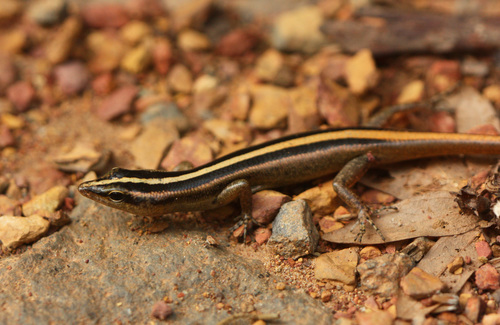
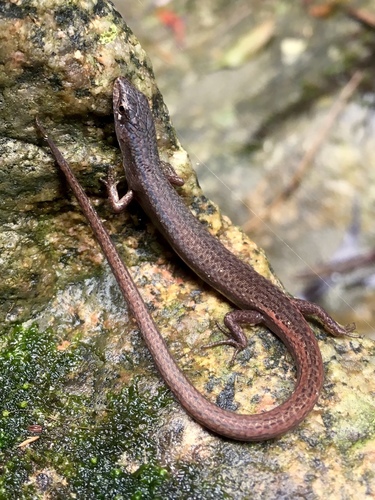
Saproscincus mustelinus (O'Shaughnessy, 1874) is a animal in the Scincidae family, order null, kingdom Animalia. Not known to be toxic.

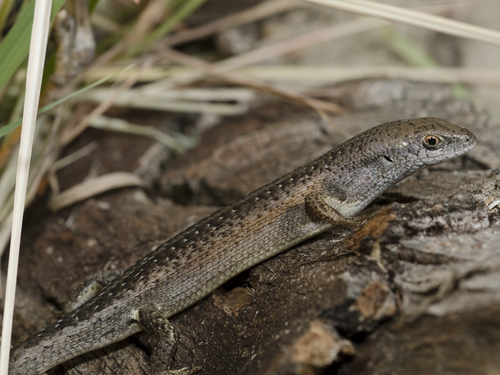
Photo of Saproscincus mustelinus (O'Shaughnessy, 1874) (Saproscincus mustelinus (O'Shaughnessy, 1874))
Animalia

Saproscincus mustelinus (O'Shaughnessy, 1874)

Saproscincus mustelinus (O'Shaughnessy, 1874)

Saproscincus mustelinus, the southern weasel skink, is a small Australian skink with distinct markings and communal egg-laying.

Identify with AI — Offline
Family
Genus
Saproscincus
Order
Class
Squamata

About Saproscincus mustelinus (O'Shaughnessy, 1874)

Scientific Name and Snout-Vent Length

The southern weasel skink, scientifically named Saproscincus mustelinus (O'Shaughnessy, 1874), measures approximately 45 mm (1.8 in) from snout to vent.

Scales and Facial Markings

Its body is covered in fine, iridescent reddish brown scales, and it has several distinct white markings located behind and below the eye.

Shelter Sources

For shelter, the southern weasel skink typically makes use of existing vegetation and fallen timber.

Geographic Distribution

This species has a geographic distribution that forms a coastal strip running from southern Victoria to southern Queensland.

Clutch Size

For reproduction, female southern weasel skinks lay up to four eggs per clutch in communal nests.

Communal Nest Characteristics

These nests are usually dug burrows that hold the eggs of many different females.

Egg Laying Period

Egg laying normally takes place between spring and late summer.
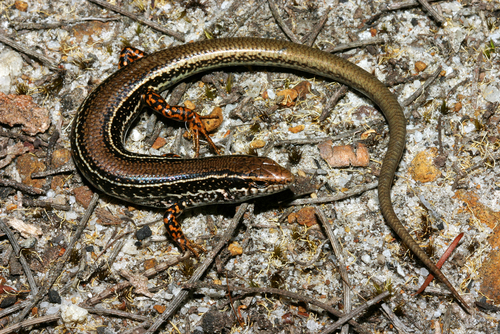
Photo: (c) bennybotany85, some rights reserved (CC BY-NC), uploaded by bennybotany85 · cc-by-nc

Taxonomy

Animalia Chordata Squamata Scincidae Saproscincus

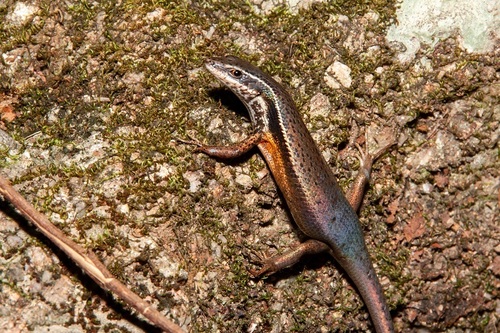
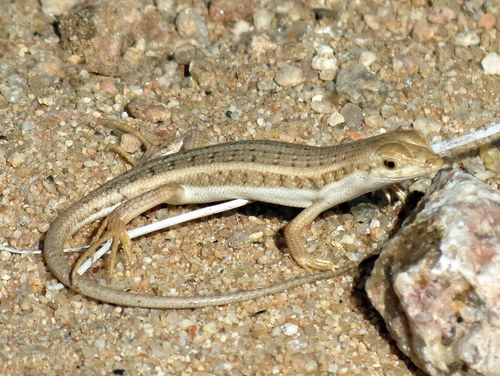
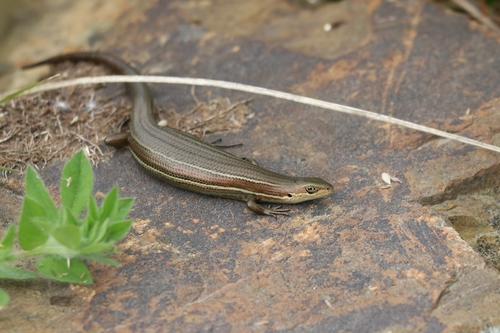
More from Scincidae

Sources: GBIF, iNaturalist, Wikipedia, NCBI Taxonomy · Disclaimer

Start Exploring Nature Today

Download iNature for free. 10 identifications on us. No account needed. No credit card required.

App Store
Scan to download from App Store

Scan with iPhone camera

Google Play
Scan to download from Google Play

Scan with Android camera