Animals — 36,937 Species
Top Families in Animals
All Animals Species
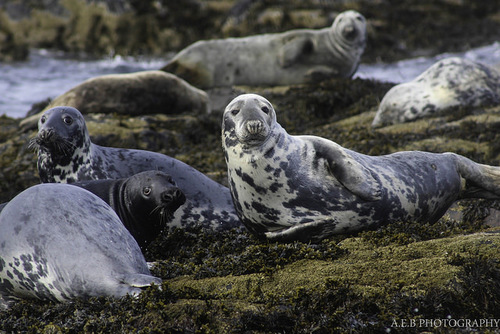
Grey Seal
Halichoerus grypus (Fabricius, 1791)
Halichoerus grypus, the grey seal, is a large sexually dimorphic pinniped found across North Atlantic coasts.","optimized_content":"This fairly large seal species has notable size differences between sexes and populations. In eastern Atlantic populations, breeding males (bulls) reach 1.95–2.3 m (6 ft 5 in – 7 ft 7 in) long and weigh 170–310 kg (370–680 lb), while females (cows) are much smaller, typically measuring 1.6–1.95 m (5 ft 3 in – 6 ft 5 in) long and weighing 100–190 kg (220–420 lb). Individuals from the western Atlantic are often much larger: males average up to 2.7 m (8 ft 10 in) and can weigh as much as 400 kg (880 lb), and females average up to 2.05 m (6 ft 9 in) and sometimes reach 250 kg (550 lb). The largest recorded bull grey seals reach roughly 3.3 m (10 ft 10 in) in length. In Great Britain, the recorded average weight is about 233 kg (514 lb) for adult males and 154.6 kg (341 lb) for adult females, while in Nova Scotia, Canada, adult males average 294.6 kg (649 lb) and adult females average 224.5 kg (495 lb). It can be distinguished from the smaller harbor seal by its straight head profile, widely spaced nostrils, and fewer body spots. Wintering hooded seals, which are similar in size and have a somewhat comparable large-nosed shape, are often confused with grey seals; they can be told apart because hooded seals have a paler base color and typically show stronger spotting. Grey seals have no external ear flaps and characteristically have large snouts; bull grey seals have larger noses and a less curved profile than bull harbor seals. Males are generally darker than females, with lighter patches and often scarring around the neck. Females are silver grey to brown with dark patches. In terms of ecology and distribution, grey seals breed in several coastal colonies around the United Kingdom and Ireland. Notable large colonies are at Blakeney Point (Norfolk), Donna Nook (Lincolnshire), the Farne Islands off the Northumberland Coast (home to around 6,000 animals), Orkney and North Rona off the north coast of Scotland, Lambay Island off Dublin in the Irish Sea, the Isle of Man, and Ramsey Island off Pembrokeshire, Wales. In the German Bight, colonies exist off the islands Sylt and Amrum, and on Heligoland. Large numbers of grey seals, alongside harbor seals, have recently begun recolonizing the tidal section of the River Thames in London; a 2024 ZSL survey found around 3,000 grey seals living in this area. In the western North Atlantic, grey seals are typically found in large numbers in the coastal waters of Canada's Maritime Provinces, ranging south to Nantucket in the United States. In coastal Canada, they are commonly seen in the Gulf of St. Lawrence, Newfoundland, Prince Edward Island, and Quebec. The world's largest colony is on Sable Island, Nova Scotia. In the United States, they are present year-round off the coast of New England, particularly Maine and Massachusetts, and have also been observed in waters around Connecticut, New York, and Rhode Island. Archaeological evidence confirms grey seals once lived in southern New England, with remains found on Block Island, Martha's Vineyard, and near the mouth of the Quinnipiac River in New Haven, Connecticut. Author Farley Mowat also reported historic breeding colonies as far south as Cape Hatteras, North Carolina, and confirmed sightings off North Carolina show the species' natural range now extends much further south than previously thought. Many small colonies exist alongside these large ones, and some are well-known tourist attractions despite their small size, such as the colony at the Carrack rocks, Cornwall. During winter, grey seals can be found hauled out on rocks, islands, and shoals not far from shore, and occasionally come ashore to rest. In spring, recently weaned pups and yearlings occasionally become stranded on beaches after separating from their group. Grey seals face the typical predators of pinniped mammals. Their primary predator is the orca, or killer whale, but certain large shark species are known to prey on grey seals in North American waters — particularly great white sharks and bull sharks, and there is also evidence that Greenland sharks prey on them. Some grey seal carcasses that have washed ashore bear visible "cookie cutter" bite marks, a clear sign of attack by a Greenland shark, also called the sleeper shark. In the waters around Great Britain, grey seals are a fairly common prey species for killer whales. In the Baltic, grey seal pups are preyed on by white-tailed eagles and great black-backed gulls. As capital breeders, grey seals forage to build up stored blubber, which they use for energy during breeding and pup rearing, as they do not forage during this period. Females give birth to a single pup each year. Female grey seals begin reproducing as early as 4 years old, and remain reproductive up to 30 years of age. All parental care is provided by the female; during breeding, males do not provide parental care, but defend females from other males to secure mating opportunities. Pups are born weighing around 14 kg. In the eastern Atlantic, pups are born in autumn (September to December), while in the western Atlantic they are born in winter (January to February). Newborn pups have dense, soft, silky white fur. Though small at birth, they rapidly gain fat on their mother's extremely fat-rich milk, which can contain up to 60% fat. Grey seal pups are precocial. Mothers return to the sea to forage once pups are weaned, and pups undergo a post-weaning fast before leaving land and learning to swim. Within around a month, they shed their white pup fur, grow dense waterproof adult fur, and leave for the sea to learn to catch fish for themselves. In recent years, grey seal numbers have been increasing in the western North Atlantic, leading to calls for a seal cull in the U.S. and Canada. First-year survival rates for seal pups range from 80 to 85% to below 50%, depending on location and conditions. Starvation, caused by difficulties learning to feed, is the main cause of pup death. Male grey seals engage in aggressive sexual behavior that can cause severe injury or even death to females, and they sometimes also target females from other seal species. Multiple cases have been recorded in the North Sea of pregnant harbor seals dying as a result of forced copulation by male grey seals.","one_line_intro":"Halichoerus grypus, the grey seal, is a large, sexually dimorphic pinniped native to North Atlantic coasts.
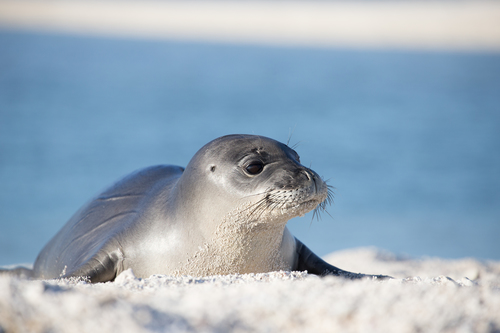
Hawaiian Monk Seal
Neomonachus schauinslandi (Matschie, 1905)
This is a description of Neomonachus schauinslandi, the Hawaiian monk seal, covering its traits, habitat, reproduction, and proposed conservation.
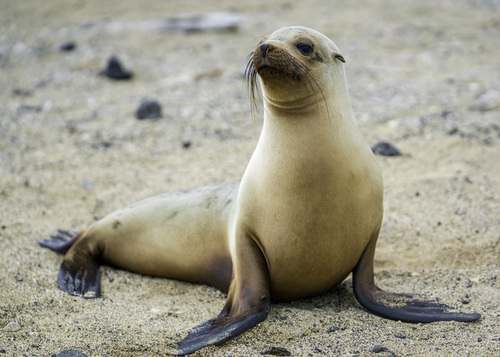
Galápagos Sea Lion
Zalophus wollebaeki Sivertsen, 1953
Galápagos sea lions (Zalophus wollebaeki) are a sexually dimorphic sea lion species native to the Galápagos region with occasional vagrant sightings further afield.
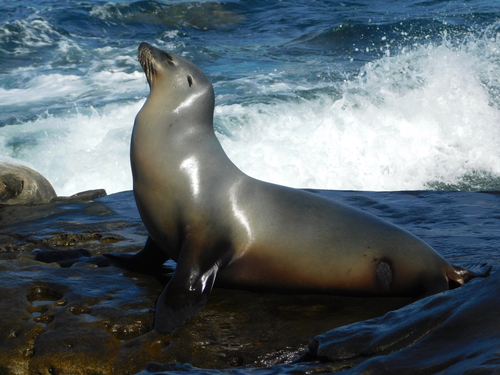
California Sea Lion
Zalophus californianus (Lesson, 1828)
Zalophus californianus, the California sea lion, is an intelligent coastal eared seal native to western North America.
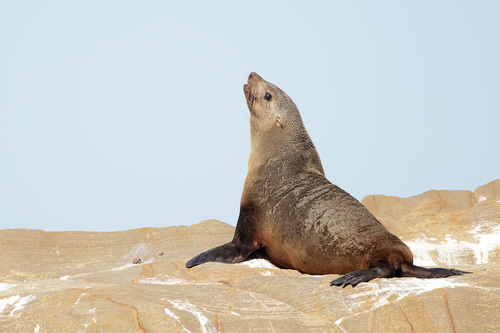
Brown Fur Seal
Arctocephalus pusillus (Schreber, 1775)
Arctocephalus pusillus (brown fur seal) is the largest fur seal species, with two subspecies differing in size, range, and diet.
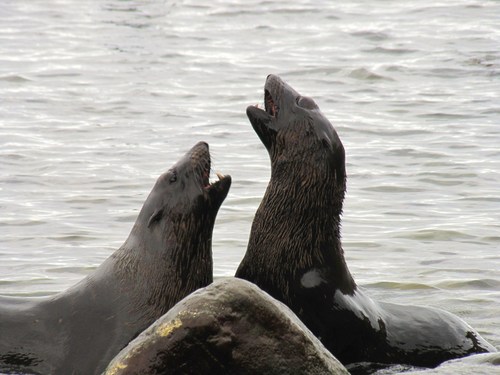
Juan Fernández Fur Seal
Arctocephalus philippii townsendi Merriam, 1897
Arctocephalus philippii townsendi, the Juan Fernandez fur seal, is a small sexually dimorphic eared seal with distinct polygynous breeding habits.
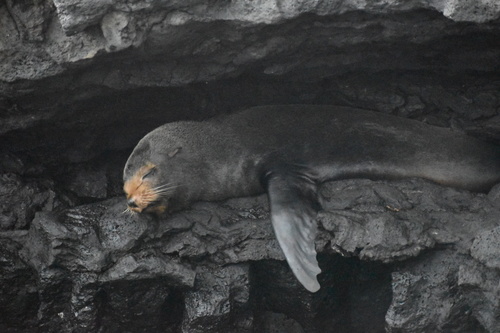
Galápagos Fur Seal
Arctocephalus galapagoensis Heller, 1904
Arctocephalus galapagoensis, the Galápagos fur seal, is a small otariid endemic to the Galápagos Islands that lives in large breeding colonies.
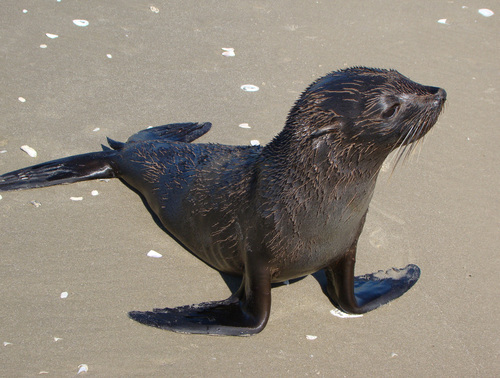
South American Fur Seal
Arctocephalus australis (Zimmermann, 1783)
Arctocephalus australis, the South American fur seal, is a sexually dimorphic pinniped found along South American coasts.
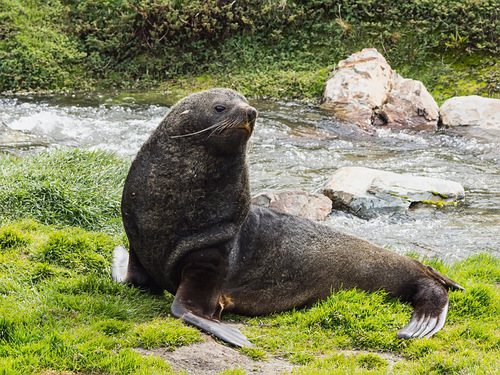
Antarctic Fur Seal
Arctocephalus gazella (Peters, 1875)
Arctocephalus gazella, the Antarctic fur seal, is a sexually dimorphic midsized pinniped with a circumpolar distribution in the Southern Hemisphere.
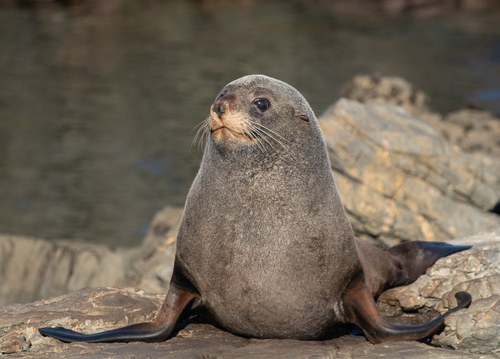
Long-nosed Fur Seal
Arctocephalus forsteri (Lesson, 1828)
Arctocephalus forsteri, the New Zealand fur seal, is an otariid species found in Australia and New Zealand with distinct polygynous breeding behavior.
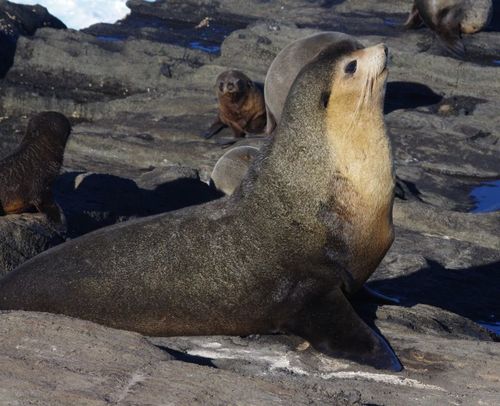
Subantarctic Fur Seal
Arctocephalus tropicalis (J.E.Gray, 1872)
Arctocephalus tropicalis, the subantarctic fur seal, is a medium-sized, sexually dimorphic otariid found across subantarctic Southern Hemisphere waters.
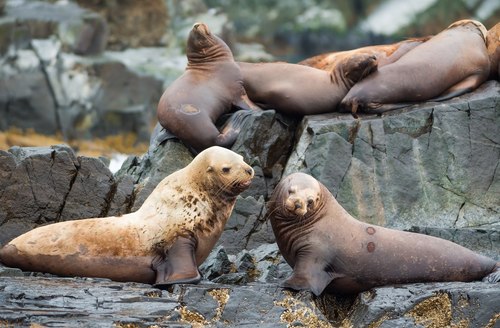
Steller Sea Lion
Eumetopias jubatus (Schreber, 1776)
Steller sea lion (Eumetopias jubatus) is a sexually dimorphic otariid found in northern Pacific coastal waters.
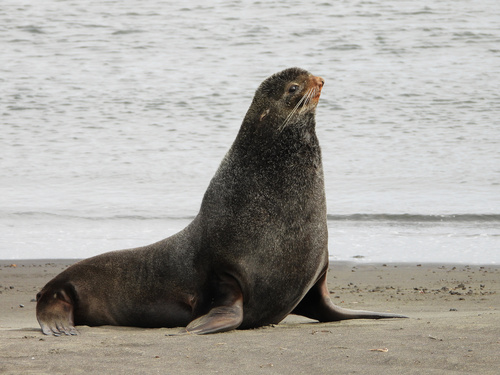
Northern Fur Seal
Callorhinus ursinus (Linnaeus, 1758)
This is a detailed description of the northern fur seal, Callorhinus ursinus, covering its anatomy, range, and ecology.

Australian Sea Lion
Neophoca cinerea (Péron, 1816)
Neophoca cinerea, the endangered endemic Australian sea lion, has unique irregular breeding cycles and lives along southern Australia's coasts.
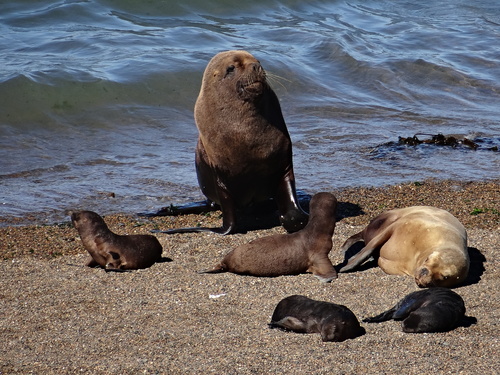
South American Sea Lion
Otaria byronia (de Blainville, 1820)
Otaria byronia, the South American sea lion, is a large sexually dimorphic eared seal native to South American coasts.
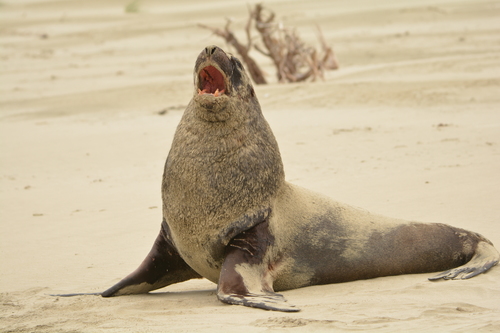
New Zealand Sea Lion
Phocarctos hookeri (Gray, 1844)
Phocarctos hookeri, the endemic New Zealand sea lion, is one of the world's rarest sea lion species.
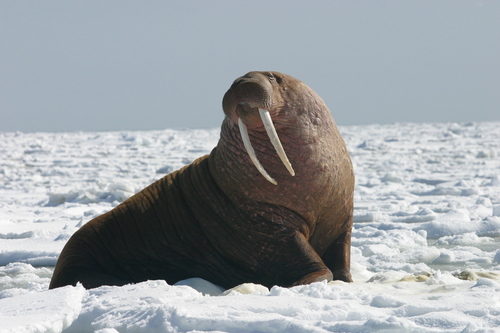
Walrus
Odobenus rosmarus (Linnaeus, 1758)
Odobenus rosmarus, the walrus, is a large Arctic pinniped, the only extant species in Odobenidae.
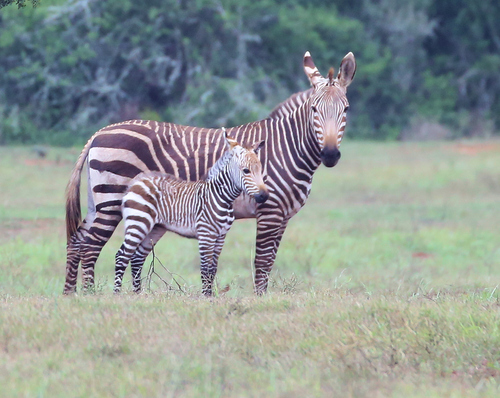
Mountain Zebra
Equus zebra Linnaeus, 1758
Mountain zebra (Equus zebra) is a southwestern African equid with two allopatric subspecies and specific social, feeding and habitat traits.
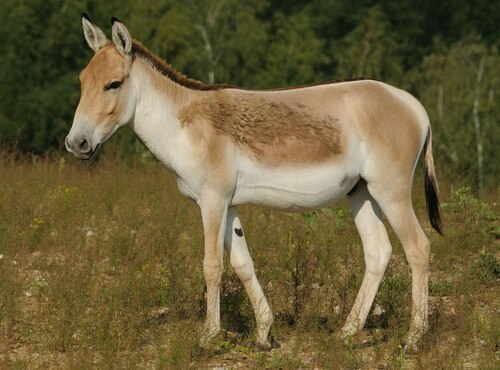
Onager
Equus hemionus Pallas, 1775
Equus hemionus, the onager, is a wild Asiatic ass with distinct coat traits, specific ranges, and defined reproduction habits.
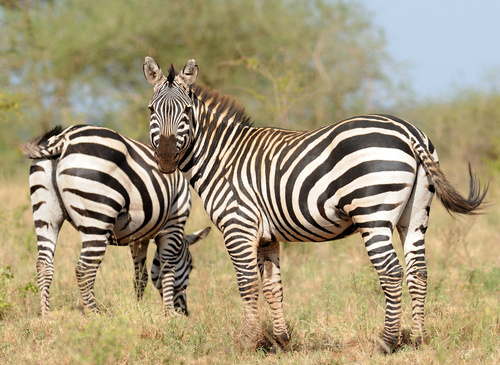
Plains Zebra
Equus quagga Boddaert, 1785
Equus quagga, the plains zebra, is a striped African equid with defined physical traits, habitat range, and reproductive behavior.
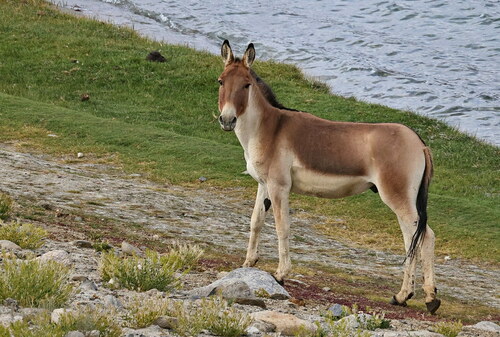
Kiang
Equus kiang Moorcroft, 1841
Equus kiang, the kiang, is the largest wild ass native to high plateaus of the Himalayan and Tibetan region.
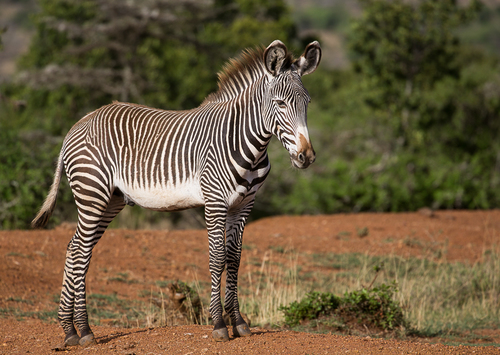
Grévy's Zebra
Equus grevyi Oustalet, 1882
This is a full description of Grévy's zebra (Equus grevyi), covering appearance, range, ecology, reproduction.
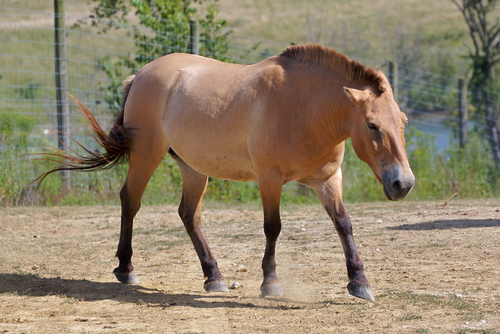
Wild Horse
Equus ferus Boddaert, 1785
Equus ferus is a wild horse species native to the Old World, with the only living subspecies being the reintroduced Przewalski's horse.
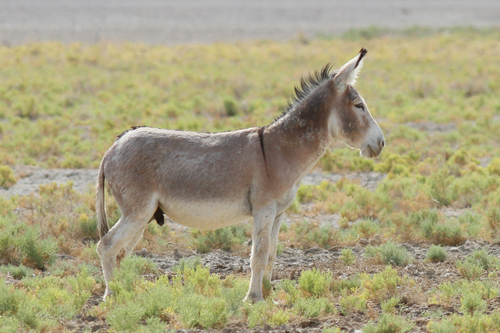
Donkey
Equus asinus Linnaeus, 1758
Equus asinus (donkeys) have distinct physical and behavioral adaptations, and are used worldwide for work, meat, milk, and other products.
Start Exploring Nature Today
Download iNature for free. 10 identifications on us. No account needed. No credit card required.
Scan with iPhone camera
Scan with Android camera


