About Equus zebra Linnaeus, 1758
Taxonomy and Nomenclature
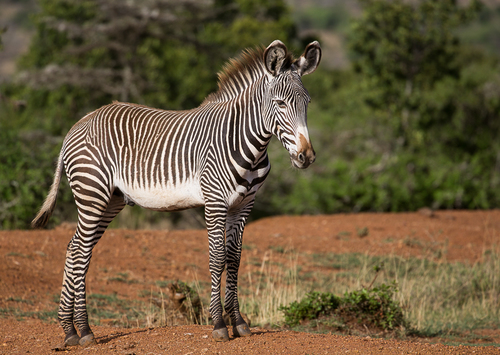
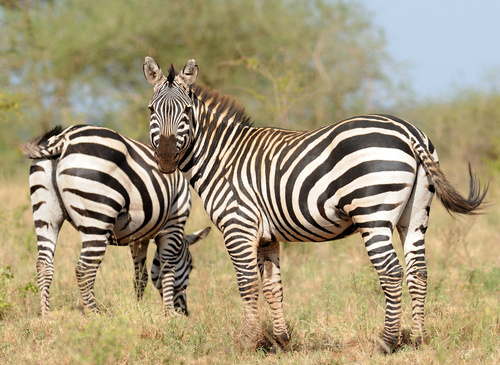
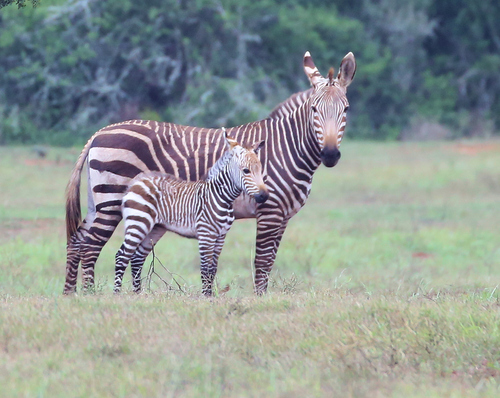
The mountain zebra (Equus zebra) is a zebra species belonging to the family Equidae, native to southwestern Africa.
Subspecies
It has two recognized subspecies: the Cape mountain zebra (E. z. zebra), which occurs in South Africa, and Hartmann's mountain zebra (E. z. hartmannae), which is found in south-western Angola and Namibia.
General Habitat Types
Mountain zebras occupy mountain slopes, open grasslands, woodlands, and areas with enough vegetation, but their preferred habitat is mountainous terrain, especially escarpments that support a diversity of grass species. They live in hot, dry, rocky, mountainous and hilly habitats.
Elevation Range
They favor slopes and plateaus up to 2,000 m (6,600 ft) above sea level, and migrate to lower elevations during winter.
Primary Diet
Their preferred diet is tufted grass, primarily Themeda triandra.
Alternative Food Sources
When food is scarce, they browse on bark, twigs, leaves, buds, fruit, and roots.
Other Consumed Grass Species
Other grass species they consume include Cymbopogon pospischilii, Heteropogon contortus, Setaria sphacelata, and Enneapogon scoparius.
Water Requirements
They need to drink every day.
Drought Water Acquisition
During droughts when no surface water is accessible, they commonly dig for groundwater in dry river beds.
Current Subspecies Range Separation
The Cape mountain zebra and Hartmann's mountain zebra are currently allopatric, meaning their modern ranges do not overlap, so they cannot crossbreed.
Cause of Range Separation
This was not the case historically; their current separation is the result of population fragmentation after hunters exterminated mountain zebras across South Africa's Northern Cape Province.
Historical Distribution
Historically, mountain zebras ranged along the entire length of the escarpments on southern Africa's west coast, and in the fold mountain region in the south.
Historical Population Abundance
Even historically, they generally lived on low-productivity land and were never as numerous as plains-dwelling zebra or antelope species.
Herd Structure
Unlike plains zebras, mountain zebras do not form large herds. Instead, they gather in small family groups made up of one stallion, one to five mares, and their recent offspring.
Bachelor Group Structure
Unmated bachelor males live in separate groups.
Harem Acquisition Behavior
Mature bachelors attempt to capture young mares to establish their own harems, a behavior that is opposed by the dominant stallion of an existing family group.
Reproduction and Weaning
Mares produce one foal per birth, and foals are weaned onto solid forage over approximately three years.
Cape Mountain Zebra Foal Dispersal Age
Cape mountain zebra foals typically leave their maternal herd between 13 and 37 months of age.
Hartmann's Mountain Zebra Foal Expulsion
For Hartmann's mountain zebra, mares attempt to expel their foals when the young are around 14 to 16 months old.
Post-Dispersal Behavior
After leaving their maternal herd, young males may wander alone for a time before joining a bachelor group, while young females either join an existing breeding herd or pair with a bachelor male to form a new breeding herd.