About Karusasaurus polyzonus (Smith, 1838)
Taxonomy and Size
The Karoo girdled lizard, scientifically named Karusasaurus polyzonus (Smith, 1838), is a fairly large species. Its snout-to-vent length, the measurement from the tip of the snout to the cloaca, is approximately 120 millimeters, or nearly 5 inches.
Physical Features
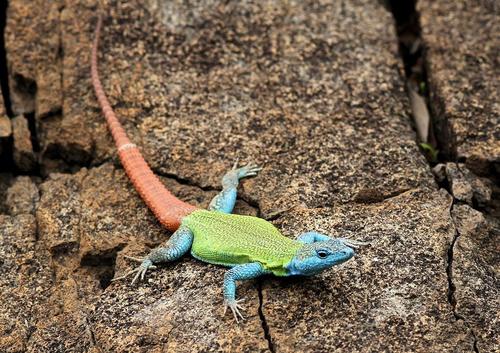
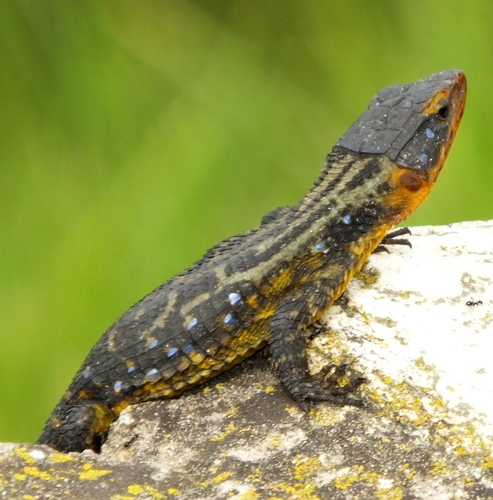
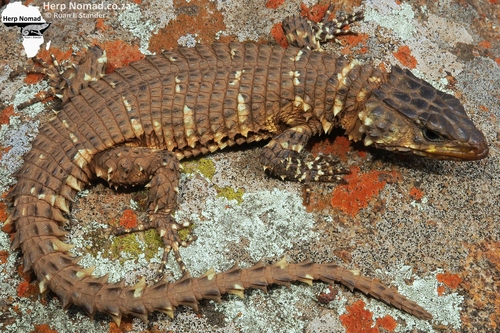
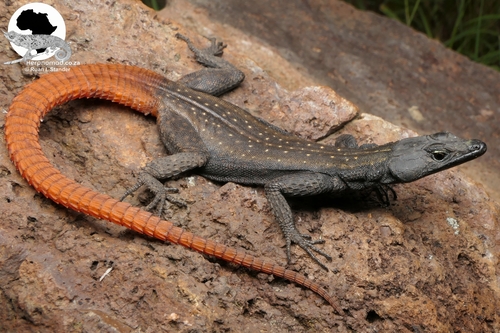
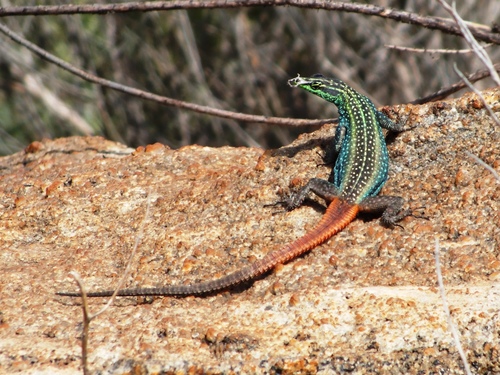
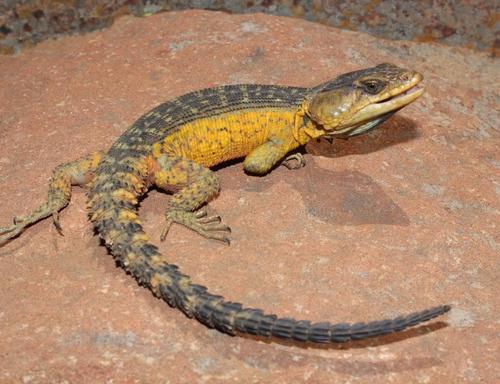
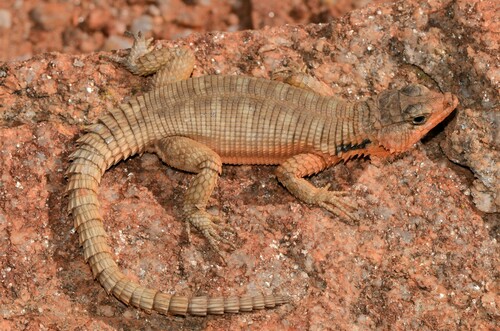
Osteoderms are spread across the lizard’s entire body. The species shows extensive color variation: individual specimens can be black, red, or turquoise, and some individuals have spotted patterning.
Distribution Range
The Karoo girdled lizard is a common species distributed across southern Africa. Its confirmed range covers Southern Namibia and most of South Africa, with unconfirmed records from additional nearby areas. The total area of its confirmed range is close to 150,000 square kilometers.
Habitat Preferences
Karoo girdled lizards almost exclusively inhabit rocky areas, though other aspects of their habitat can vary somewhat. They occur at lower elevations, with most specimens found in lowland areas and on the lower slopes of mountains.
Reproduction
This species is ovoviviparous, meaning embryos develop inside eggs that remain inside the mother’s body until they are ready to hatch. It has a generation time longer than one year, a trait called semivoltinism.
Behavior and Diet
The Karoo girdled lizard is diurnal and enters dormancy during specific seasons. Like Karusasaurus jordani, it is an insectivore.