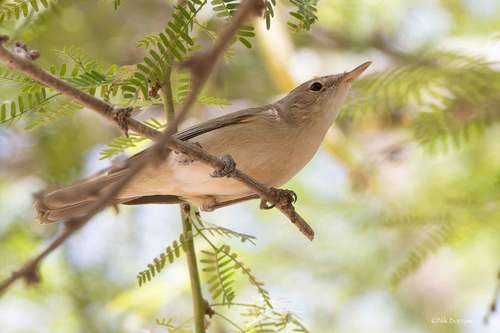
About Iduna opaca (Cabanis, 1850)
Common Name and Classification
Iduna opaca, commonly known as the western olivaceous warbler, is a small migratory passerine bird.
Habitat
This species inhabits dry open country including cultivated areas that have bushes or scattered trees.
Appearance Comparison
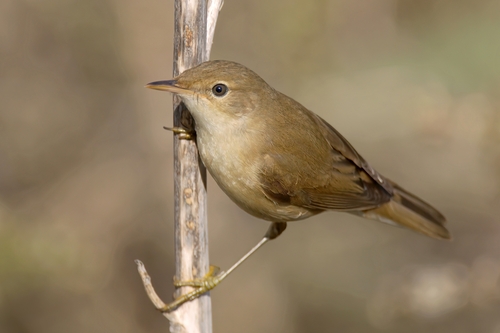
It is a medium-sized warbler, with an appearance more similar to a very pale reed warbler than to its close relative the melodious warbler.
Adult Plumage
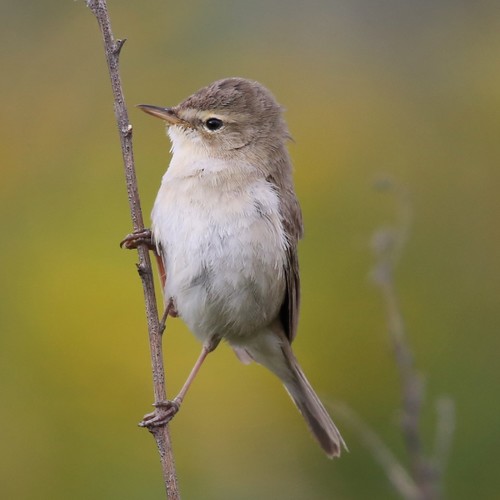
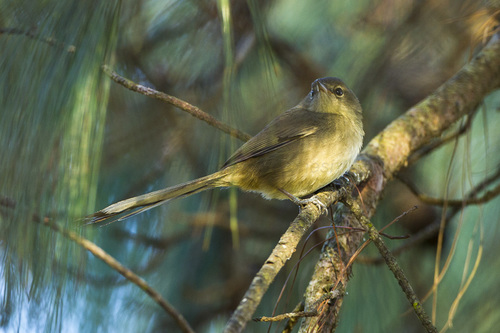
Adult western olivaceous warblers have a plain pale brown back and whitish underparts.
Body Measurements
The species has a body length of approximately 13–14 centimetres (5.1–5.5 in), a wingspan of 18–21 centimetres (7.1–8.3 in), and a weight between 8–13 grams (0.28–0.46 oz).
Bill and Leg Characteristics
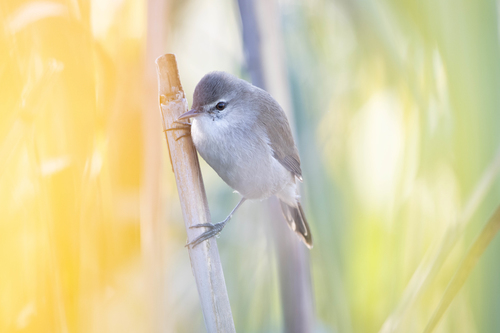
It has a strong, pointed bill and grey legs.
Plumage Variation
Like most warblers, males and females have identical plumage, while young birds have more buff colouring on the belly.
Foraging Behavior
This species rarely, if ever, wiggles its tail, and it searches for food at a range of different heights.
Diet
Like most warblers, the western olivaceous warbler is insectivorous.
Nesting and Reproduction
It builds its nest in low undergrowth or a bush, and lays a clutch of two or three eggs.
Breeding and Wintering Range
The species breeds in Iberia and north Africa, and is migratory, wintering in sub-Saharan Africa.
Vagrant Occurrence
It is a rare vagrant to northern Europe.
Comparison to Eastern Olivaceous Warbler
Compared to the eastern olivaceous warbler, the western olivaceous warbler is larger, has a browner tinge to its upperparts, and also has a larger bill.
Song Characteristics
Its song is a fast nasal babbling.