About Iduna natalensis (A.Smith, 1847)
Species Naming
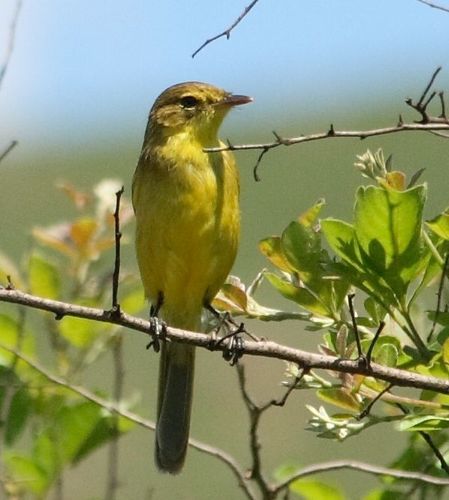
Iduna natalensis (A.Smith, 1847), commonly called the African yellow warbler, is a medium-sized warbler species.
Upperpart Plumage
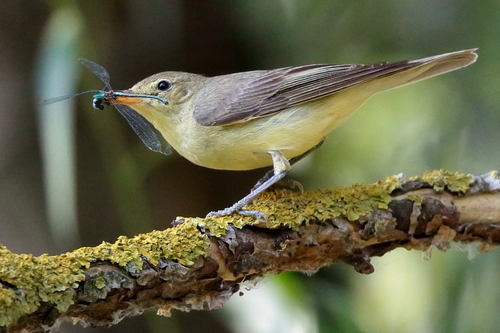
Its entire upperparts and tail are yellowish-brown, with a slightly browner crown and a yellower rump. Wing feathers are brown with yellow edging.
Underpart Plumage
The underparts are bright yellow, with an olive tint on the sides of the breast, flanks, and lower belly.
Bill and Leg Coloration
The upper mandible of the bill is pale, while the lower mandible and legs are blackish.
Sexual and Juvenile Plumage Differences
Females have duller underparts than males, and juveniles resemble males but are buffier overall.
Size and Weight
This species measures 13 cm (5.1 in) in total length, and individual birds weigh between 10 and 15 g (0.35 and 0.53 oz).
Habitat
African yellow warblers inhabit dense rank vegetation, occurring in reeds, overgrown waterside vegetation, and forest edges, particularly in sites where these habitats are connected to wetter vegetation.
Historical Taxonomic Placement
This species was originally classified in the genus Chloropeta together with the mountain yellow warbler.
Molecular Taxonomic Findings
Molecular studies have since shown it is closely related to a clade of Palearctic bush warblers formerly placed in the genus Hippolais, as well as the thick-billed warbler, which was previously categorized as incertae sedis.
Subspecies Distributions
Four subspecies of Iduna natalensis are currently recognized, with distinct distributions: Iduna natalensis batesi (Sharpe, 1905) ranges from Nigeria east to northern Democratic Republic of Congo and western South Sudan; Iduna natalensis massaica (G. A. Fischer & Reichenow, 1884) is found in western and southern Ethiopia, eastern South Sudan, north-eastern Democratic Republic of Congo, Uganda, western and southern Kenya, and north-western and north-eastern Tanzania; Iduna natalensis major (E. J. O. Hartert, 1904) ranges from Gabon east to southern Democratic Republic of Congo (east to Maniema and south to Katanga), south to Angola (as far south as Benguela, northern Huíla and southern Lunda Sul) and northern Zambia; Iduna natalensis natalensis (A. Smith, 1847) occurs in southern Tanzania, Malawi, southern Zambia, northern and eastern Zimbabwe, north-western and western Mozambique, eastern South Africa from eastern Limpopo south to central Eastern Cape, and Eswatini.