About Hyla arborea (Linnaeus, 1758)
Taxonomy
European tree frogs (scientific name Hyla arborea (Linnaeus, 1758)) are small, slender amphibians with long legs.
Size
Males measure 32–43 mm (1.3–1.7 in) in length, while females are larger at 40–50 mm (1.6–2.0 in).
Skin Texture
Their dorsal skin is smooth, and their ventral skin is granular.
Dorsal Coloration
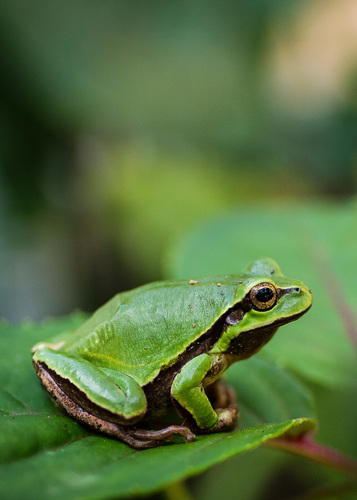
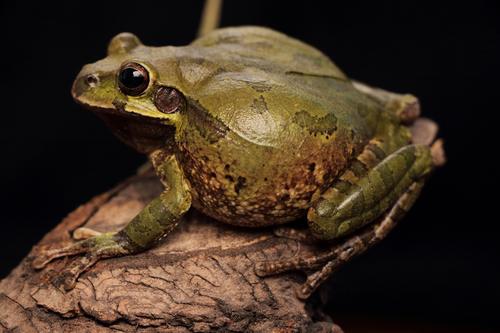
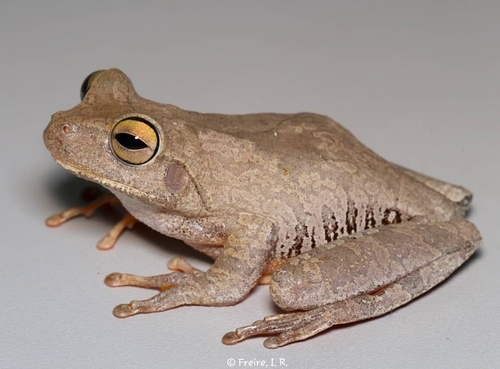
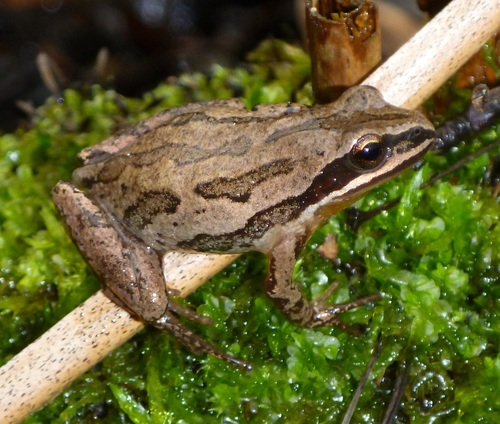
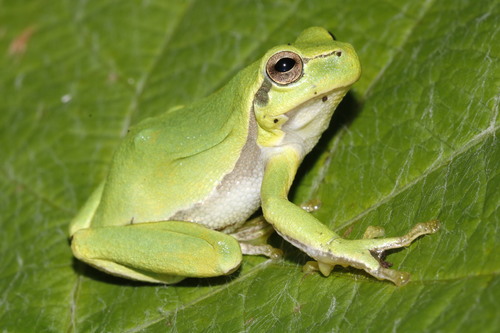
Dorsal skin color can change to green, gray, or tan based on environmental temperature, humidity, or the frog’s mood.
Ventral and Lateral Markings
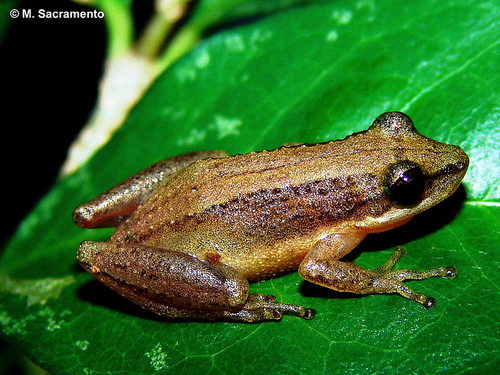
Ventral skin is whitish, and a dark brown lateral stripe runs from the eyes to the groin, separating the dorsal and ventral color regions.
Throat and Vocal Sac Characteristics
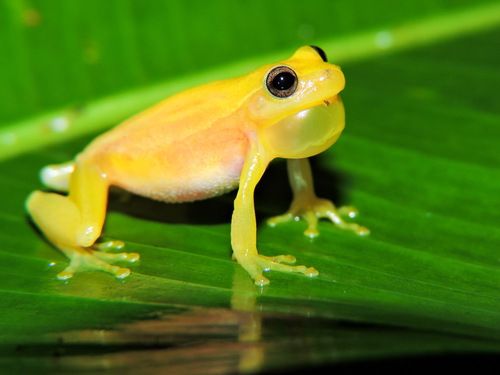
Females have white throats; males have golden brown throats with large folded vocal sacs.
Head Features
This species has a rounded head, a sharply sloping lip, a horizontally elliptical pupil, and a clearly visible tympanum.
Adhesive Toe Discs
A key characteristic feature of Hyla arborea is the adhesive toe discs that allow it to climb trees and hedges.
Limb Structure
Like all frogs, its hind legs are much larger and stronger than its fore legs, enabling rapid jumping.
Native Status in Europe
Members of the H. arborea species complex are the only native representatives of the widespread tree frog family Hylidae found in mainland Europe.
Global Distribution Range
This complex occurs across most of Europe (excluding the United Kingdom), northwest Africa, and temperate Asia extending east to Japan.
Native Countries
It is native to Albania, Armenia, Austria, Azerbaijan, Belarus, Belgium, Bosnia and Herzegovina, Bulgaria, Croatia, Cyprus, the Czech Republic, Denmark, France, Georgia, Germany, Greece, Hungary, Jordan, Italy, Latvia, Liechtenstein, Lithuania, Luxembourg, Moldova, Montenegro, the Netherlands, North Macedonia, Poland, Portugal, Romania, Russia, Serbia, Slovakia, Slovenia, Sweden, Switzerland, Turkey, and Ukraine.
Status in the United Kingdom
In the United Kingdom, this species is legally classified as non-native; it was introduced to the region and is currently thought to be extinct there.
Inhabited Habitats
European tree frogs inhabit marshlands, damp meadows, reed beds, parks, gardens, vineyards, orchards, stream banks, lake shores, and both humid and dry forests.
Habitat Preferences and Tolerances
They avoid dark, dense forests, can tolerate short dry periods, and may sometimes be found in dry habitats.
Breeding Site and Timing
European tree frogs reproduce in stagnant water bodies including lakes, ponds, swamps, reservoirs, and occasionally puddles, with breeding occurring from late March to June.
Male Breeding Behavior
Males croak during the breeding season, even while migrating to mating ponds.
Breeding Pond Movement
Males often switch breeding ponds within a single breeding season.
Male Mating Call Behavior
After a spring rain, males call to attract females from low vegetation or shallow ponds.
Egg Characteristics
Females lay 800 to 1000 eggs in clumps roughly the size of a walnut; individual eggs measure about 1.5 mm in diameter.
Development Timeline
Eggs hatch 10–14 days after laying, and tadpoles complete metamorphosis into adult frogs after three months.
Metamorphosis Period
Peak metamorphosis typically occurs from late July to early August.
Lifespan
This species can live up to 15 years.