About Hoploxypterus cayanus (Latham, 1790)
Taxonomic Identification
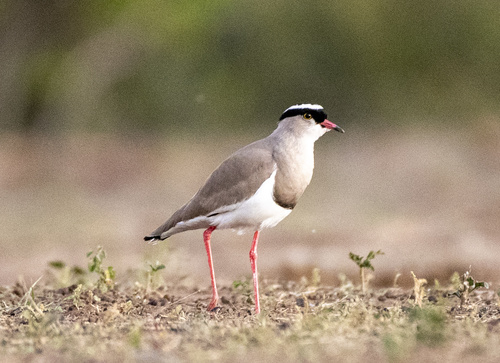
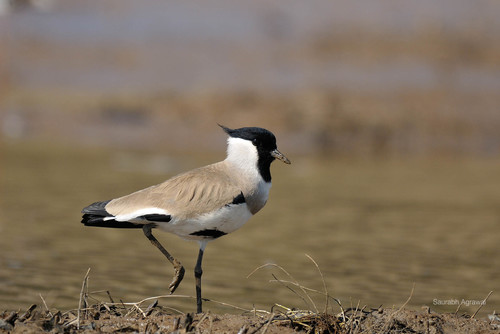
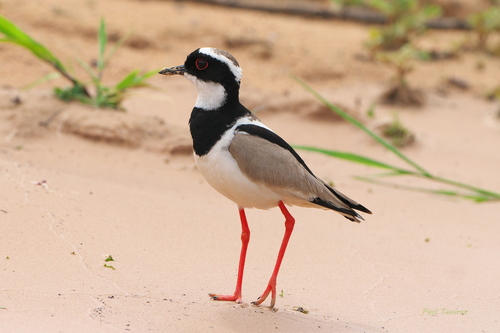
The pied plover, scientific name Hoploxypterus cayanus (Latham, 1790), is a strongly patterned bird with contrasting black and white markings.
Plumage Coloration
Its back and wings are buff-colored, and its abdomen is white. A bright red eye-ring circles each eye, and a prominent black V-shaped marking sits on its upper back.
Size and Morphology
It has long, red legs, and is a medium-sized member of the plover family Charadriidae, reaching approximately 22 centimeters in length.
Sexual Dimorphism
This species shows no sexual dimorphism, meaning males and females are identical in appearance.
Juvenile Appearance
Juveniles are similar in appearance to adults, but they are more extensively buff-colored overall and have buff eye-rings instead of bright red ones.
Vocalization Frequency
Pied plovers are a quiet species that do not call very often.
Typical Call Characteristics
Their typical call sounds like "kee-oo", with the second portion of the call being lower in pitch.
Flight Display Call
When performing flight displays, their call consists of repeated "klee" sounds.
Core Habitat
This species inhabits sandy and muddy shorelines of lakes and rivers in northern South America.
Geographical Range
Its range covers Brazil, Bolivia, Paraguay, Peru, Colombia, Ecuador, Venezuela, Guyana, Suriname, and French Guiana.
Movement Patterns
Little is known about the movement patterns of the pied plover, but it appears to shift habitats between different times of year.
Altitudinal Range
In Bolivia, it has been observed at altitudes as high as 2600 meters, possibly because wet season conditions push it to higher ground.
Behavior Documentation Status
Overall, little is documented about the pied plover's behavior, and conflicting observations have been reported.
Brazil Flocking Behavior
At Serra da Capivara National Park in Brazil, pied plovers were observed only flocking with other members of their own species, and did not mix with other wader species along shorelines.
Peru Flocking Behavior
However, at Tambopata Reserve in Peru, pied plovers were seen alone or in pairs, and did not form flocks at all.
Diet Documentation Status
Not much is known about the pied plover's diet.
Confirmed Prey Items
They mainly eat insects and snails, and individuals have been observed holding a crustacean in their bill, though it has not been confirmed that they eat crustaceans.
Additional Prey Record
One documented prey item for the species is scorpions, recorded in Brazil.