About Hippotragus niger (Harris, 1838)
Scientific Naming and Sexual Dimorphism Overview
The sable antelope, scientifically named Hippotragus niger (Harris, 1838), shows clear sexual dimorphism: males are heavier and roughly one-fifth taller than females.
Head-and-Body Length
Typical head-and-body length ranges from 190 to 255 cm (75 to 100 in).
Shoulder Height
Shoulder height reaches 117–140 cm (46–55 in) for males, while females are slightly shorter.
Weight
On average, males weigh 235 kg (518 lb) and females weigh 220 kg (490 lb).
Tail Characteristics
The 40–75 cm (16–30 in) long tail ends in a tuft.
Body Build
This species has a compact, robust build with a thick neck and tough skin.
Mane Structure
It has a well-developed, often upright neck mane, plus a short throat mane.
General Body Color Range
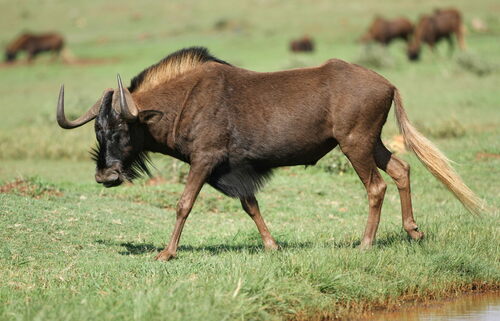
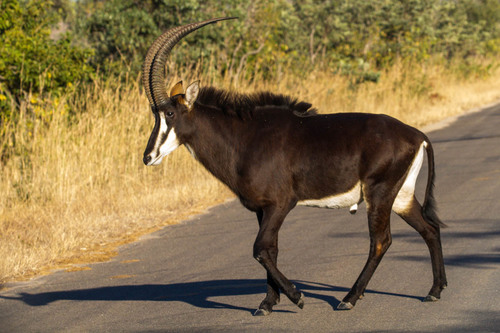
Overall body color ranges from rich chestnut to black.
Sex and Age-Related Color Variation
Females and juveniles are chestnut to dark brown, and males begin darkening and turn black after reaching three years of age.
Southern Population Female Coat Color
In southern populations of sable antelope, however, females have brown to black coats.
Calf Coloration Under Two Months
Calves under two months old are light tan with faint markings.
Contrasting Light Body Markings
The underparts, cheeks, and chin are all white, creating strong contrast with the dark back and flanks.
Facial Markings
Long white hairs grow below the eyes, and a wide black stripe runs across the nose.
Horn Presence and General Structure
Both sexes have backward-arching ringed horns.
Horn Length Variation by Sex
Female horns measure 61–102 cm (24–40 cm) in length, while male horns range from 81–165 cm (32–65 in) long.
General Species Lifespan
The average lifespan of sable antelope is 19 years in the wild and 22 years in captivity.
Giant Sable Antelope Breeding Seasonality
For the giant sable antelope, a subspecies of this animal, breeding occurs seasonally, and births align with the rainy season.
Gestation and Litter Size
After a gestation period of around 9 months, females give birth to a single calf.
Newborn Calf Camouflage Coat
Newborn calves have a sandy-colored coat that helps them camouflage.
Post-Birth Calf Hiding Behavior
For at least 10 days after birth, the calf stays hidden while nursing from its mother.
Weaning and Sexual Maturity Age
Young sable antelope are weaned at around 8 months old, and reach sexual maturity between 2 and 3 years of age.
Calf Development and Social Integration
As the calf grows, its coat darkens, and it will establish its social position within the herd.
Giant Sable Antelope Lifespan
The average lifespan of a giant sable antelope is around 17 years.