About Hipposideros diadema (É.Geoffroy Saint-Hilaire, 1813)
Etymology and Nose Leaf Origin
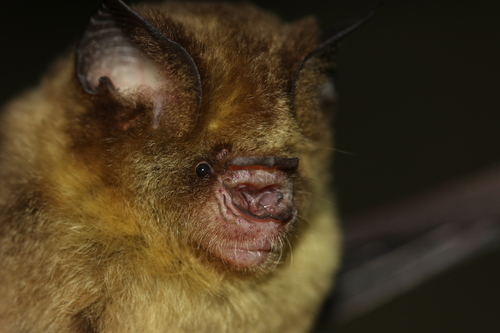
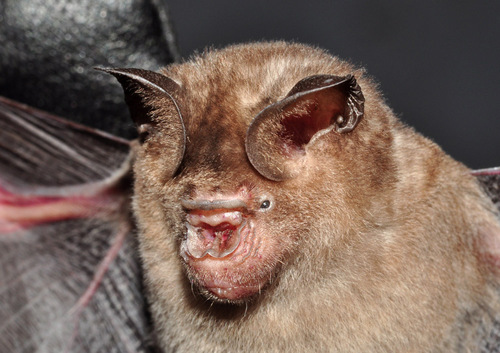
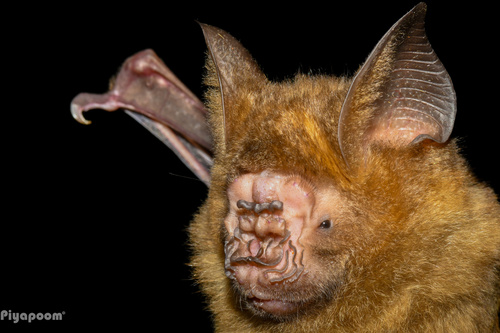
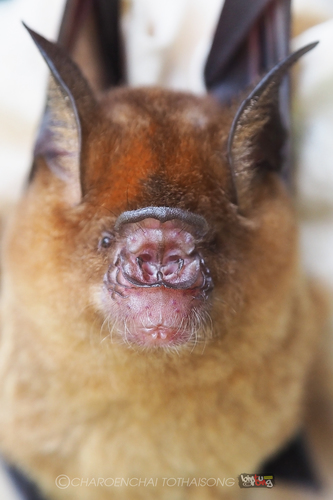
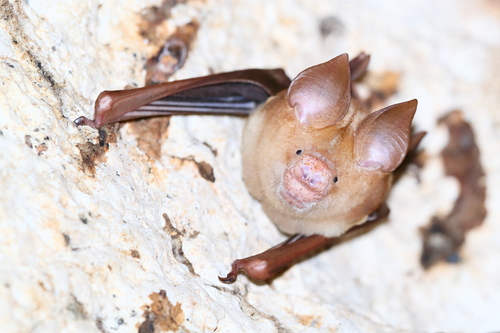
Hipposideros diadema gets its name from its complex anterior nose leaf, which is horseshoe-shaped and sits on a slightly inflated nasal region. This specialized nasal structure evolved to support echolocation: the noseleaf and its associated intricate musculature help the nose resonate more effectively.
Transverse Leaf Characteristics
The transverse leaf is erect, and no median projection is present.
Ear Structure
The species has very large ears, primarily due to a well-developed antitragus, and no tragus is present.
Male Nasal Sac
Males have a sac positioned posterior to the nose that secretes a waxy substance, which is thought to function in attracting mates and establishing social status.
Body Length and Fur
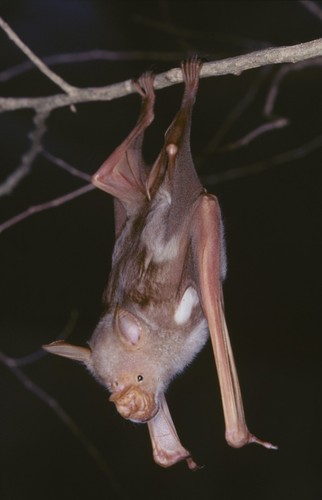
Adult body length ranges from 6 to 10 centimeters, and brown fur covers the entire body except the limbs. The underbelly is a paler shade than the rest of the body, and white spots are often present in the shoulder region.
Weight and Wingspan
Adult individuals weigh between 34 and 50 grams, with a wingspan of approximately 15 to 22 centimeters.
Limb Claw Structure
The hind limbs have large, sturdy claws, and each forelimb bears a single claw. Each foot toe has two phalanges, and the short tail is usually enclosed within the small uropatagium.
Dental Characteristics
The dental formula for this species is 1/2, 1/1, 2/2, 3/3; molars are dilambdodont, and thick enamel tubules are present at the dentin-enamel junctions.
Skull Premaxillary Structure
In the oral region of the skull, premaxillary palatal branches are fused medially and widely separated from the maxillae laterally.
Body and Wing Shape
This bat species has a heavy body and long, narrow wings. This body shape makes it adept at fast flight, but it has relatively poor maneuverability.
Foraging Habitat Range
It has adapted to forage in open gaps within forests, such as areas around tree falls or above rivers. The species is not restricted to rainforest; in outback Australia, it forages in eucalypt woodland, open forest, deciduous vine thicket, and within human towns.
Foraging Distance
Individual bats are known to forage up to two and a half kilometers from their roost over the course of a night.
Roosting Behavior
During the day, they roost in small groups in caves, old mines, sheds, hollow trees, and tree branches.
Breeding Season Timing
This species has one breeding season per year, and birthing and lactation align with peak spring insect availability. One young is born per litter.
Male Breeding Competition
Male competition includes occasional physical skirmishes, but centers mostly on secreting and detecting the waxy material from the sac behind the nose.
Female Breeding Behavior
Females congregate in large groups during March and April, and each gives birth to a single offspring during this period. The mother stays close to her young until weaning, after which the juvenile usually becomes independent.
General Diet Classification
Hipposideros diadema is typically insectivorous. Its diet varies by location, but it generally prefers insects from the orders Coleoptera (beetles), Lepidoptera (butterflies and moths), and orthopteroid orders (grasshoppers).
Carnivorous Prey Occurrence
Rarely, it will prey on small birds and spiders, so the species is sometimes classified as an occasional carnivore.
Hunting Success Adaptation
These bats are very skilled predators. Their echolocation, enhanced by their highly modified nose and nostrils, gives them a very high hunting success rate.
Echolocation Call Parameters
They produce a constant frequency echolocation call around 50 to 58 kHz, which they maintain for 20 to 30 seconds at a time.
Perch Hunting Strategy
They do not hunt while in continuous flight; instead, they make short flights from perches to intercept prey midair. This perch hunting strategy is a low-energy method of obtaining food.
Hunting Habitat Preference
When hunting, they usually fly over canopy-covered streams or creeks, and they very rarely venture out over open water.
Moth Prey and Evasion
Eared moths, a type of lepidopteran, make up a significant portion of their diet. These moths have an auditory range of 20 to 50 kHz, and research shows they can sense the bats' echolocation pulses and learn to evade or hide from attacking bats.
Additional Prey Species
In addition to beetles and moths, other insects consumed include weevils and katydids.
Prey Consumption Habits
The bats eat the soft parts of these insects, and leave inedible parts such as wings, carapaces, and legs discarded below their perch.