About Hipposideros cervinus (Gould, 1854)
Species Classification
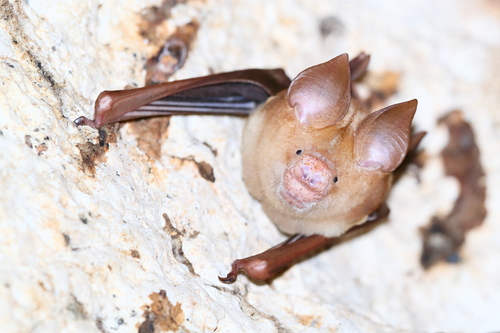
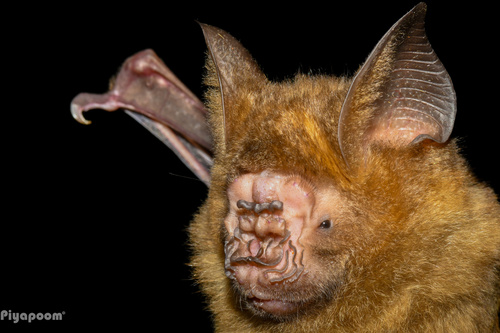
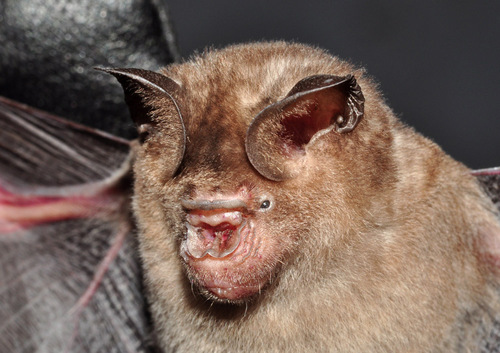
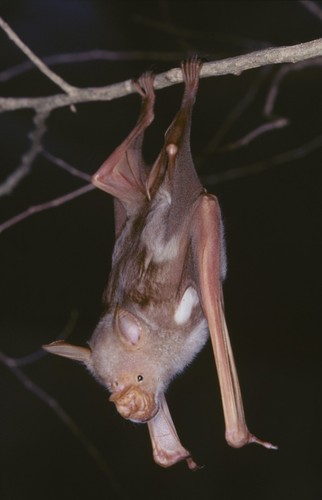
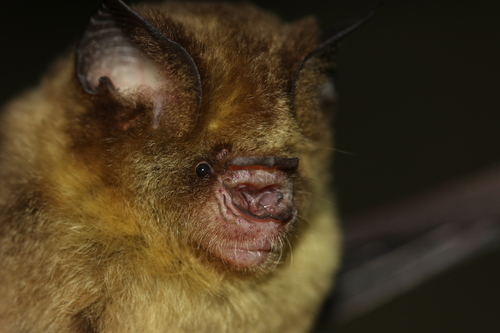
Hipposideros cervinus is a medium-sized hipposiderid bat that has two lateral leaflets on its nose-leaf.
Nose-leaf and Ear Features
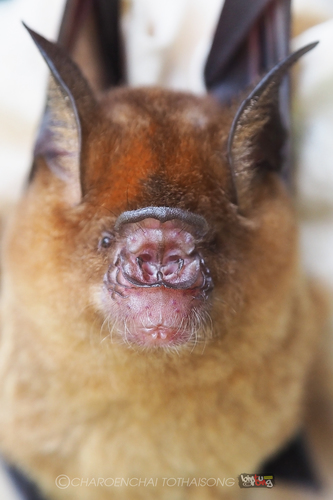
The nose-leaf is greyish pink, and the species’ ears are triangular and funnel-shaped, ending in a pointed tip.
Distinguishing Nose-leaf Morphology
The nose-leaf has a squarish outline, is broader at its lower section below the nostrils, and has small leaflets extending from either side of the structure; this unique nose-leaf form distinguishes the species from others.
Juvenile to Adult Fur Color Change
Newborn pups are dark gray, and mature into dark brown adults.
Fur Bleaching in Roosts
Adult fur often becomes bleached over time, turning bright orange due to ammonia from droppings in communal roosts.
Fur Color Variation
Overall fur color is variable, ranging from uniform gray, to grayish-brown with russet highlights, and occasionally bright orange.
Linear Body Measurements
Standard measurements for the species are: forearm length 45–48 millimetres, combined head and body length 41–51 mm, ear length from tip to base notch 13–15 mm.
Body Mass
Body mass ranges from 5.6 to 8.5 grams, with an average of 7.0 grams.
Core Distribution Range
Hipposideros cervinus is widespread across a region that extends from the Malay Peninsula, across large and small islands in Indonesia and New Guinea.
Australian Distribution
Its distribution also includes the Torres Strait islands of northeast Australia, with a small number of records on the mainland in eastern Cape York, near the town of Coen, Queensland.
Altitudinal Range
The species occurs at altitudes from sea level up to 1400 metres above sea level.
Roosting Habitat Preference
This bat is a communal rooster, most commonly found residing in caves and trees.
Niah Population Estimate
In 1958, Medway estimated the population of this species at Niah to be 250,000 individuals.
Roosting Behavior
Hipposideros cervinus roosts in caves and abandoned mines, where individuals suspend themselves separately rather than huddling together, and will cohabit with other species of hipposiderid bats.
Foraging Habitats
They forage across a wide variety of habitats, from dense rainforest to open woodland in savannah landscapes.
Prey and Foraging Location
They prey on mid-sized insects caught in flight, close to low vegetation, over water, and near the ground.
Foraging Flight Style
They fly slowly with high manoeuvrability while foraging for invertebrates including beetles and moths; this flight style allows them to hunt at low altitudes and make sudden direction changes to catch prey.
Group Hunting Behavior
H. cervinus has been recorded hunting in small groups.
Reproductive Cycle
Reproduction produces a single birth each year between November and December.
Juvenile Attachment Position
Juveniles attach to their mother by clasping her ventral side, holding this position with their head facing away whether the mother is at the roost or in flight.
Juvenile Feeding Position
They turn the opposite direction to receive food from their mother.