About Hipposideros armiger (Hodgson, 1835)
Species Distinction
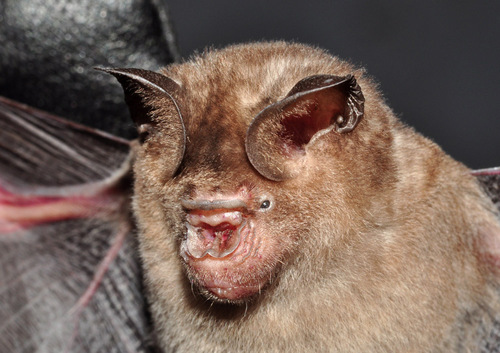
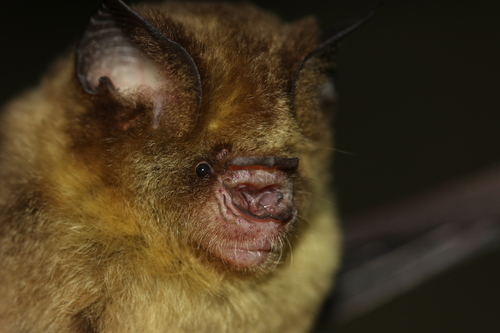
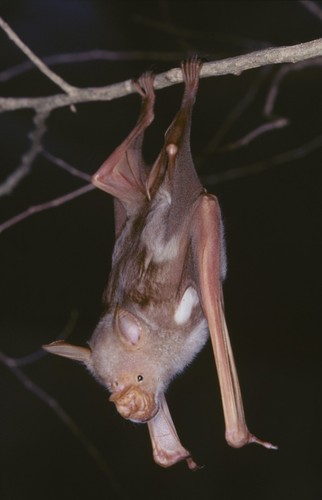
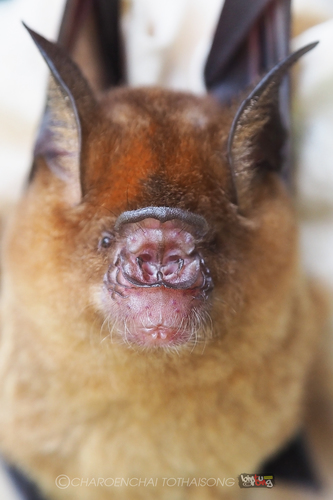
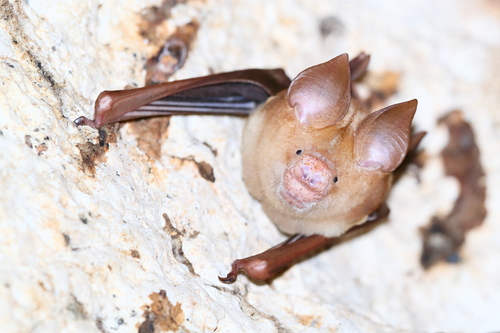
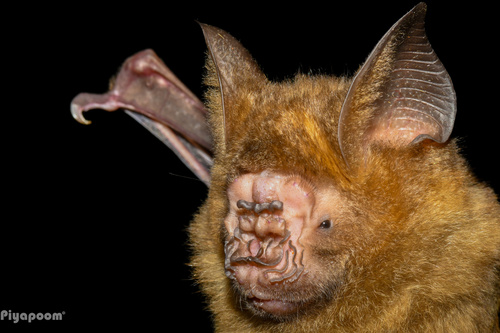
The great roundleaf bat, Hipposideros armiger, is visually similar to its close relative the intermediate roundleaf bat (H. larvatus), but is larger and has four lateral accessory leaflets on each side of its main noseleaf, rather than three.
Size Measurements
Its forearm can grow up to 9.8 cm long, and it can weigh up to 60 g.
Noseleaf and Ear Experiment Methods
In an experiment published by Kathryn Knight, researchers painted the bats’ accessory leaflets and ears and recorded their movement on video. The experiment found that when the bats clicked, their leaflets closed and their ears bent downward. When the bats listened to clicking, they opened their noseleaves and ears.
Overall Distribution Range
This bat has been documented across South and Southeast Asia.
South Asia Distribution
In South Asia, it is found in Northern and Northeastern India, as well as Central, Eastern and Western Nepal.
China Distribution
In China, it occurs south of the Yangtze River, and has also been recorded on the islands of Hong Kong and Taiwan.
Southeast Asia Distribution
In Southeast Asia, it has been documented in Myanmar, Thailand, Laos, Vietnam, and Malaysia.
Elevation Range
It has been recorded at elevations ranging from 100 to 2031 meters above sea level.
Flight Behavior
It is a low-flying species.
South Asia Habitat
In South Asia, it is a high-altitude species that lives in montane and bamboo forests.
South Asia Roosting Habits
It roosts either alone or in small colonies of several individuals, and shares roosting spots in caves, house lofts, verandahs of old houses, and old temples with other bat species.
China Habitat
In China, the species occupies a wide range of habitats.
China Roosting Habits
It roosts in caves and various man-made structures in colonies of hundreds of bats, shared with bats of the genus Rhinolopus.
Southeast Asia Ecology
In Southeast Asia, the bat roosts in caves, but is known to forage in areas located far from its roosts.
Breeding Characteristics
This species breeds once per year and gives birth to two young.
Reproductive Timeline
Females have been found pregnant from January through early May, while young bats were observed attached to their mothers from February to June.