About Hemigymnus fasciatus (Bloch, 1792)
Species Nomenclature and Size
The barred thicklip wrasse, scientifically named Hemigymnus fasciatus (Bloch, 1792), is a medium-sized fish that can reach a maximum length between 30 and 50 centimeters.
Body Shape
It has a tall, relatively flattened body, a large head, and thick lips at its terminal mouth.
Color Change Overview
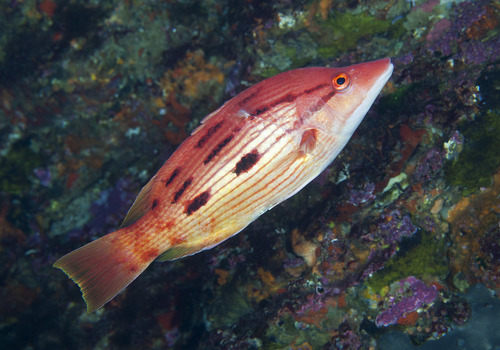
Its body coloration changes with age.
Juvenile Coloration
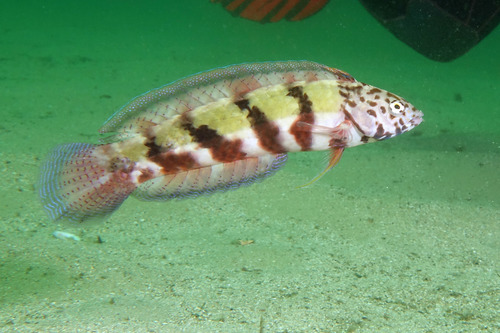
In the juvenile phase, this wrasse has a green-yellow base body color with six yellow vertical stripes, separated by thin black vertical lines that are not always visible.
Initial Phase Female Coloration
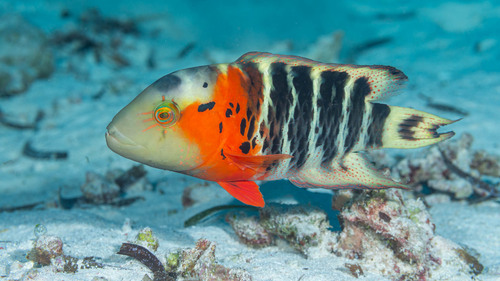
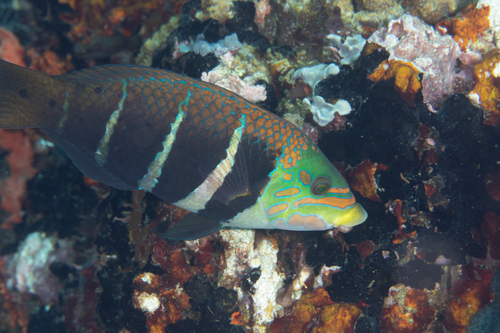
Females in the initial phase have a dark green to black body with four vertical white stripes. Their heads are green and white with pink patterns that are outlined in turquoise, and their caudal fin is orange.
Terminal Phase Male Body Coloration
In the terminal phase, mature males have a dark green to black body with four white stripes. These stripes get thinner toward the top of the body, and may even fade completely in older individuals.
Terminal Phase Male Head and Fin Coloration
The male's head shares the same color pattern as the female's, but the patterns are more intensely colored, with a distinct horseshoe-shaped pattern on the snout. The male's caudal fin matches the dominant color of its body.
Geographical Distribution
The barred thicklip wrasse is widely distributed across tropical and subtropical waters of the Indo-Pacific. Its range extends from the eastern coast of Africa (including the Red Sea) to Polynesia, and from New Caledonia to southern Japan.
Habitat Type
It prefers mixed coral habitats that include rubble, sand, and corals, which let it easily find food and shelter.
Depth Range
These habitats range from the surface down to 25 meters deep.
Juvenile Behavior
Juveniles are more shy and reclusive, and always stay hidden among corals or even inside sea urchins.