About Grallaria alleni Chapman, 1912
Common Name and Taxonomy
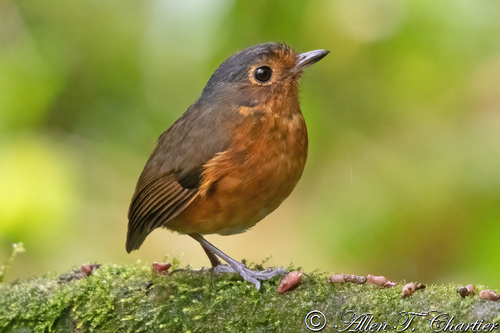
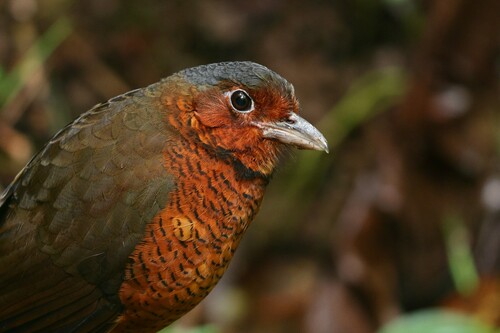
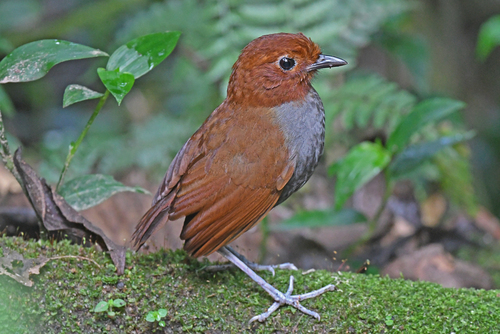
Grallaria alleni, commonly called the moustached antpitta, is a member of the Grallaria genus of antpittas. These antpittas are described as a wonderful group of plump, round antbirds that often keep their feathers fluffed up, with stout bills and very short tails.
Size Measurements
The moustached antpitta is 16.5 to 17 cm (6.5 to 6.7 in) long; two males weighed 64 and 77 g (2.3 and 2.7 oz) respectively. The sexes have identical plumage.
Nominate Subspecies Head Plumage
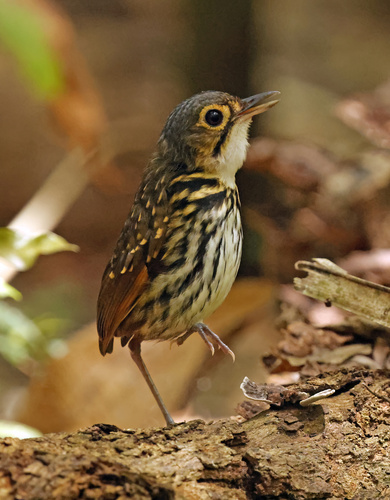
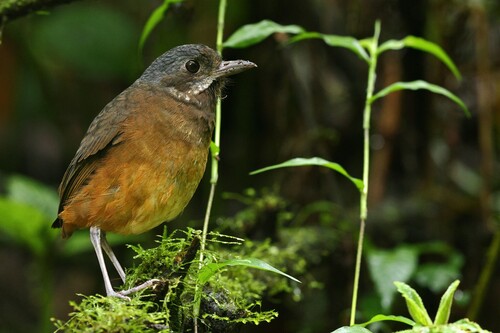
Adults of the nominate subspecies have a light olive brown forecrown, with a slate gray crown and nape; each feather has thin blackish edges. They have white lores, olive brown ear coverts, and a wide white moustachial stripe marked with thin black streaks.
Nominate Subspecies Upperpart Plumage
Their upperparts range from dark rufescent brown to olive brown, and thin blackish edges to their feathers create a faint scaly appearance. Their tail is rufous chestnut to deep tawny.
Nominate Subspecies Underpart Plumage
Their chin and throat are rufescent brown, with a white crescent below the throat. Their breast is olive brown with thin white streaks, and their belly is buffy white.
G. a. andaquiensis Plumage Differences
Subspecies G. a. andaquiensis is overall browner than the nominate subspecies, and has an ochraceous belly. Both subspecies share the same traits: dark brown iris, black bill, and vinaceous gray legs and feet.
Distribution Pattern
This species has a disjunct distribution. The nominate subspecies occurs in the northern and central sections of Colombia's Western Andes, and on the western slope of Colombia's Central Andes.
G. a. andaquiensis Distribution
Subspecies G. a. andaquiensis occurs in the upper Magdalena River Valley in Colombia, and on both slopes of the Andes in Ecuador, extending south as far as Cotopaxi and Napo provinces.
Habitat Preferences
The moustached antpitta lives in the understory of humid montane forest, and prefers dense undergrowth growing in ravines and on steep slopes.