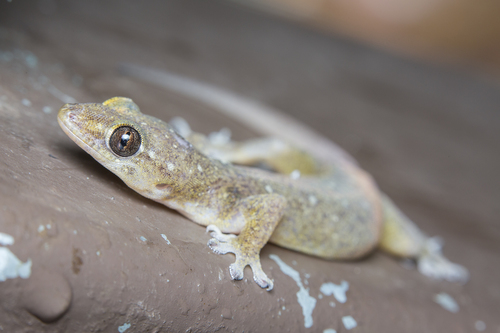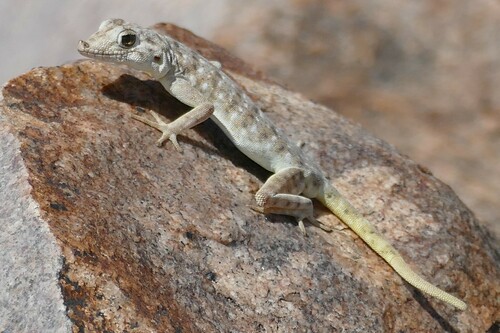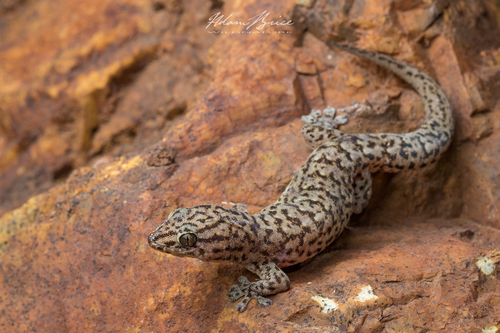
About Gehyra variegata (Duméril & Bibron, 1836)
This species is commonly known as the tree dtella.
Adult Size
For adults, the snout-vent length of the body reaches 55 mm, and tail length reaches 70 mm.
Dorsal Color Variation Cause
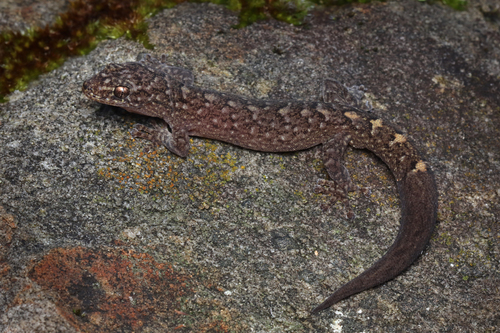
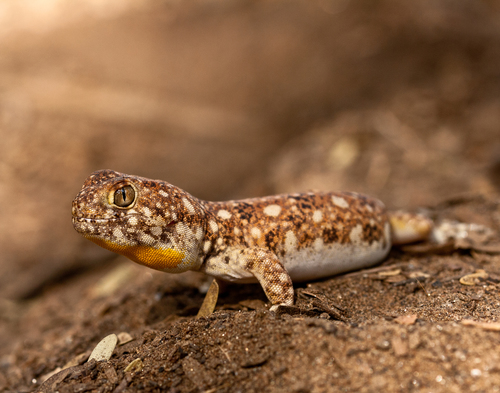
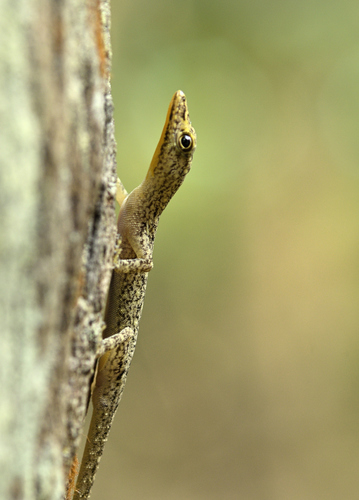
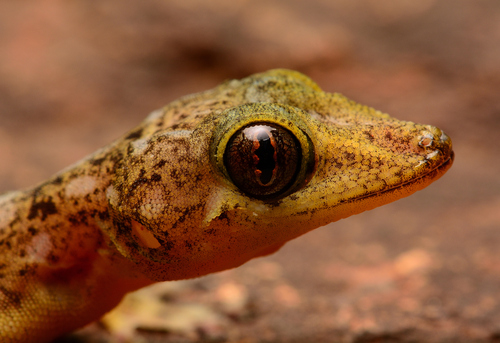
The tree dtella has highly variable dorsal coloration; this variation is likely because the current classification actually includes multiple distinct species.
Population Color Differences
Color ranges from grey to brown across different populations. Eastern populations have chequered dark and pale blotches and marbling, while western populations have white to pale brown spots paired with dark bars.
Dorsal Pattern Structure
All these patterns form an irregular reticulate pattern across the entire dorsal surface.
Habitat Range
The tree dtella inhabits arid to sub-humid areas, including woodland, shrubland, and dry rocky environments.
Shelter Sites
It is both arboreal and saxicolous: it can be found under loose bark and in tree hollows, as well as in rock crevices and under exfoliating rock.
Arboreal Shelter Preferences
When on trees, it prefers sheltered sites that are more than 1 metre above the ground, and it may also be found under ground debris.
Geographic Distribution
Its distribution is limited to inland Australia, excluding the north-west and south-east regions.
Metapopulation Structure
Field studies confirm that tree dtella populations have a metapopulation structure across their geographic range.
Disturbed Habitat Adaptation
The species can survive in small patches of disturbed land, because it can adjust its habitat use in response to environmental change.
Habitat Use Example
For example, populations in nature reserves occupy shrubs, while populations in small fragmented remnant vegetation shelter in logs and eucalyptus trees.
Thermoregulation Classification
The tree dtella is an ectotherm, and falls into the thigmotherm subgroup, meaning it relies on heat exchange with a substrate to maintain its body temperature.
Thermoregulation Behaviour
Arboreal tree dtellas perform this by shifting their position under tree bark as the sun warms different parts of the tree throughout the day.
Thermoregulation Purpose
This behavioural thermoregulation is thought to be linked to the high thermal requirements the species has for digestion.
Lifespan and Maturity
The tree dtella has a lifespan of at least 5 years, and reaches sexual maturity at 3 years of age.
Reproductive Mode
It is oviparous.
Egg Laying Details
Each clutch holds one hard-shelled egg, which is laid beneath cover, usually in bark, logs, or holes under rocks.
Clutch Timing
Females lay two clutches per breeding season, around one month apart. The first clutch is laid in late November.
Egg Dimensions
Eggs measure 10 by 11 mm.
Gestation Period
The gestation period lasts 61 to 79 days, which is slightly longer than two months.
Hatchling Size
Newly hatched tree dtellas are 45 mm in total length.
Communal Nests
Nests are often communal, and a single nest has been found containing 35 eggs.