About Fundulus parvipinnis Girard, 1854
Taxonomy and Common Name
The California killifish, scientifically Fundulus parvipinnis, is a species of killifish in the family Fundulidae that occurs along the coast of southern California and the Baja California Peninsula.
Size
Like other members of its family, California killifish are small, reaching a maximum length of about 11 centimetres (4.3 inches).
Body Shape
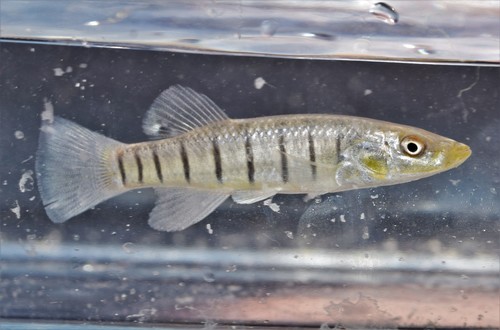
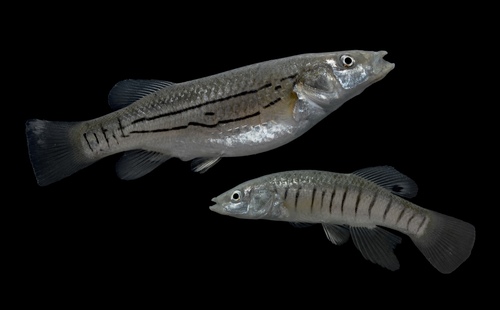
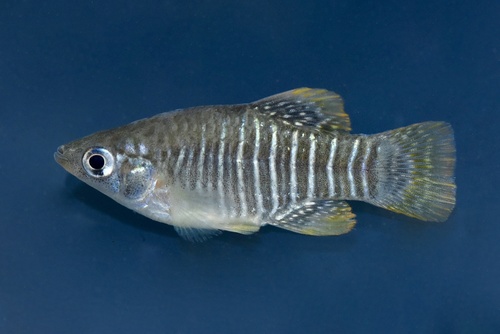
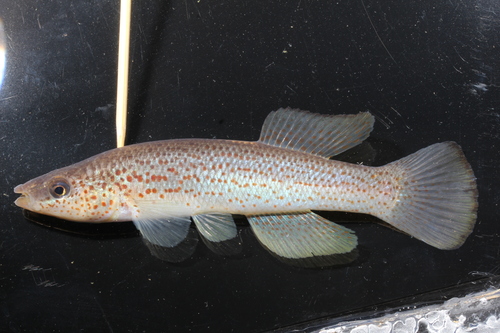
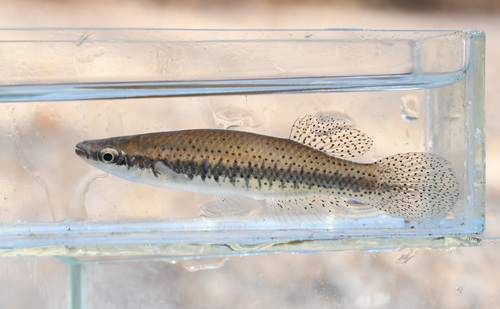
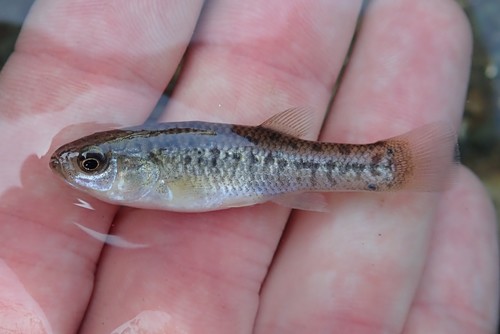
Their bodies are fairly thick and oblong-shaped, with almost no narrowing of the caudal peduncle, and a squarish tail fin.
Fin Structure
Their pelvic fins are small, while their anal fin is long and has between 11 and 13 rays.
Coloration
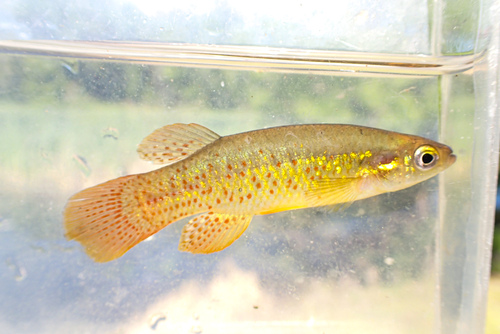
The dorsal side of their body is olive-green, and the ventral side is yellowish brown; during breeding season, their back turns dark brown, while their belly and paired fins become bright yellow.
Habitat Types
California killifish are coastal fish that inhabit shallow bays, estuaries, marshes, and lower stream sections, ranging from Morro Bay south to Magdalena Bay in central Baja California Sur.
Distribution Continuity
Their distribution is almost continuous between Goleta Slough and the Tijuana River, as the frequent presence of wetlands in this region lets the fish move freely between habitats.
Environmental Tolerance
This species can tolerate a wide range of salinities, oxygen levels, and pollution.
Diet
California killifish feed on a wide variety of benthic and planktonic invertebrates, including snails, crustaceans, and insects.
Feeding Behavior
They typically find this food by foraging in vegetation areas flooded by high tides.
Genus Placement
Along with the Baja California killifish F. lima, the California killifish is one of only two members of the genus Fundulus found on the west coast of North America, and it is distinct from the rest of the genus, which is restricted to the east coast.
Taxonomic Proposal
Researchers have suggested these two west coast species may form their own separate genus.