About Fordonia leucobalia (Schlegel, 1837)
Genus Classification
The genus Fordonia is a group of aquatic snakes within the family Homalopsidae. This genus is monotypic, meaning it contains only one recognized species: Fordonia leucobalia.
Common Names
This species is commonly known by two common names: the crab-eating water snake and the white-bellied mangrove snake.
Distribution and Habitat
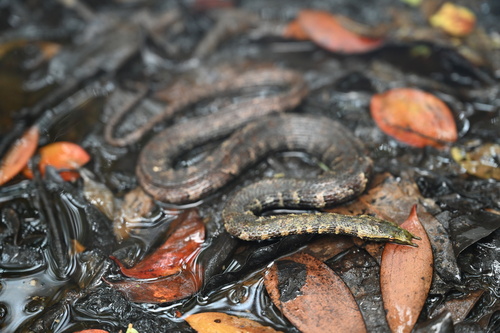
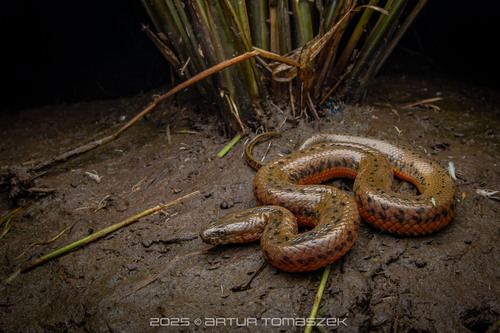
This snake is a common resident of mangrove swamps and tropical tidal wetlands, ranging from the coast of Southeast Asia through Indonesia to the coasts of Northern Australia.
Adult Size
Adult individuals of Fordonia leucobalia can grow up to one meter in length.
Coloration
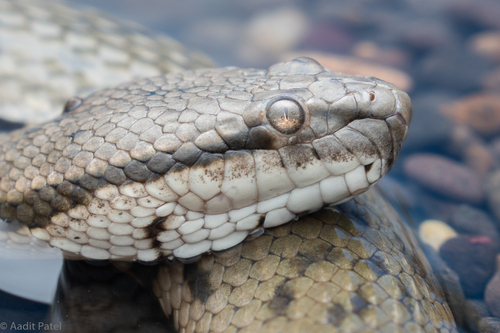
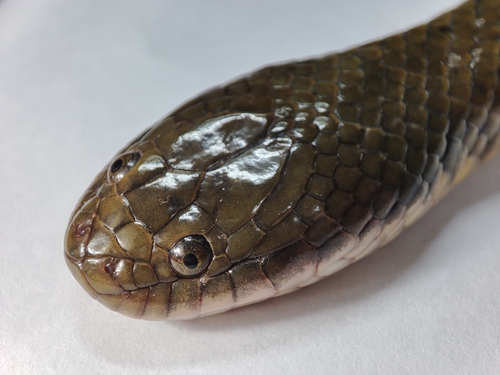
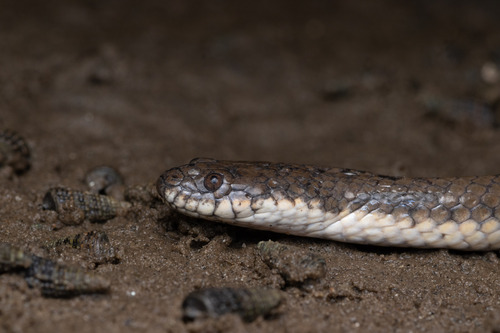
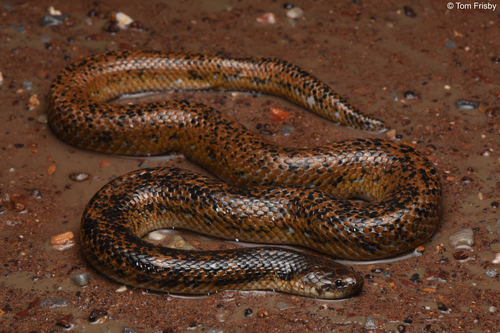
Their dorsal coloration is brown or gray, and they have a characteristic white belly. This species displays significant color variation across individuals, and some individuals have visible spots on their bodies.
Aquatic Adaptations
The snake’s anatomy is adapted specifically to its fully aquatic lifestyle: its eyes are positioned on the top of the head, and its nostrils have specialized valves that close when the snake dives underwater.
Diet
It feeds on small prey native to its habitat, including frogs and small fish, and it is a specialized predator of crabs, which is how it earned its common name of crab-eating water snake.
Reproduction
Just like other homalopsine snakes, Fordonia leucobalia gives birth to live young instead of laying eggs.