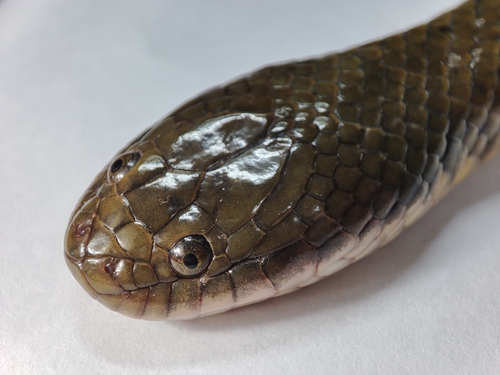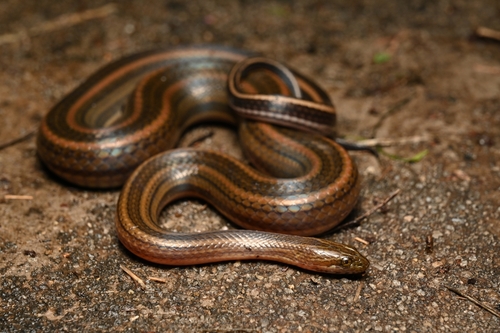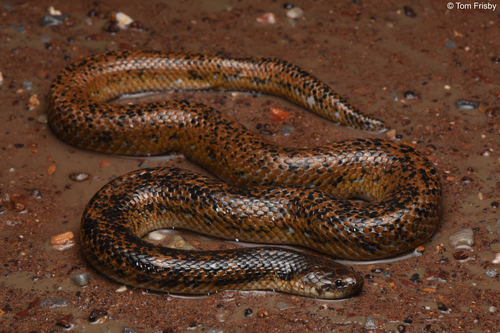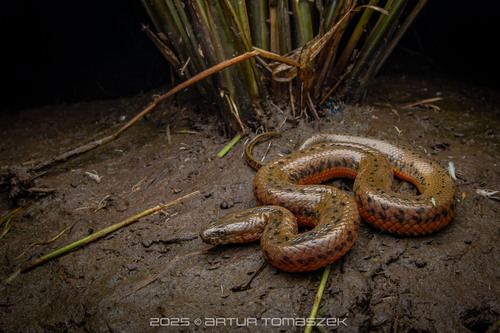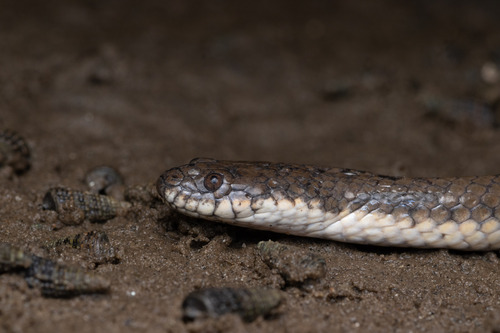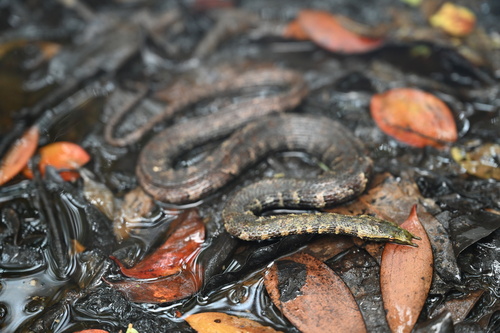
About Erpeton tentaculatum Lacépède, 1800
Common Name and Size
Erpeton tentaculatum, commonly called the tentacled snake, is a relatively small species, with an average length between 50 and 90 cm (20 to 35 in).
Color Phases
This snake occurs in two main color phases: striped or blotched. Individuals from both phases range in color from dark gray or brown to a light tan.
Habitat Type
The tentacled snake spends its entire life in murky water.
Head Tentacles
It is the only snake species that has a pair of twin "tentacles" on the front of its head, and these structures are confirmed to have a mechanosensory function.
Diet
The diet of the tentacled snake consists exclusively of fish.
Venom and Human Risk
While this species does have venomous fangs, it is not considered dangerous to humans. Its fangs are small, only partially grooved, and positioned deep in the rear of the mouth. Its venom is specialized to act on the fish it preys on.
Geographic Range
The tentacled snake is native to Southeast Asia, where it can be found in Thailand, Cambodia, and Vietnam.
Habitat Details
It inhabits the murky water of lakes, rice paddies, and slow-moving streams, and can live in fresh, brackish, and sea water. A well-documented example of its habitat is Tonlé Sap lake in central Cambodia; the water here contains high amounts of silt and supports a large fish population.
Reproduction
For reproduction, tentacled snake young develop ovoviviparously and are born live underwater.