About Caragana frutex (L.) K.Koch
Common and Taxonomic Identity
Caragana frutex, commonly known as the Siberian peashrub or Siberian pea tree, is a deciduous shrub belonging to the Fabaceae family.
Native Range and Cultivation Rationale
Native to Siberia and Mongolia, it has been widely cultivated in other parts of the world for its ornamental value and its ability to fix nitrogen in the soil.
Size Dimensions
This shrub can grow up to 6 meters tall and spread out to 4 meters wide.
Growth Habit and Foliage
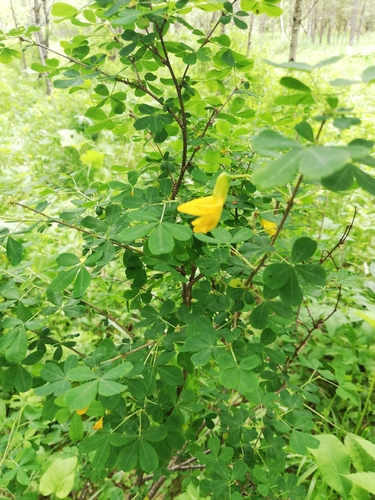
It features an upright growth habit with multiple stems adorned with small green leaves composed of several leaflets.
Flowers and Fruits
In late spring, it produces bright yellow, pea-like flowers that are followed by small pods containing seeds.
Temperature and Drought Tolerance
The Siberian peashrub is a hardy plant capable of tolerating drought and cold temperatures as low as -40°C (-40°F).
Soil Adaptability
While it prefers well-drained soils, it can thrive in various soil types, including sandy or clay soils.
Practical Landscape and Agricultural Uses
Beyond its ornamental appeal, Caragana frutex offers several practical uses, such as erosion control, windbreaks, and forage for livestock.
Edible Seed Use
The seeds are also edible and have traditionally been used as a food source by indigenous people.
Horticultural Value Summary
Overall, Caragana frutex is an attractive shrub with multiple benefits, making it an excellent addition to gardens or landscapes where hardy plants are required.