About Falco newtoni (Gurney Sr, 1863)
Species Name
This species, the Malagasy kestrel (Falco newtoni), reaches a total length of 30 cm.
Wing Length
Male wing length ranges from 180 mm to 195 mm, while female wing length ranges from 188 mm to 203 mm.
Body Weight
Male body weight is between 112 and 118 grams, and female body weight can reach up to 128 grams.
Male Non-Rufous Morph Head Coloration
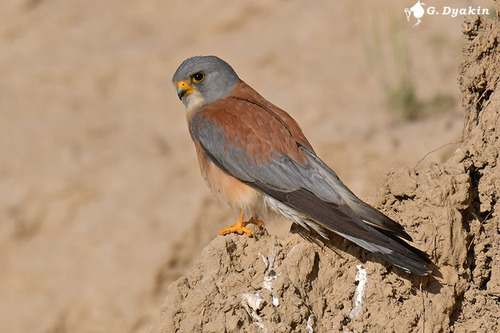
For typical (non-rufous morph) males, the head and nape are rufous grey with dark streaks.
Male Non-Rufous Morph Facial Marking
A dark moustachial streak runs from the base of the bill backward to the sides of the throat.
Male Non-Rufous Morph Upperparts Coloration
The upperparts and wing coverts are chestnut with black spots, and the uppertail coverts are grey with blackish spots.
Male Non-Rufous Morph Long Flight Feathers
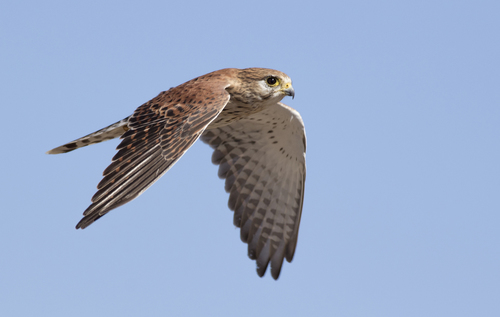
The long flight feathers are blackish brown, and their inner webs are covered with white and chestnut spots.
Male Non-Rufous Morph Underparts Base Color
The underparts are whitish.
Male Non-Rufous Morph Short Flight Feathers
The short flight feathers are chestnut-colored with dark bands.
Male Non-Rufous Morph Underside Spotting
Black spots cover the chest, belly, and underwing coverts.
Male Non-Rufous Morph Tail Features
The tail is grey, with six to seven narrow black bars, a broad subterminal black bar, and white tips on all tail feathers.
Rufous Morph Existence
There is also a rufous color morph of this species.
Rufous Morph Head Coloration
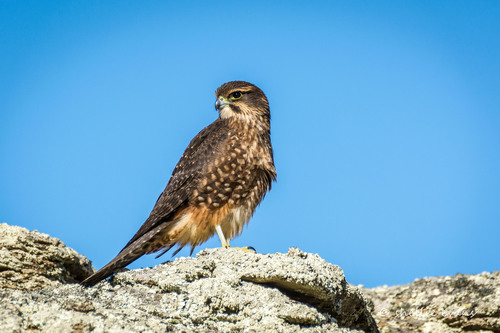
In the rufous morph, the head and nape are almost black.
Rufous Morph Body Coloration
The body and underwing coverts are dark chestnut brown with black streaks and spots.
Rufous Morph Throat and Underwing Coverts
The throat is buffish-white, and the underwing coverts are greyish white with black spots.
Female Plumage Features
Female Falco newtoni have a stronger chestnut color on the head, more extensive spotting on the underparts, and a brown tail with black bars.
Adult Soft Part Features
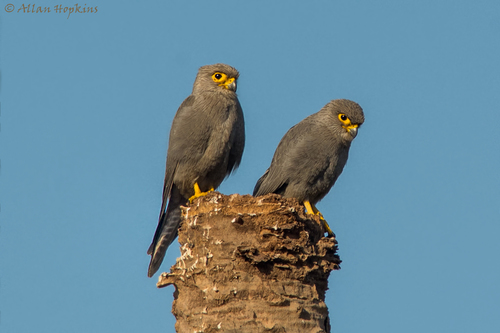
Both sexes have a slate grey bill with a black tip, a yellow cere, and legs that are either yellow or bright orange in the rufous morph.
Juvenile Plumage
Juveniles have similar coloration to adult females.
Overall Range
This species has a large range, and is native to Madagascar, Mayotte, and the Comores.
Madagascar Habitat and Distribution
The Malagasy kestrel is a non-migratory breeding resident in Madagascar, where it occurs in savannas, wetlands, and artificial landscapes near human settlements, at altitudes from 0 to 2000 meters above sea level.
Forest Occurrence
It is uncommon in forested areas.
Aldabra and Comores Population Range
The Aldabra kestrel population is associated with Grande Terre (an island of the Aldabra group), with evidence also of its presence on Anjouan in the Comores.
Nesting Sites
Malagasy kestrels typically nest on rock ledges, in buildings, in tree holes, or in abandoned stick nests built by other bird species, such as the pied crow.
Clutch Details
They lay a clutch of four to six eggs, usually in September.
Incubation Behavior
Only the female incubates the eggs, and the male feeds her at regular intervals during this incubation period.