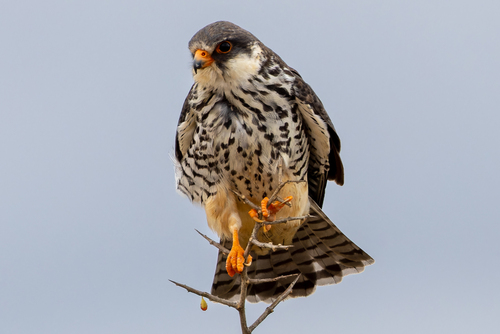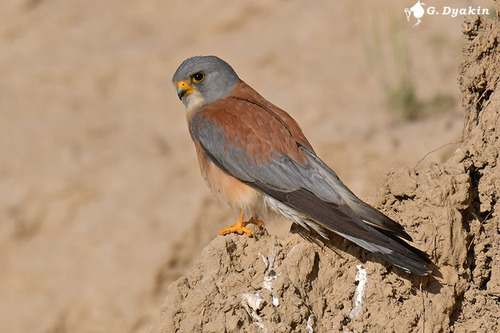
About Falco naumanni J.G.Fleischer, 1818
Taxonomy and size
This small bird of prey, Falco naumanni (the lesser kestrel), measures 27–33 cm (11–13 in) in length and has a 63–72 cm (25–28 in) wingspan. It closely resembles the larger common kestrel, but has proportionally shorter wings and tail.
General plumage
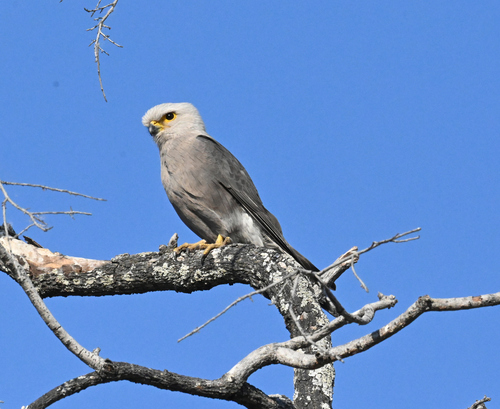
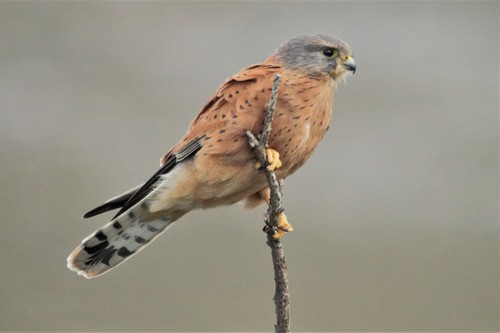
Like the common kestrel, it has a brown back and barred grey underparts. Male lesser kestrels share the grey head and tail of male common kestrels, but lack dark back spotting and the black malar stripe, and have grey patches on their wings.
Female and juvenile plumage
Female and young lesser kestrels are slightly paler than common kestrels, and are so similar in plumage that call and body structure are more reliable identifiers than feather patterns. The lesser kestrel’s call is a diagnostic harsh chay-chay-chay, different from the common kestrel’s kee-kee-kee.
Talon coloration
Unlike most falcons, neither sex of this species has dark talons; its talons are an unusual whitish-horn colour, though this trait is only visible at very close range. As the common name suggests, the lesser kestrel is smaller and more delicate than the common kestrel.
Range overlap and competition
Its breeding range completely overlaps with that of the common kestrel, and the two species compete to a limited extent. This similarity in appearance has led to the hypothesis that the similar colouring may provide some adaptive advantage: it could be a case of Müllerian mimicry, as lesser kestrels would benefit if potential predators mistake them for the larger common kestrel and avoid them, a possibility that requires further study.
Diet
The lesser kestrel feeds primarily on insects, but also eats small birds, reptiles, and rodents, especially mice, most often captured on the ground.
Nesting habits
It nests colonially on buildings, cliffs, or in tree holes, laying 3 to 6 eggs per clutch. Like most falcons, it does not build any structured nest.
Wintering range
During the winter, lesser kestrels live in West Africa, where they prefer a latitude belt through Senegal that supports abundant locust and grasshopper populations. January 2007 surveys of wintering lesser kestrels conducted by the Ligue pour la Protection des Oiseaux found that the species roosts communally; one roost discovered in the survey held 28,600 lesser kestrels alongside 16,000 scissor-tailed kites (Chelictinia riocourii).
Conservation status
Globally, the species is widespread and abundant, so the IUCN has classified it as Least Concern.
Threats
Indiscriminate pesticide use is known to have a strong negative impact on this species due to its insectivorous diet, and habitat destruction may also pose a threat.