About Falco dickinsoni P.L.Sclater, 1864
Taxonomy and General Build
Dickinson's kestrel, scientifically named Falco dickinsoni P.L.Sclater, 1864, is a fairly small, stocky kestrel with a large, square head.
Size Measurements
Adults measure 27–30 cm (11–12 in) in length, have a wingspan of 61–68 cm (24–27 in), and weigh 167–246 g (5.9–8.7 oz). Females are approximately 4% larger and 10–20% heavier than males.
Adult Plumage
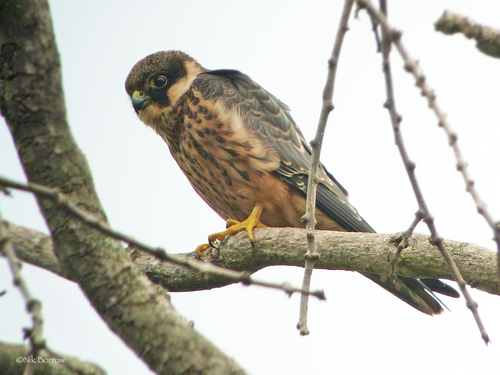
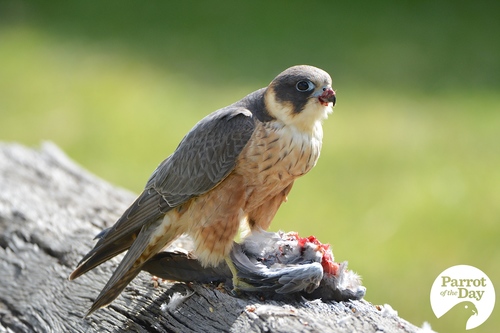
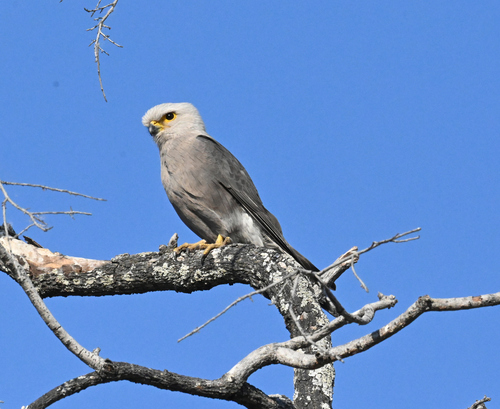
Adult plumage is mostly dark grey, with a pale head and pale rump. The grey tail features narrow black bars and a broad black subterminal band. The undersides of the flight feathers are also barred.
Adult Soft Parts
The cere and feet are yellow, with bare yellow skin surrounding the eye. The bill is dark grey, and the eyes are brown.
Juvenile Characteristics
Juvenile birds are grey-brown with barred flanks, and lack the paler head and rump seen in adults; they have a greenish cere and greenish eye-ring.
Vocalizations
This species is usually silent, but produces a high-pitched alarm and contact call. At the nest, adults use a soft, mewing call to attract young for feeding.
Preferred Habitat Types
This kestrel inhabits savanna and open woodland, particularly swampy areas near water. It favors miombo woodland, and is typically associated with palm trees, including Hyphaene and Borassus species.
Associated Vegetation
It is also often found near baobab trees, and occurs in coconut plantations in some areas.
Geographic Range
Its geographic range covers most of Mozambique, Zimbabwe, Zambia and Malawi, along with north-eastern South Africa (mainly in Kruger National Park), northern Botswana, north-east Namibia, eastern Angola, southern Democratic Republic of the Congo and parts of Tanzania.
Range Size and Occurrence
It is an occasional visitor to Kenya, and its total range covers approximately 3,400,000 km2 (1,300,000 sq mi). It is generally rather scarce across its range, but is more common in some areas such as Zanzibar and Pemba Islands.
Threats
Loss of palm trees is a potential threat to the species.