About Falco amurensis Radde, 1863
Male Adult Plumage (Upperparts)
Male Amur falcons (Falco amurensis) are characteristically dark sooty grey on their upperparts, with rufous thighs and vent.
Male Flight Plumage
When in flight, their wing lining is white, which contrasts sharply with their dark wing feathers.
Red-footed Falcon Comparison (Male)
By comparison, adult males of the closely related red-footed falcon have a dark grey wing lining.
Gabar Goshawk Comparison
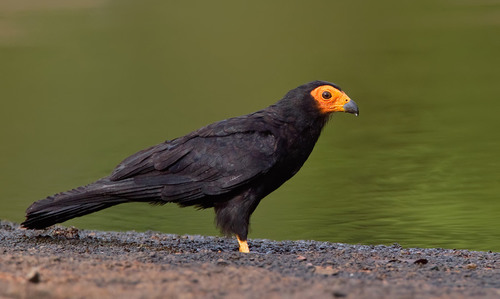
In Africa, male Amur falcons can be mistaken for melanistic Gabar goshawks, but their distinctive chestnut marking on the vent sets them apart.
Sooty Falcon & Grey Kestrel Comparison
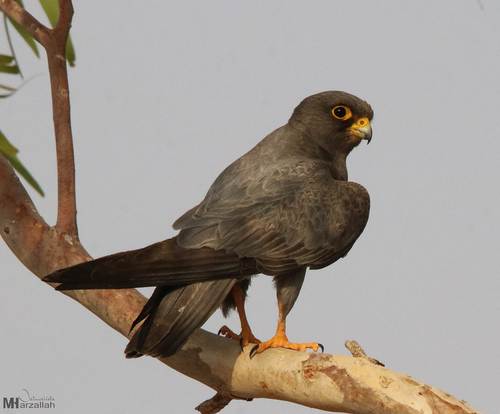
They also bear a superficial resemblance to the sooty falcon and the grey kestrel, but both of these species have yellow feet and yellow cere, unlike the Amur falcon.
Wing Size & Span
Like most falcons, Amur falcons have long wings, with a wingspan ranging from 63 to 71 cm.
Resting Wing Length
When at rest, the wing tip reaches or extends just past the tip of the tail.
Female Identification Challenge
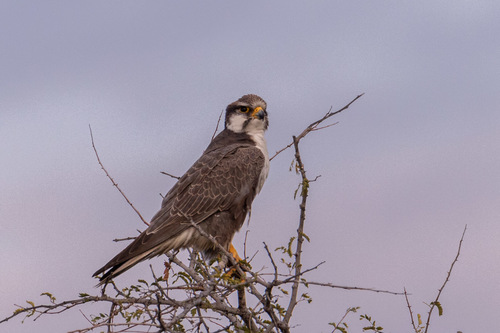
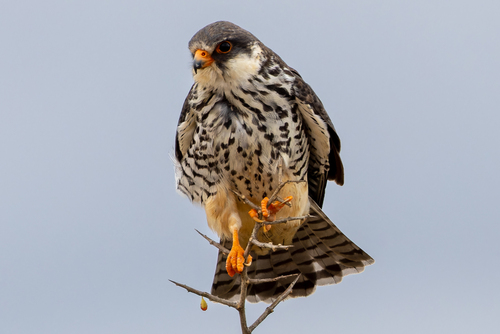
Females are often more difficult to identify, as they share a plumage pattern common to many falcon species.
Female Distinguishing Features
However, they can be distinguished by their distinctive orange eye-ring, red cere, and reddish orange feet.
Juvenile Red-footed Falcon Comparison
Juvenile Amur falcons may only be confused with juvenile red-footed falcons, but juvenile Amur falcons lack the buffy underwing coverts found in juvenile red-footed falcons.
Breeding Range
The Amur falcon breeds in East Asia, ranging from Transbaikalia, Amurland, and northern Mongolia to parts of North Korea.
Southbound Migration Route (Asia)
During migration, they travel across a broad front through India and Sri Lanka, sometimes moving further east over Thailand and Cambodia, before crossing the Arabian Sea.
Southbound Migration Destination
They may pass through the Maldives and other islands during this journey to reach their non-breeding grounds in southern Africa.
Migration Flight Altitude
It is thought that strong westward blowing winds help Amur falcons passing over India; these winds are strongest at an altitude of around 3000m, and the birds are believed to fly at heights above 1000m during migration.
Northbound Migration Route
Their return route to the breeding grounds runs slightly further north than their southbound migration route.
Vagrancy Records
Due to their tendency to wander long distances over the ocean during migration, Amur falcons have been recorded far outside their normal range, including in Italy, Sweden, Tristan da Cunha, St. Helena, and the United Kingdom.
Feeding Activity Period
Amur falcons feed mainly in the late evening or early morning.
Prey Capture Locations
They capture a wide variety of insects, both in the air and on the ground.
Prey Capture Methods
Most prey is captured in flight, sometimes by hovering, but they will also alight on the ground to pick up prey.
Diet Variation by Season
Their winter diet appears to be almost entirely made up of insects, but they catch small birds, mammals, and amphibians to feed their young while in their breeding range.
Non-breeding Season Prey
Rains in southern Africa produce swarms of termites, locusts, ants, and beetles that provide abundant food for the species during the non-breeding season.
Arabian Sea Migration Prey
Their crossing of the Arabian Sea during migration coincides with the migration of the dragonfly Pantala flavescens, which are thought to provide food for the falcons during this demanding section of their migration route.