About Eupsophus emiliopugini Formas, 1989
This species is Eupsophus emiliopugini Formas, 1989.
Size Measurements
In terms of physical characteristics, adult males measure 43–50 mm (1.7–2.0 in) and adult females measure 41–65 mm (1.6–2.6 in) in snout–vent length. Newly metamorphosed froglets of this species measure 10–11 mm (0.39–0.43 in).
Head Features
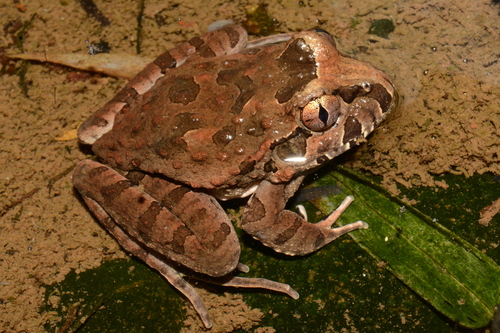
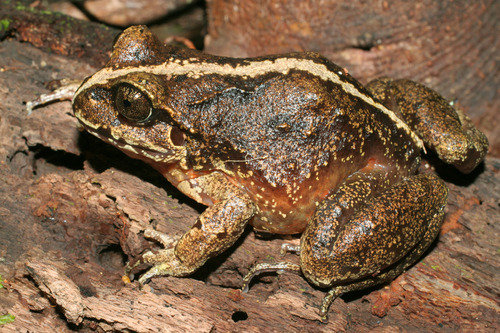
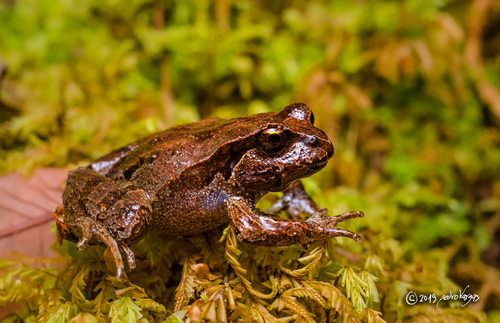
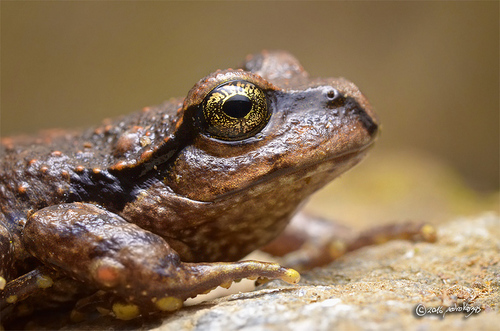
The head of the frog is wider than it is long. The tympanum is distinct, and a well-developed supra-tympanic fold is present.
Limb and Skin Traits
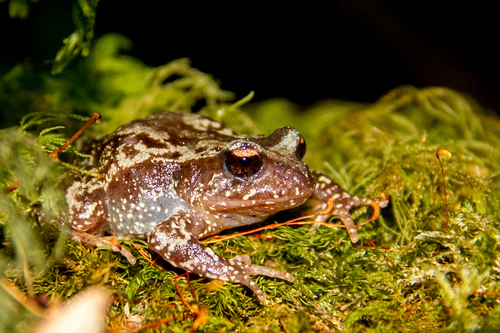
The limbs are slender, webbing is absent, and the skin is smooth.
Dorsal Coloration
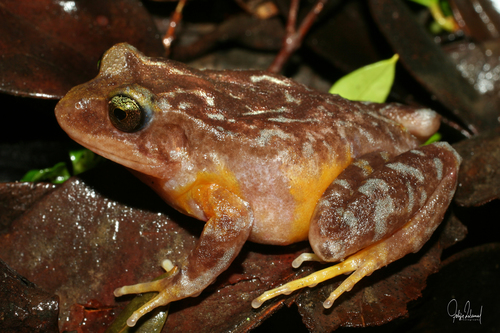
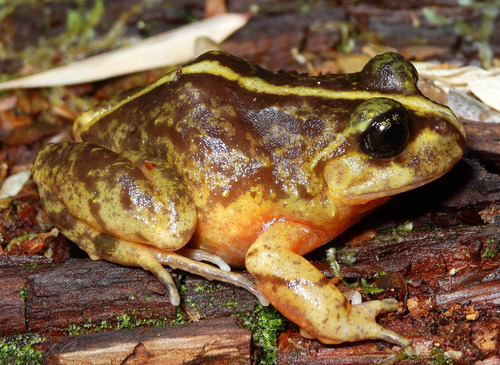
The dorsal ground color ranges from grayish brown to leaden. There is a lemon-yellow vertebral line and an olive-green band between the eyes.
Other Markings
Bright yellowish reticulations are sometimes present on the thighs. The belly is whitish, and mature males have a bright orange gular area.
Regarding habitat and conservation status, the natural habitats of Eupsophus emiliopugini are humid forests near cold streams, ranging from near sea level to 1,500 m (4,900 ft) above sea level.
Adult Habitat
Adults can be found under logs or in small holes at the edges of streams. Males call from small holes during the day.
Reproductive Behavior
Females lay their eggs inside these holes; the free-swimming tadpoles develop in these water-filled cavities on the ground. The tadpoles spend a considerable amount of time in the nest, and do not eat during this period. Scientists suspect that this species provides parental care.
Threats
Eupsophus emiliopugini is threatened by habitat loss caused by fires and the plantation of exotic trees for forestry.
Protected Presence
The species occurs in Lago Puelo National Park in Argentina, and in at least six other protected parks in Chile.